View methods side by side.
Choose up to four methods. Add them using the search and share the comparison by copying its link.
| Criterion |  Agile WSJF |  Operations PDCA Cycle | 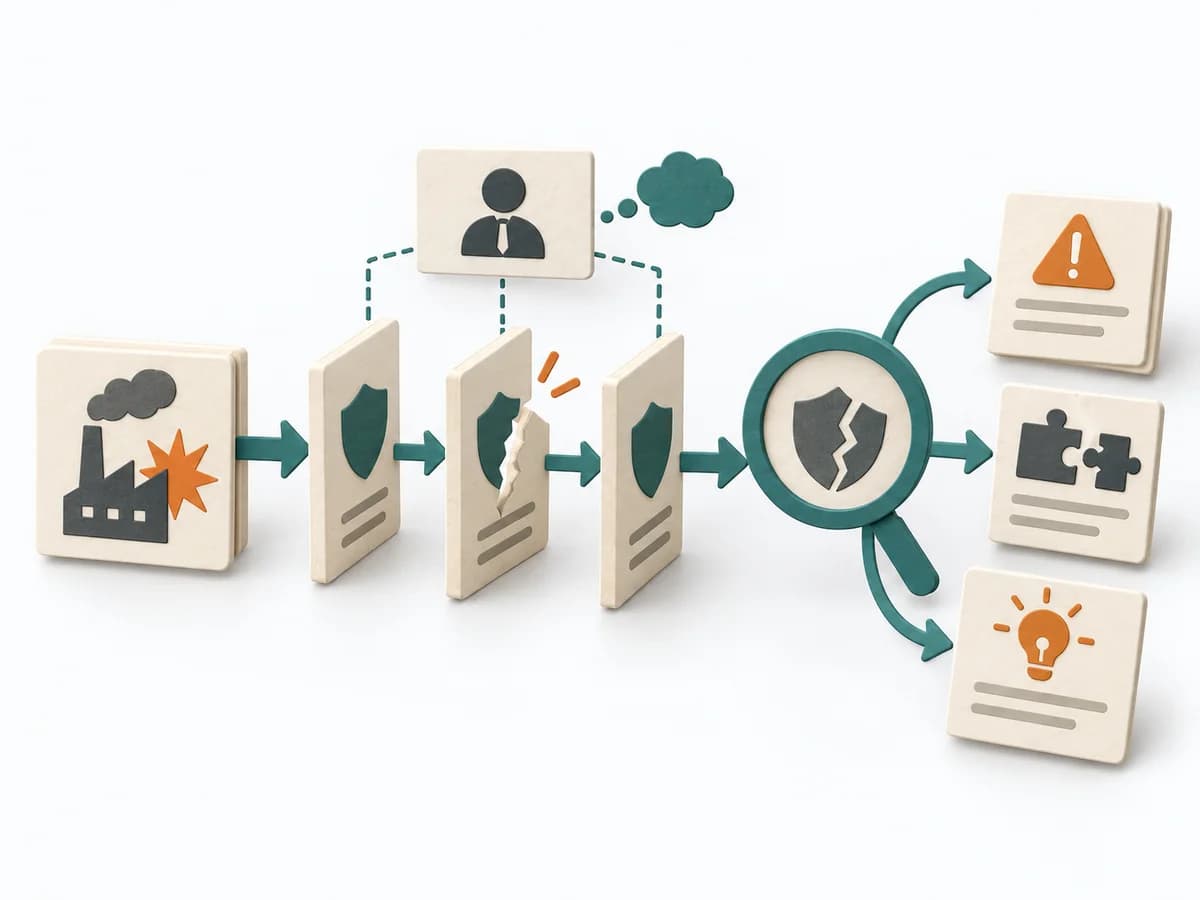 Operations MORT Analysis |  Operations Family Tree Analysis |
|---|---|---|---|---|
Purposedifferent | When many tasks compete for the same capacity, it orders work by economic impact. It makes time lost, benefit, and effort comparable together. | For an improvement that still has to prove itself in everyday work, the method runs it through small learning loops. It connects planning, checking, and standardization into a repeatable learning mode. | For a safety-relevant event or a system with high protection requirements, the method examines where controls failed. It exposes both technical and organizational gaps. | For a series of incidents with a similar pattern, the method arranges individual events as branches of a common origin. It makes visible which conditions keep recurring. |
Complexitydifferent | High | Low | High | Medium |
Timedifferent | 45-90 min | 1 h bis mehrere Wochen | Mehrere Tage bis Wochen | 2-4 h |
Participantsdifferent | 3-10 | 1-8 | 2-6 | 2-6 |
Formatdifferent | Workshop | Workshop + async | Workshop + async | Workshop + async |
Outputdifferent | Ranked Backlog, Cost-of-Delay Assumptions | PDCA Log, Experiment Plan, Learning Outcome, Standard Change | MORT Worksheets, Findings per Branch, Corrective Actions, Systemic Recommendations | Family Tree Diagram, Pattern Notes, Systemic Measures |
Tagsno overlap | LeanEconomicsSequencePrioritization | Continuous improvementLeanExperiments | Root causeSafetySystemicIncident | Root causePatternsIncidentSystemic |