View methods side by side.
Choose up to four methods. Add them using the search and share the comparison by copying its link.
| Criterion | 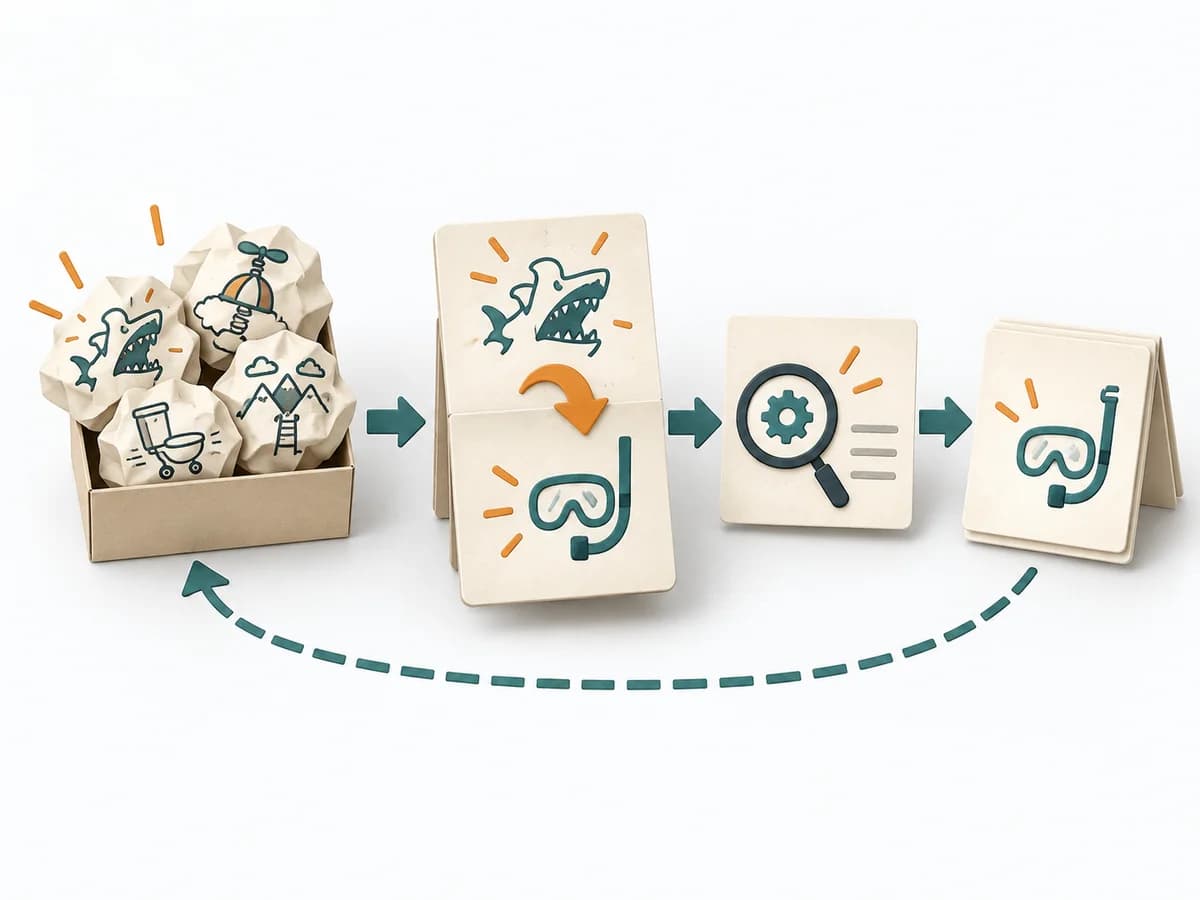 Innovation Worst Possible Idea |  Operations 5 Whys |  Operations Kepner-Tregoe |  Innovation Brainstorming |
|---|---|---|---|---|
Purposedifferent | For a seemingly familiar problem with paralyzing seriousness, the method dissolves pressure and fear of judgment. It deliberately makes failure pictures extreme, so hidden assumptions become visible faster. This clarifies what a workable path should avoid. | For a single, hard-to-explain deviation, the method exposes the causal chain behind the visible symptom. It keeps the cause open until a controllable condition emerges instead of a mere description. | For a disturbance that's hard to pin down, the method cleanly separates problem, cause, and decision. It reduces mixing when symptoms allow several interpretations. | When a team faces an open question with many obvious directions, the method first creates breadth instead of premature commitment. It separates idea flow from evaluation and makes lines of thought visible, creating a pool for selection and further development. |
Complexitydifferent | Low | Low | High | Low |
Timedifferent | 20-45 min | 15-30 min | 2-8 h | 30-60 min |
Participantsdifferent | 3-12 | 2-6 | 2-8 | 4-12 |
Formatdifferent | Workshop | Workshop | Workshop + async | Workshop |
Outputdifferent | Bad Idea List, Reframed Concepts, Idea Shortlist | Root cause notes, Countermeasures | Problem Analysis, Decision Analysis, Risk Plan | Idea pool, Theme clusters, Shortlist |
Tagsno overlap | IdeationCreativityDivergence | Root causeIncidentLeanProblem solving | Problem solvingRoot causeDecisionOperations | BrainstormingIdeationCreativityWorkshopDivergence |