View methods side by side.
Choose up to four methods. Add them using the search and share the comparison by copying its link.
| Criterion | 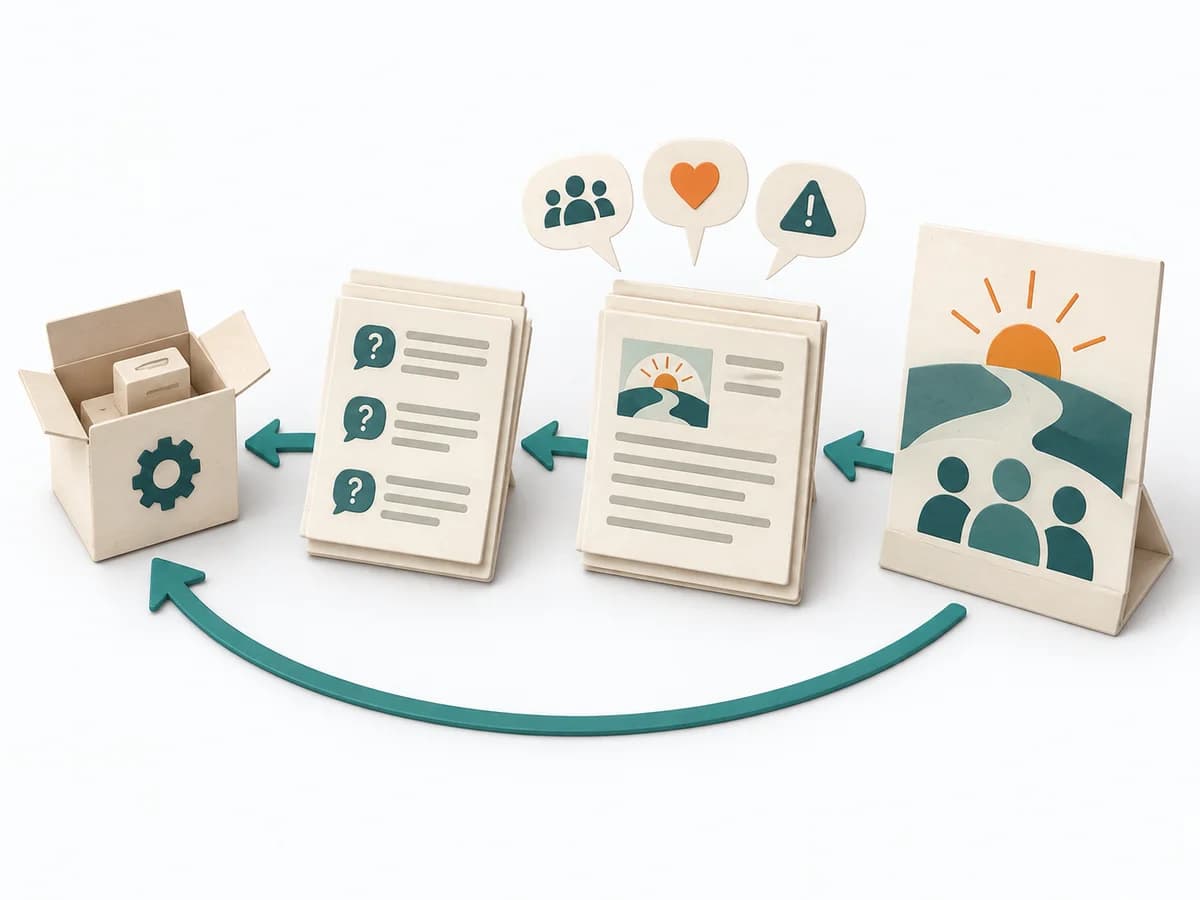 Product Discovery Working Backwards |  Decision Making RAPID |  Architecture Architecture Decision Record |  Architecture Request for Comments |
|---|---|---|---|---|
Purposedifferent | When the target state and benefit need to be clear first, it thinks backward from the desired outcome into the product logic. It sharpens vision, objections, and value proposition before elaboration. | In complex management decisions, clarity is often missing about who recommends, who agrees, and who makes the decision. RAPID creates this assignment and stabilizes decisions across several levels. | An ADR permanently records an architecture decision with context, trade-offs, and consequence. It creates continuity for later changes because the decision path stays traceable. | An RFC clarifies architecture context, options, and consequences. It structures technical context, alternatives, tradeoffs, open questions, and review feedback, and captures the result as an RFC document, reviewer comments, and a decision rationale. |
Complexitydifferent | Medium | Medium | Low | Medium |
Timedifferent | 4-8 h, mehrere Iterationen | 45-90 min | 15-45 min | 1-3 Wochen vom Draft bis zur Entscheidung |
Participantsdifferent | 2-6 | 3-12 | 1-3 | 3-20 Reviewer |
Formatdifferent | Workshop + async | Workshop + async | Async | Async |
Outputdifferent | Future Press Release, FAQ, Vision Statement | RAPID Role Map, Recommendation, Decision Log | ADR File, Decision Log, Rationale | RFC document, Reviewer comments, Decision rationale, Follow-up ADR or tickets |
Tagsno overlap | VisionNarrativeAlignment | DecisionRolesGovernance | ArchitectureRationaleDocumentationGovernance | ArchitectureDecisionAsyncGovernance |