View methods side by side.
Choose up to four methods. Add them using the search and share the comparison by copying its link.
| Criterion | 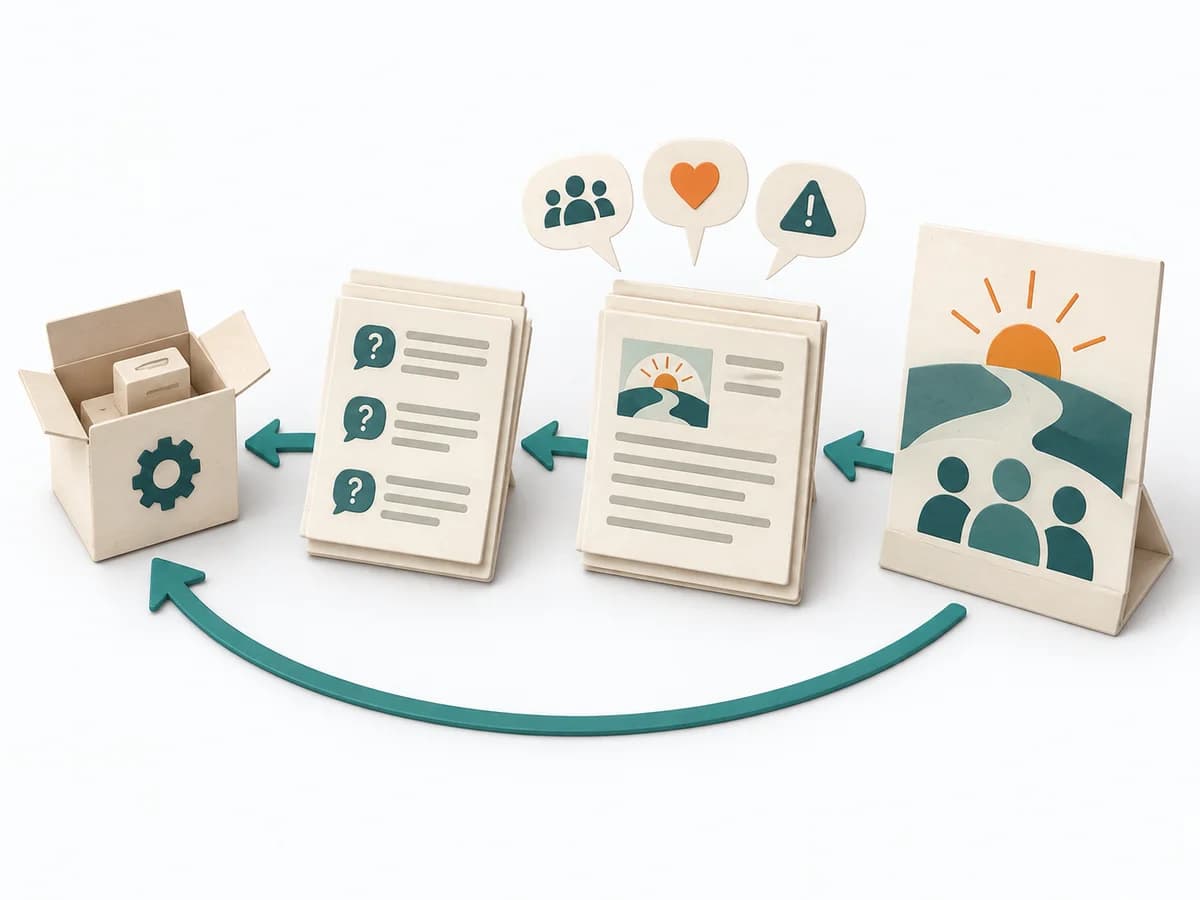 Product Discovery Working Backwards |  Operations Kepner-Tregoe |  Operations Fishbone Diagram |  Operations Failure Mode and Effects Analysis |
|---|---|---|---|---|
Purposedifferent | When the target state and benefit need to be clear first, it thinks backward from the desired outcome into the product logic. It sharpens vision, objections, and value proposition before elaboration. | For a disturbance that's hard to pin down, the method cleanly separates problem, cause, and decision. It reduces mixing when symptoms allow several interpretations. | When a problem has several possible contributing factors, the method sorts causes by cause areas. It prevents an initial hunch from blocking the view of other plausible drivers. | For a process, product, or service with noticeable failure risks, the method assesses possible failure modes in advance. It directs attention to combinations of occurrence, effect, and detectability. |
Complexitydifferent | Medium | High | Low | High |
Timedifferent | 4-8 h, mehrere Iterationen | 2-8 h | 30-60 min | 2-6 h |
Participantsdifferent | 2-6 | 2-8 | 2-8 | 3-10 |
Formatdifferent | Workshop + async | Workshop + async | Workshop | Workshop |
Outputdifferent | Future Press Release, FAQ, Vision Statement | Problem Analysis, Decision Analysis, Risk Plan | Fishbone Diagram, Cause Categories, Investigation Backlog | FMEA Table, Risk Priority, Mitigation Actions |
Tagsno overlap | VisionNarrativeAlignment | Problem solvingRoot causeDecisionOperations | Root causeQualityOperations | RiskQualityOperationsRoot cause |