View methods side by side.
Choose up to four methods. Add them using the search and share the comparison by copying its link.
| Criterion | 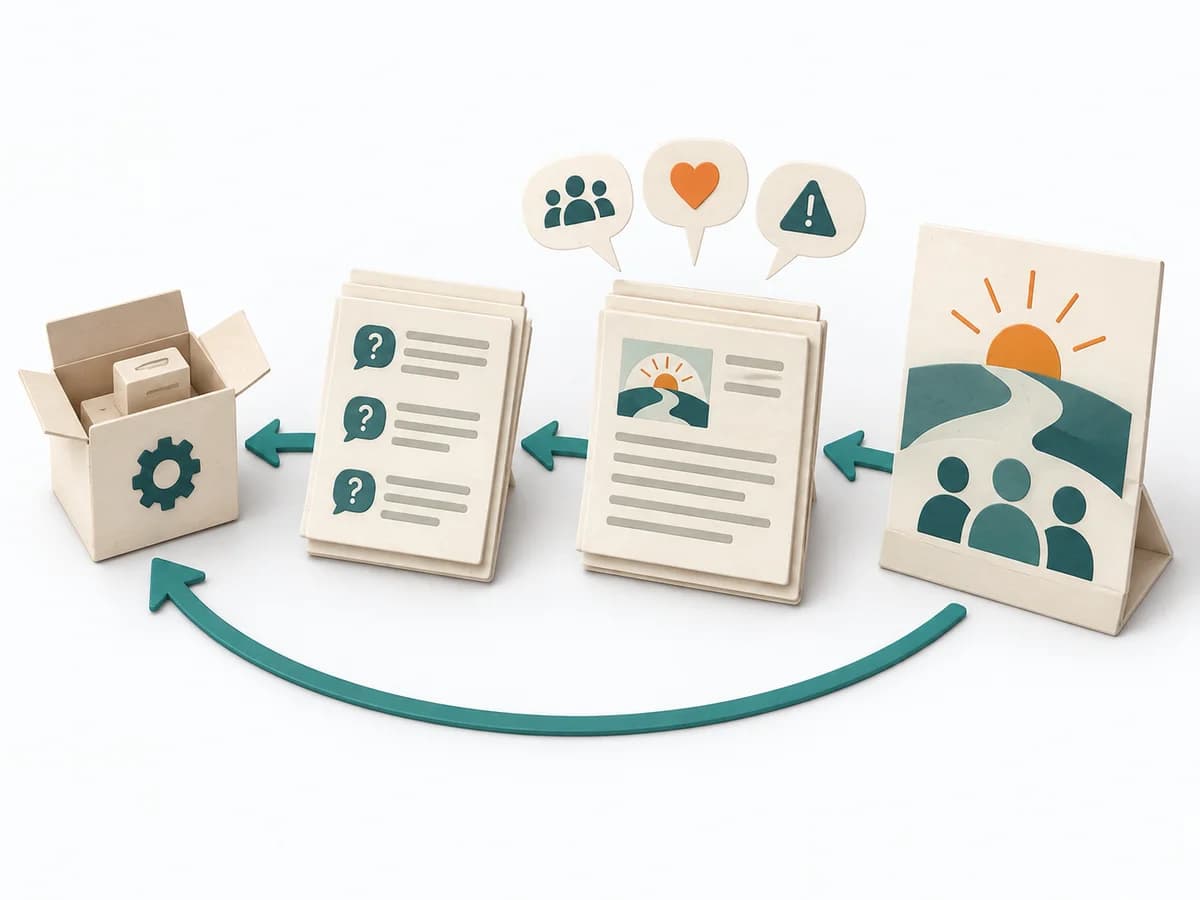 Product Discovery Working Backwards |  Operations Fishbone Diagram |  Operations Barrier Analysis |  Operations Root Cause Analysis |
|---|---|---|---|---|
Purposedifferent | When the target state and benefit need to be clear first, it thinks backward from the desired outcome into the product logic. It sharpens vision, objections, and value proposition before elaboration. | When a problem has several possible contributing factors, the method sorts causes by cause areas. It prevents an initial hunch from blocking the view of other plausible drivers. | For a risk that can only be managed through multiple layers of protection, the method examines the effectiveness of each barrier. It shows where safeguards are missing, too weak, or fail under real conditions. | When a problem keeps recurring and the cause stays unclear, the method exposes the underlying mechanism. It separates symptom, guess, and robust explanation from one another. |
Complexitydifferent | Medium | Low | Medium | Medium |
Timedifferent | 4-8 h, mehrere Iterationen | 30-60 min | 2-4 h | 1-4 h |
Participantsdifferent | 2-6 | 2-8 | 2-6 | 3-8 |
Formatdifferent | Workshop + async | Workshop | Workshop + async | Workshop + async |
Outputdifferent | Future Press Release, FAQ, Vision Statement | Fishbone Diagram, Cause Categories, Investigation Backlog | Barrier Inventory, Failure Analysis per Barrier, Action Backlog | Problem Statement, Cause Hypotheses, Confirmed Causes, Action Plan |
Tagsno overlap | VisionNarrativeAlignment | Root causeQualityOperations | Root causeSafetyIncident | Root causeProblem solvingQualityIncident |