View methods side by side.
Choose up to four methods. Add them using the search and share the comparison by copying its link.
| Criterion | 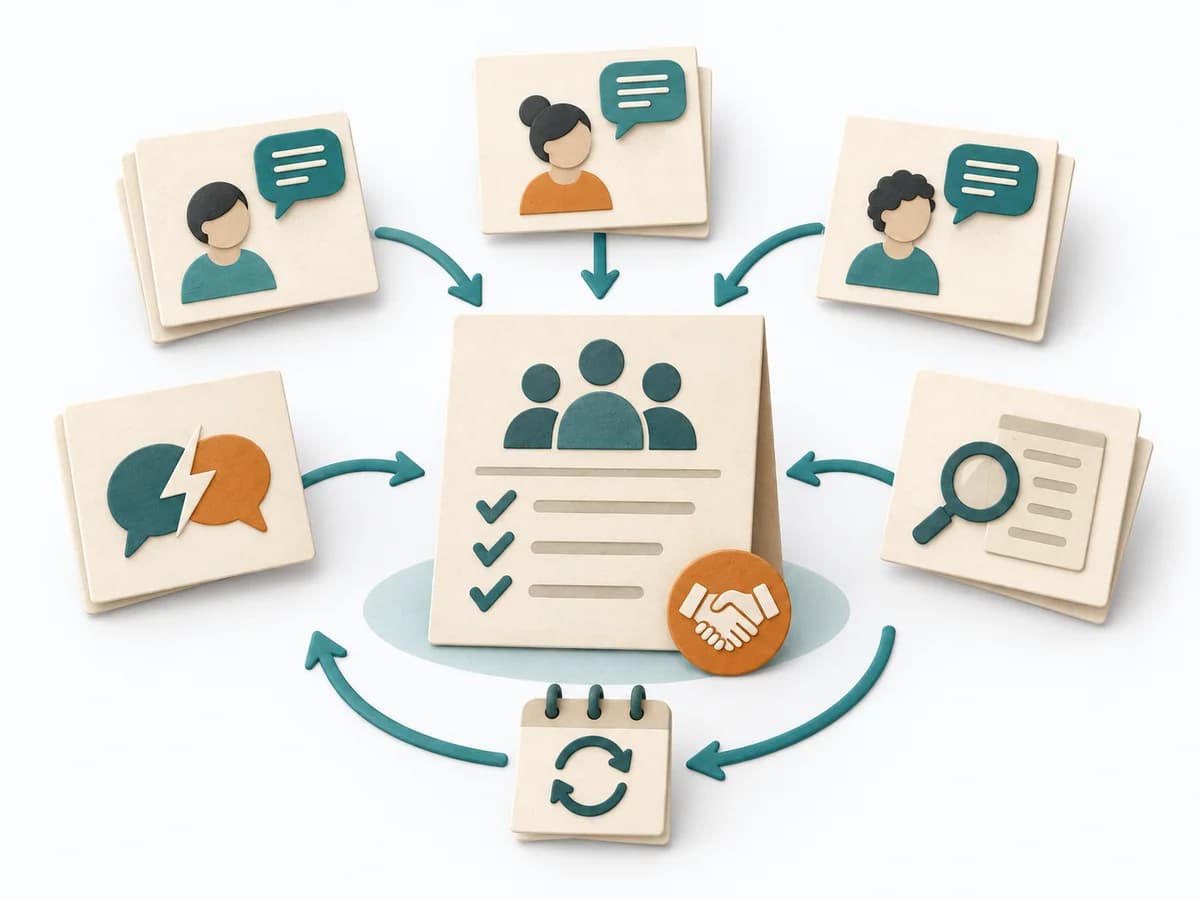 Agile Working Agreements | 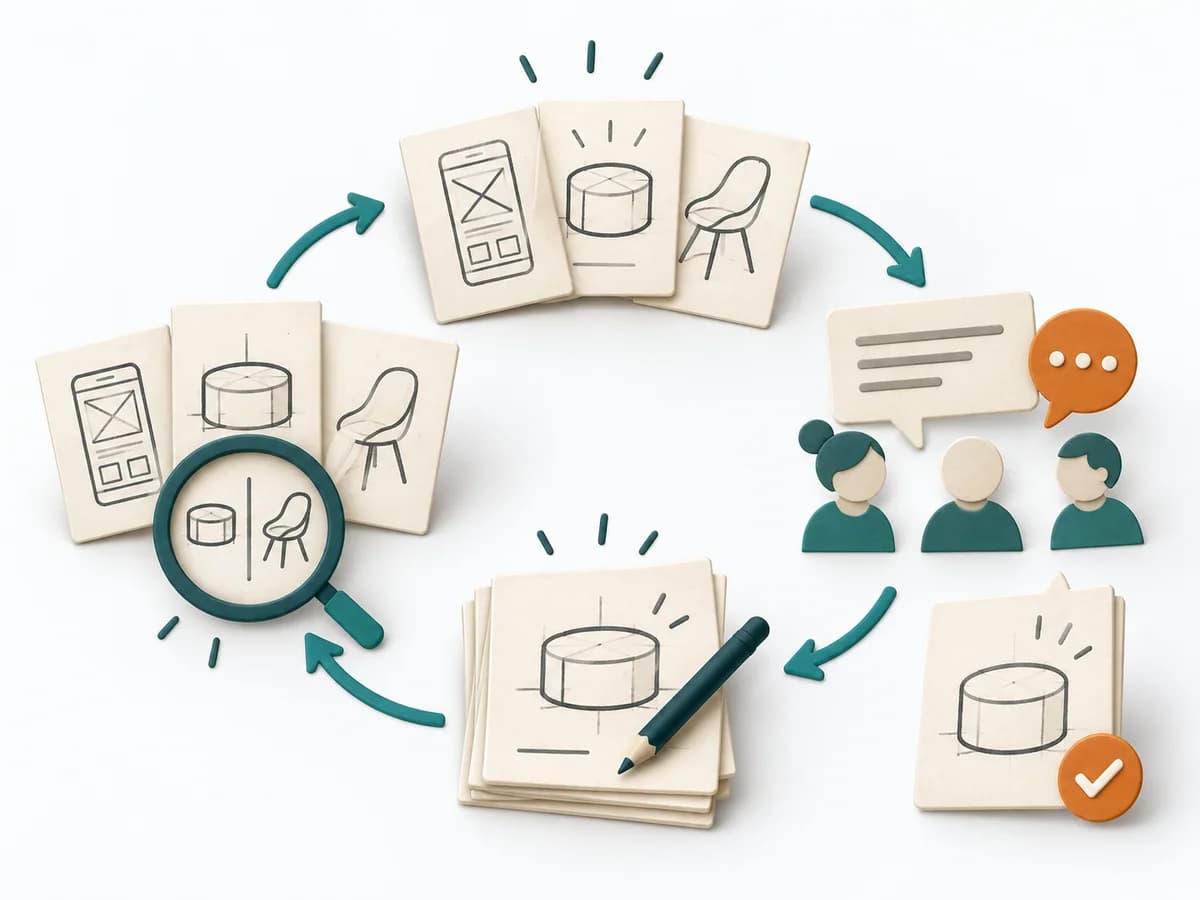 UX Design Design Studio | 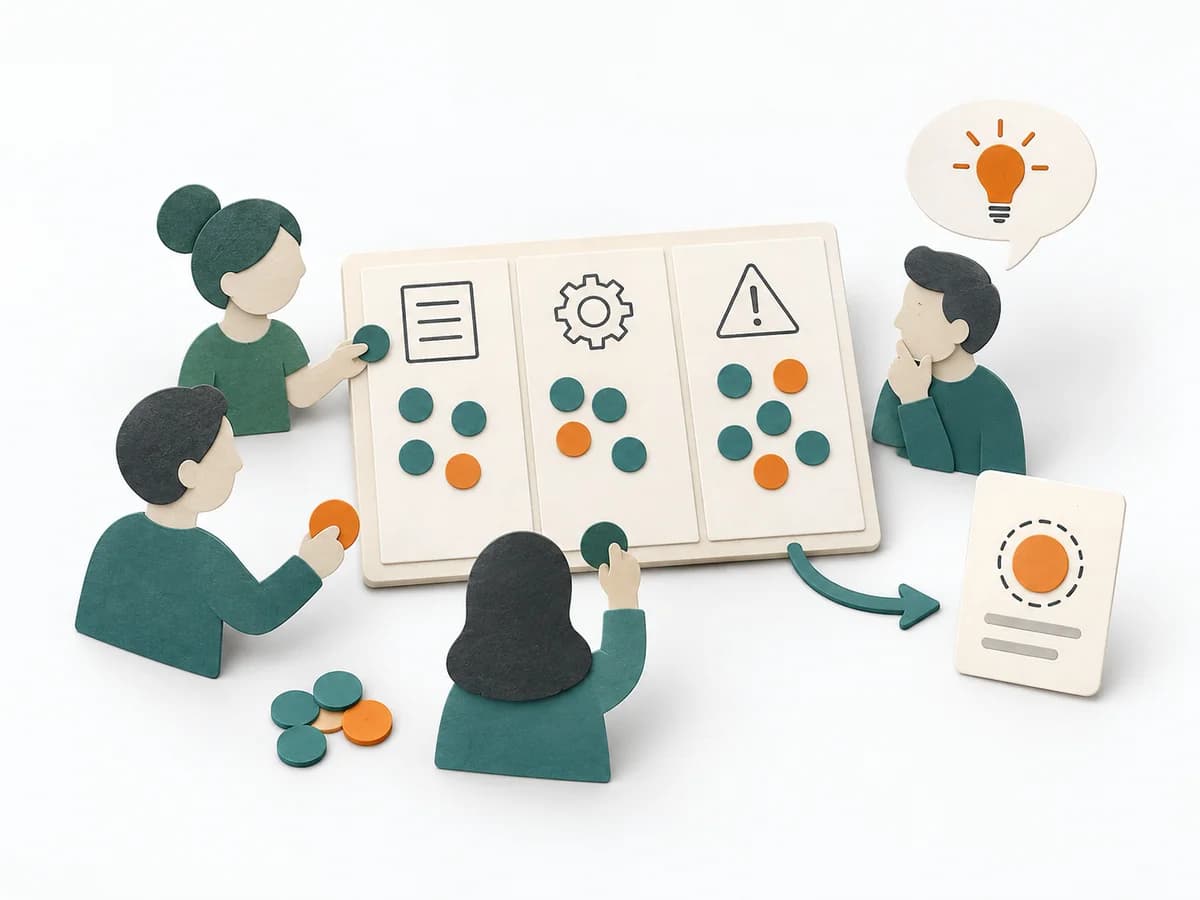 Facilitation Dot Estimation | 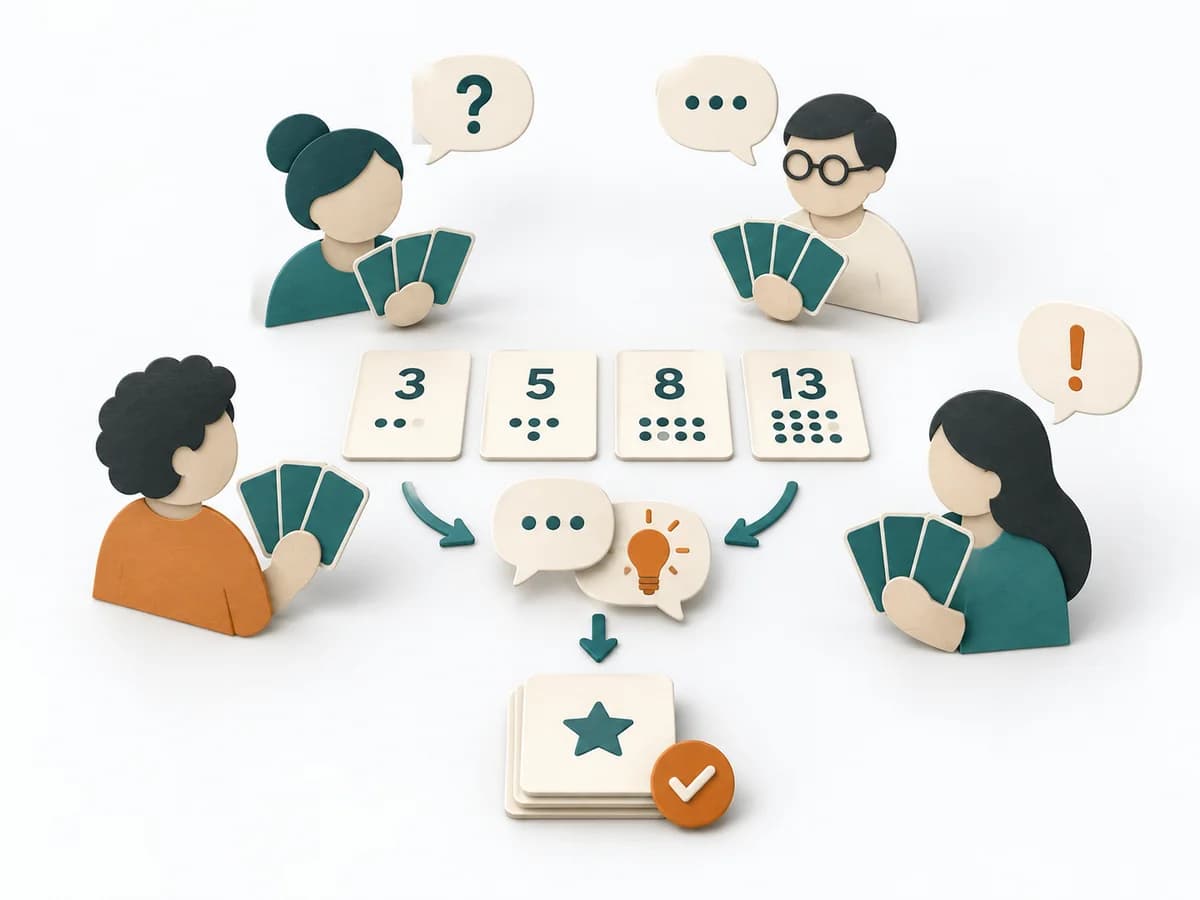 Agile Planning Poker |
|---|---|---|---|---|
Purposedifferent | When collaboration needs more than implicit expectations, it lays out shared ground rules openly. It creates reliability for conduct, availability, and decision paths. | When several designs need to be quickly put in relation to each other, it makes ideas visible and comparable. It encourages early variants instead of long upfront debates. | When size or effort can only be estimated roughly, Dot Estimation condenses the group's experience into a quick range. It turns individual contributions into a visible selection. The result is captured as an Effort Heatmap, Risk Signals, and Discussion Targets. | When estimates within the team diverge too much, it puts differing expectations on a common test bench. It separates rough complexity from unspoken assumptions. |
Complexitydifferent | Low | Medium | Low | Low |
Timedifferent | 45-90 min | 1-3 h | 5-20 min | 2-5 min je Item |
Participantsdifferent | 3-12 | 3-8 | 3-20 | 3-9 |
Formatdifferent | Workshop | Workshop | Workshop | Workshop + async |
Outputdifferent | Working Agreements, Team Norms, Review Cadence | Sketches, Concept Directions, Design Decisions | Effort Heatmap, Risk Signals, Discussion Targets | Relative Estimates, Assumption Notes, Split Candidates |
Tagsno overlap | TeamCollaborationAgile | SketchingCollaborationIdeation | EstimationEffortRisk | EstimationAgileRelative sizingTeam |