View methods side by side.
Choose up to four methods. Add them using the search and share the comparison by copying its link.
| Criterion | 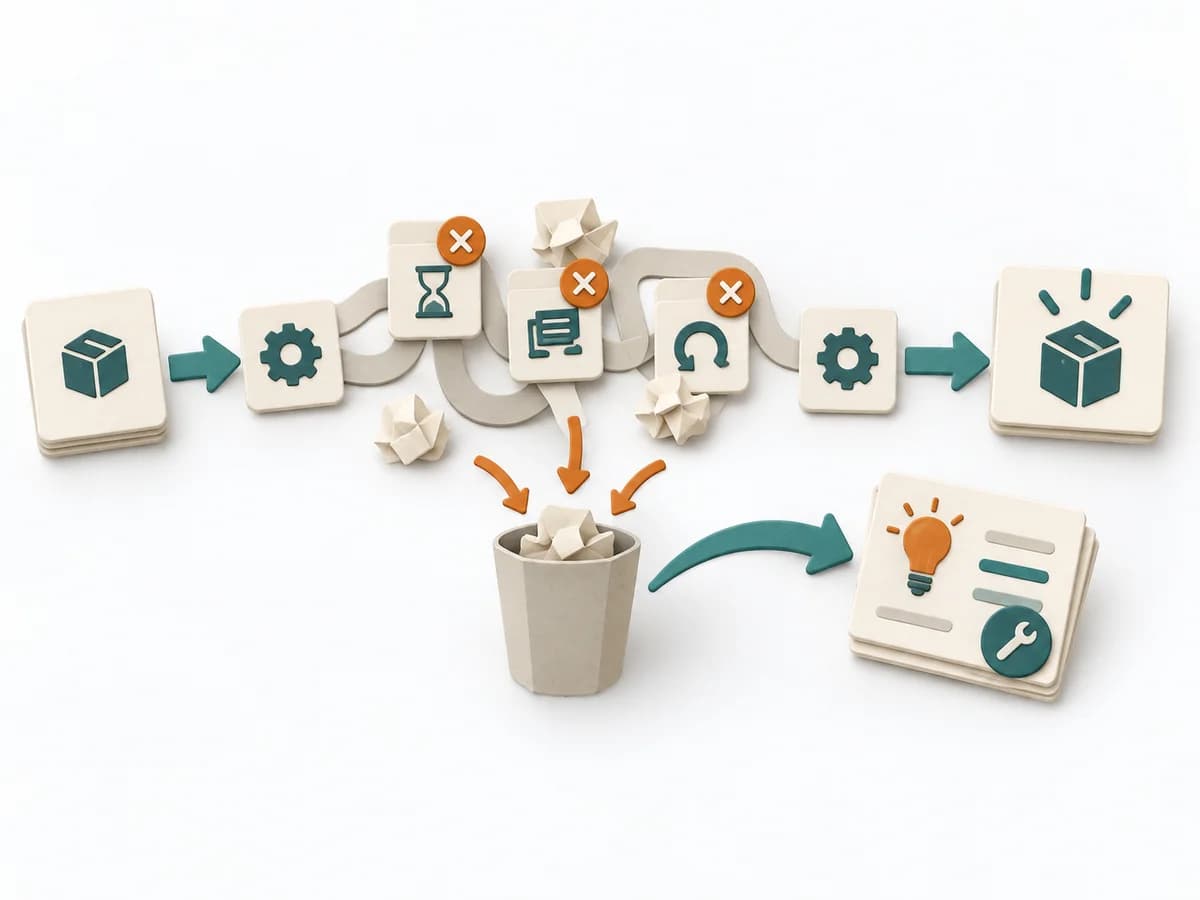 Operations Waste Analysis |  Decision Making RAPID |  Architecture Request for Comments |  Architecture Architecture Decision Record |
|---|---|---|---|---|
Purposedifferent | For a process that keeps people busy but creates little value, the method exposes waste. It directs attention to unnecessary movement, waiting times, rework, and overdelivery. | In complex management decisions, clarity is often missing about who recommends, who agrees, and who makes the decision. RAPID creates this assignment and stabilizes decisions across several levels. | An RFC clarifies architecture context, options, and consequences. It structures technical context, alternatives, tradeoffs, open questions, and review feedback, and captures the result as an RFC document, reviewer comments, and a decision rationale. | An ADR permanently records an architecture decision with context, trade-offs, and consequence. It creates continuity for later changes because the decision path stays traceable. |
Complexitydifferent | Low | Medium | Medium | Low |
Timedifferent | 45-120 min | 45-90 min | 1-3 Wochen vom Draft bis zur Entscheidung | 15-45 min |
Participantsdifferent | 2-8 | 3-12 | 3-20 Reviewer | 1-3 |
Formatdifferent | Workshop | Workshop + async | Async | Async |
Outputdifferent | Waste Map, Prioritized Waste, Improvement Backlog | RAPID Role Map, Recommendation, Decision Log | RFC document, Reviewer comments, Decision rationale, Follow-up ADR or tickets | ADR File, Decision Log, Rationale |
Tagsno overlap | WasteLeanProcess improvement | DecisionRolesGovernance | ArchitectureDecisionAsyncGovernance | ArchitectureRationaleDocumentationGovernance |