View methods side by side.
Choose up to four methods. Add them using the search and share the comparison by copying its link.
| Criterion | 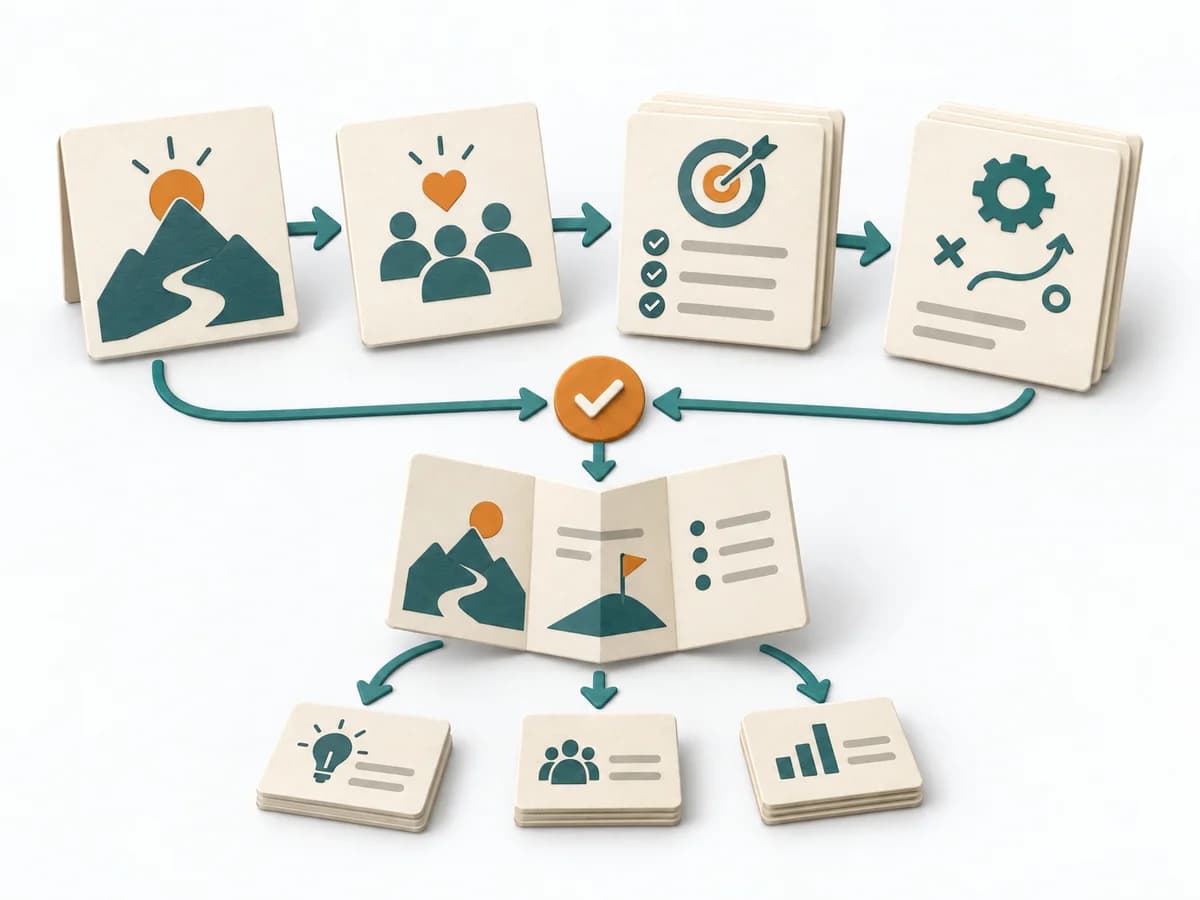 Business Strategy VMGS |  Facilitation Stakeholder Salience Model | 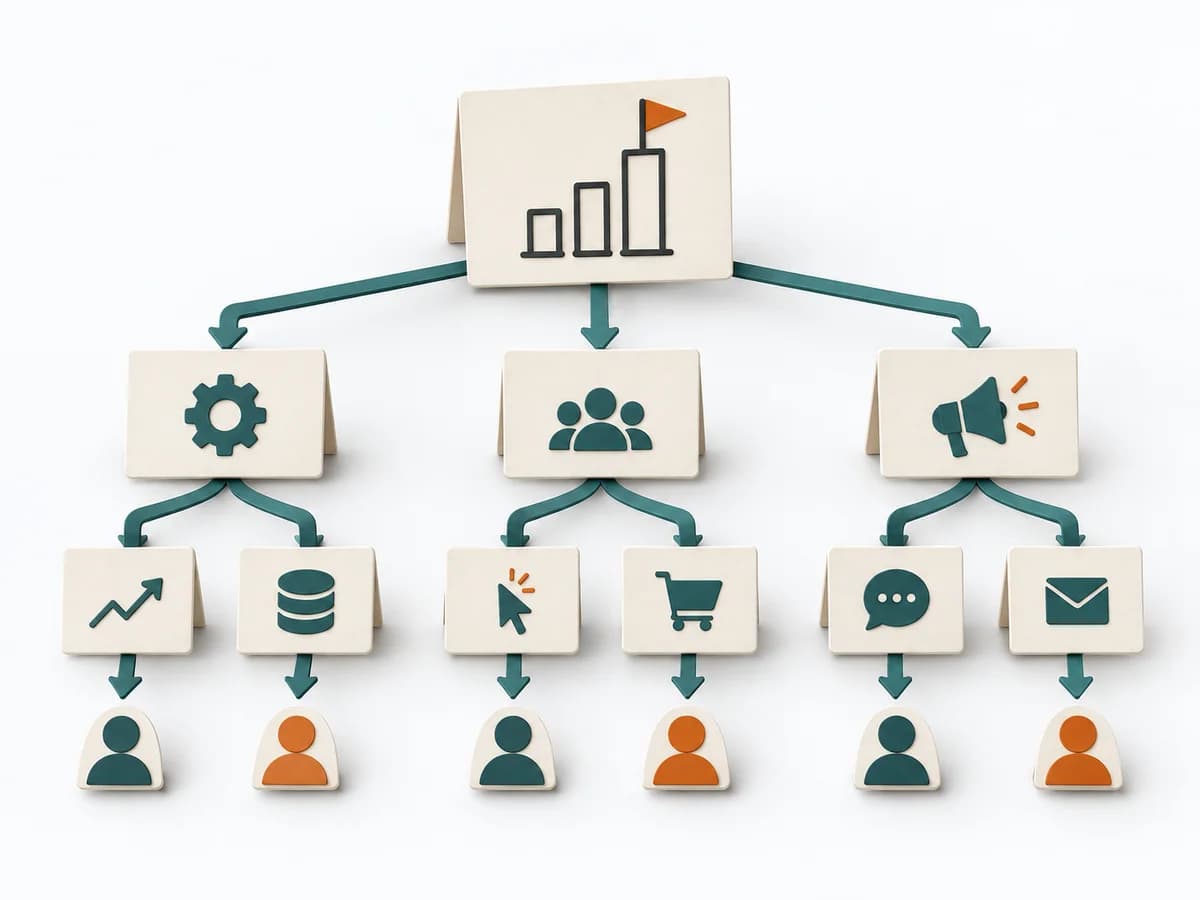 Product Strategy KPI Tree |  Facilitation Alignment Mapping |
|---|---|---|---|---|
Purposedifferent | VMGS arranges vision, mission, goals, and strategies into a clear guiding logic. Direction, purpose, and priorities are connected so teams can decide more coherently. | When stakeholders appear to matter very differently, the Stakeholder Salience Model rates their actual priority through power, legitimacy, and urgency. It turns individual contributions into a visible selection. The result is captured as a Salience diagram and a class-based strategy. | When metrics across the organization drift apart, it arranges drivers and effects under one shared logic. It connects customer value, product logic, and decision priorities. The result is captured as a KPI tree and owner list. | When several people work toward one goal but hold different mental maps, Alignment Mapping makes the discrepancies visible. It arranges goals, assumptions, and priorities so shared direction becomes verifiable. |
Complexitysame | Medium | Medium | Medium | Medium |
Timedifferent | 2-4 h | 60-90 min | 90-180 min initial, dann laufend | 1-2 h |
Participantsdifferent | 3-12 | 3-6 | 3-8 | 4-12 |
Formatdifferent | Workshop | Workshop | Workshop + async | Workshop |
Outputdifferent | Vision Statement, Mission Statement, Goals, Strategies | Salience Diagram, Strategy per Class | KPI Tree, Owner List | Alignment Map, Open Issues, Decision Questions |
Tagsno overlap | VisionGoalsStrategy | StakeholdersFacilitationAlignmentGovernance | MetricsStrategyAlignmentMeasurement | AlignmentStakeholdersStrategyFacilitation |