View methods side by side.
Choose up to four methods. Add them using the search and share the comparison by copying its link.
| Criterion | 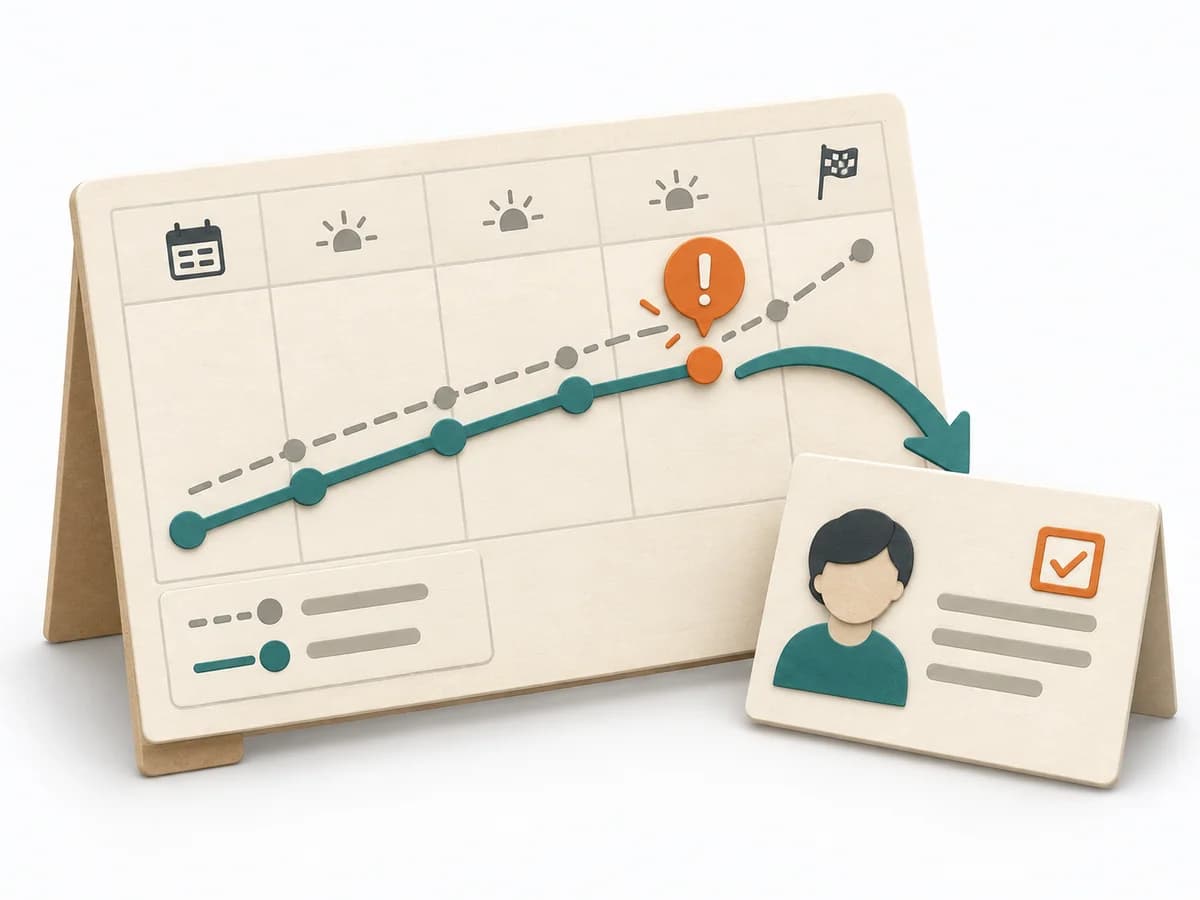 Operations Visual Management |  Agile Sprint Retrospective | 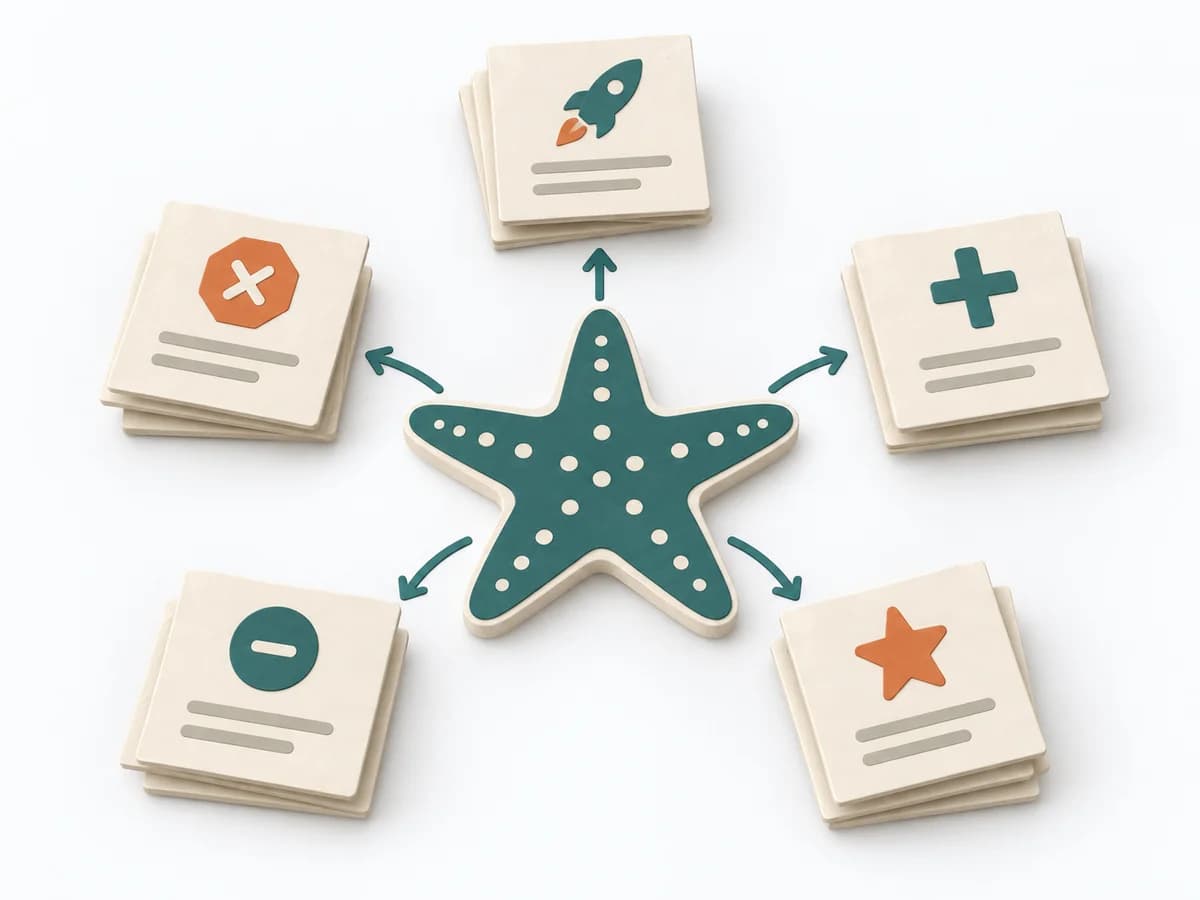 Agile Starfish Retrospective | 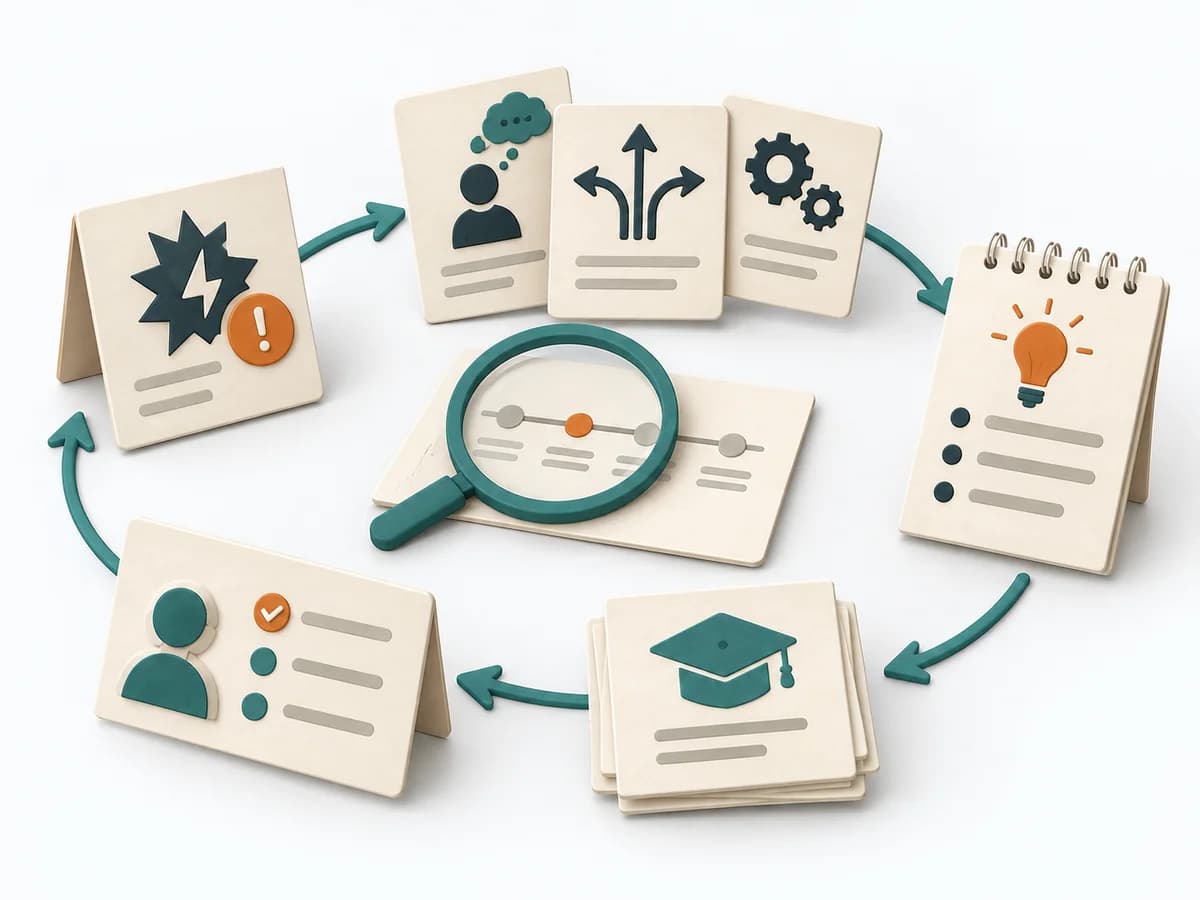 Operations Learning Review |
|---|---|---|---|---|
Purposedifferent | With high tempo and many parallel topics, the method makes status, deviations, and priorities visible at a glance. It reduces search effort and prevents what matters from getting lost in daily work. | When a sprint is over and friction shouldn't simply be carried forward, it opens the view onto collaboration and patterns. It creates space to see causes and changes together. | When improvement options need to be sorted more finely than just start and stop, it brings observations into clear kinds of action. This makes visible what should be done more, less, newly, or continued. | After a project phase with mixed results, the method makes learning from the individual case reusable. It connects events, decisions, and systemic conditions into robust insights. |
Complexitydifferent | Low | Low | Low | Medium |
Timedifferent | Ongoing | Up to 3 hours for a one-month Sprint; shorter Sprints are usually shorter | 45-90 min | 1-3 h |
Participantsdifferent | 1-20 | Scrum Team | 4-12 | 3-10 |
Formatdifferent | Workshop + async | Workshop | Workshop | Workshop |
Outputdifferent | Visual Board, Status Indicators, Exception Cues | Improvement actions, Team agreements | Starfish Board, Practice Changes, Experiments | Learning Review Notes, System Factors, Improvement Actions |
Tagsno overlap | SignalsOperationsVisual management | RetrospectiveImprovementLearning | RetrospectiveImprovementExperimentsTeam | LearningRetrospectiveIncidentOperations |