View methods side by side.
Choose up to four methods. Add them using the search and share the comparison by copying its link.
| Criterion |  UX Research User Interviews | 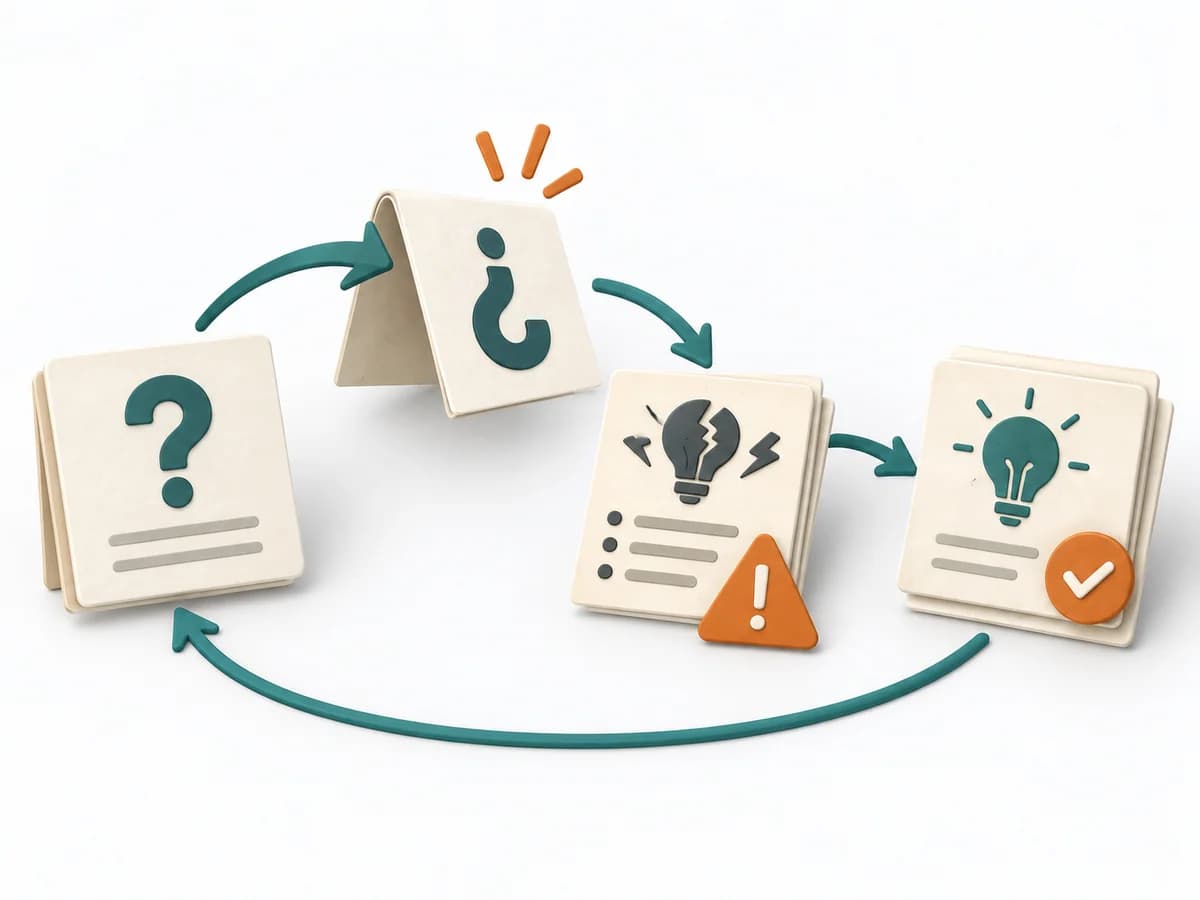 Innovation Reverse Brainstorming |  Innovation Rapid Ideation | 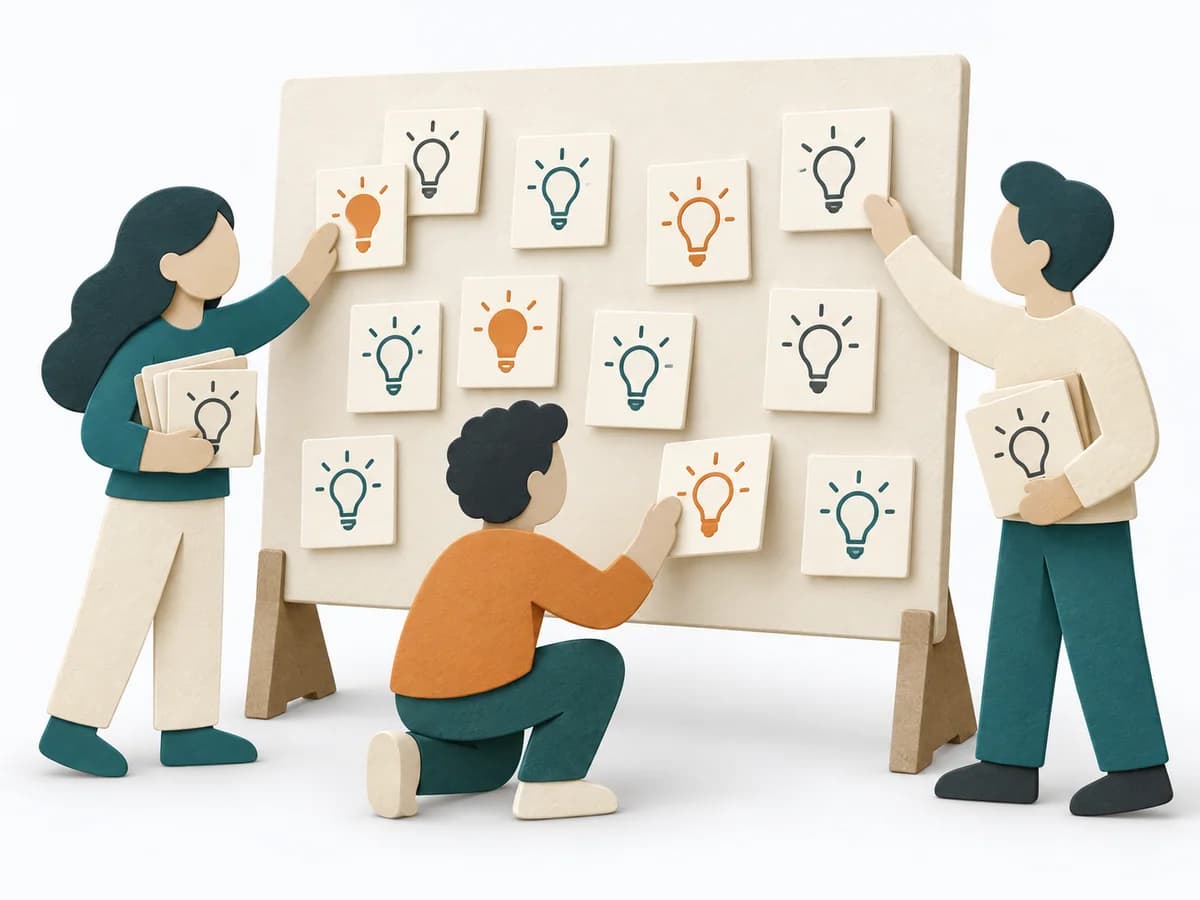 Innovation Brainstorming |
|---|---|---|---|---|
Purposedifferent | When teams derive needs only from assumptions and real motives are missing, user interviews give direct access to behavior and meaning. Conversations from the target group's everyday life make patterns, tensions, and open questions solidly visible. | For persistent errors or blockages, the method shifts the view to the opposite of the desired effect. It exposes the mechanics of failure and makes hidden causes easier to grasp. This makes improvement more concrete and the problem clearer. | When a decision needs to be prepared quickly, the method generates many solution-close variants in a short time. It deliberately relies on pace to undercut self-censorship and perfectionism. This quickly produces a usable field for prioritization and further work. | When a team faces an open question with many obvious directions, the method first creates breadth instead of premature commitment. It separates idea flow from evaluation and makes lines of thought visible, creating a pool for selection and further development. |
Complexitysame | Low | Low | Low | Low |
Timedifferent | 30–60 min per interview | 30-60 min | 5-20 min | 30-60 min |
Participantsdifferent | 1 participant per interview | 3-12 | 1-20 | 4-12 |
Formatdifferent | Workshop + async | Workshop | Workshop + async | Workshop |
Outputdifferent | Interview Notes, Themes, Insight Summary | Reverse Ideas, Risk Themes, Solution Ideas | Ideenpool, Roh-Shortlist, Cluster | Idea pool, Theme clusters, Shortlist |
Tagsno overlap | QualitativeResearchCustomerDiscovery | BrainstormingIdeationCreativityRisk | BrainstormingIdeationDivergenceSpeed | BrainstormingIdeationCreativityWorkshopDivergence |