View methods side by side.
Choose up to four methods. Add them using the search and share the comparison by copying its link.
| Criterion |  UX Research User Interviews | 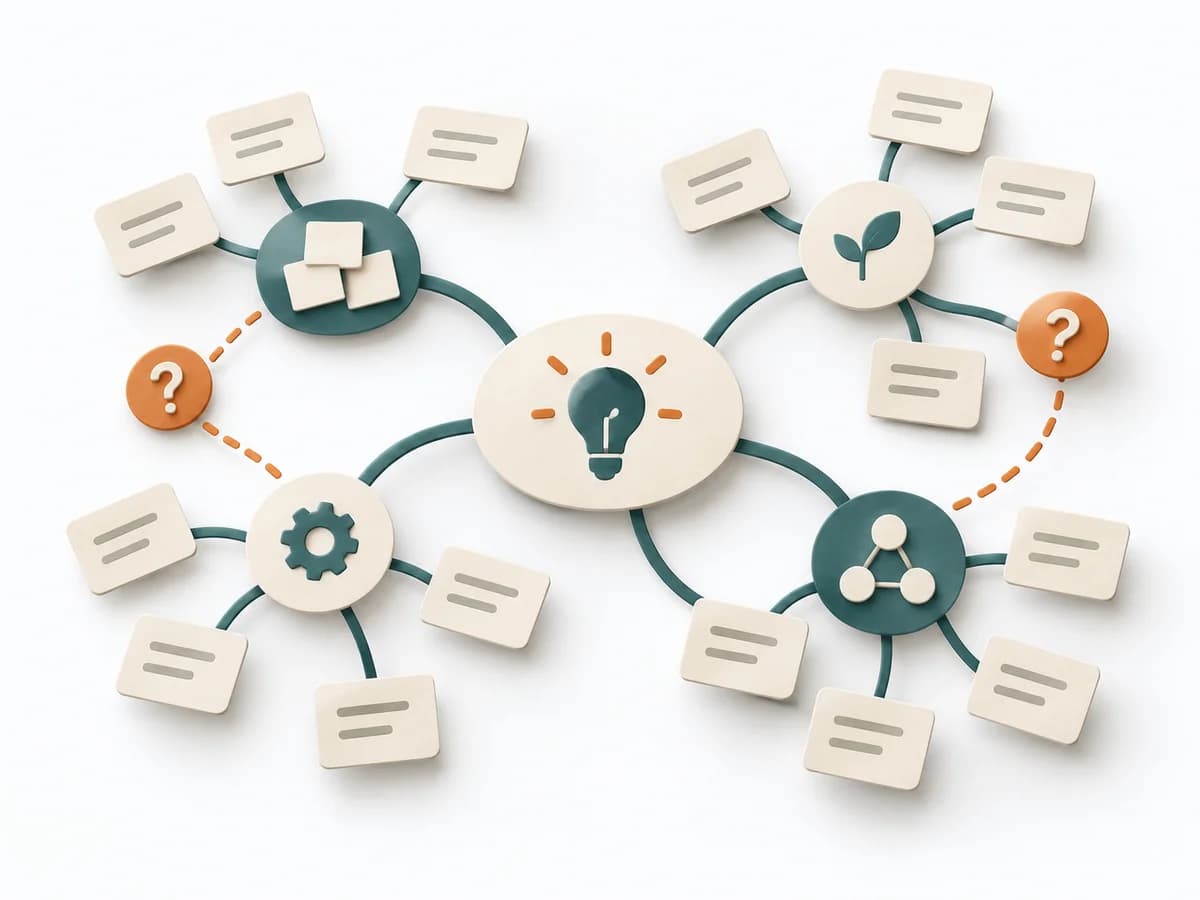 Facilitation Mind Mapping | 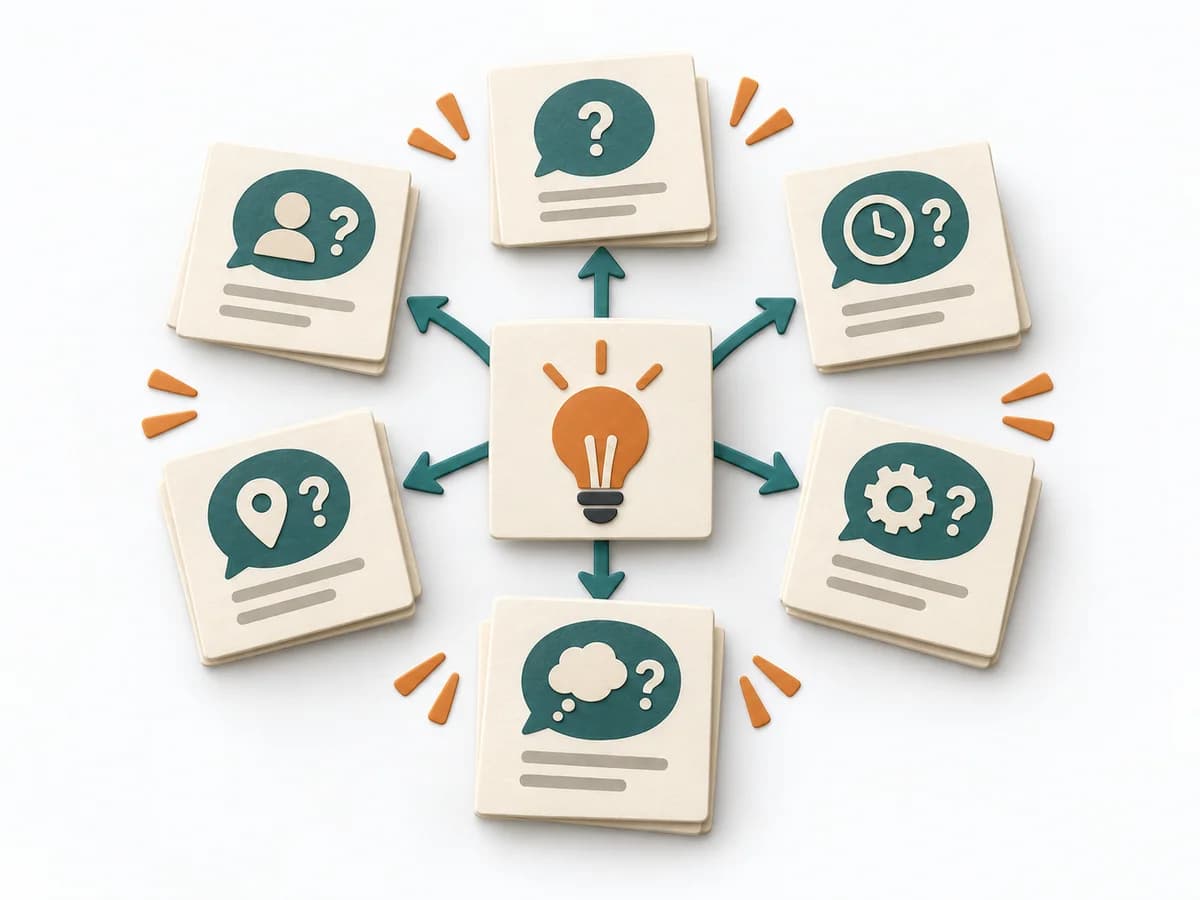 Innovation Starbursting | 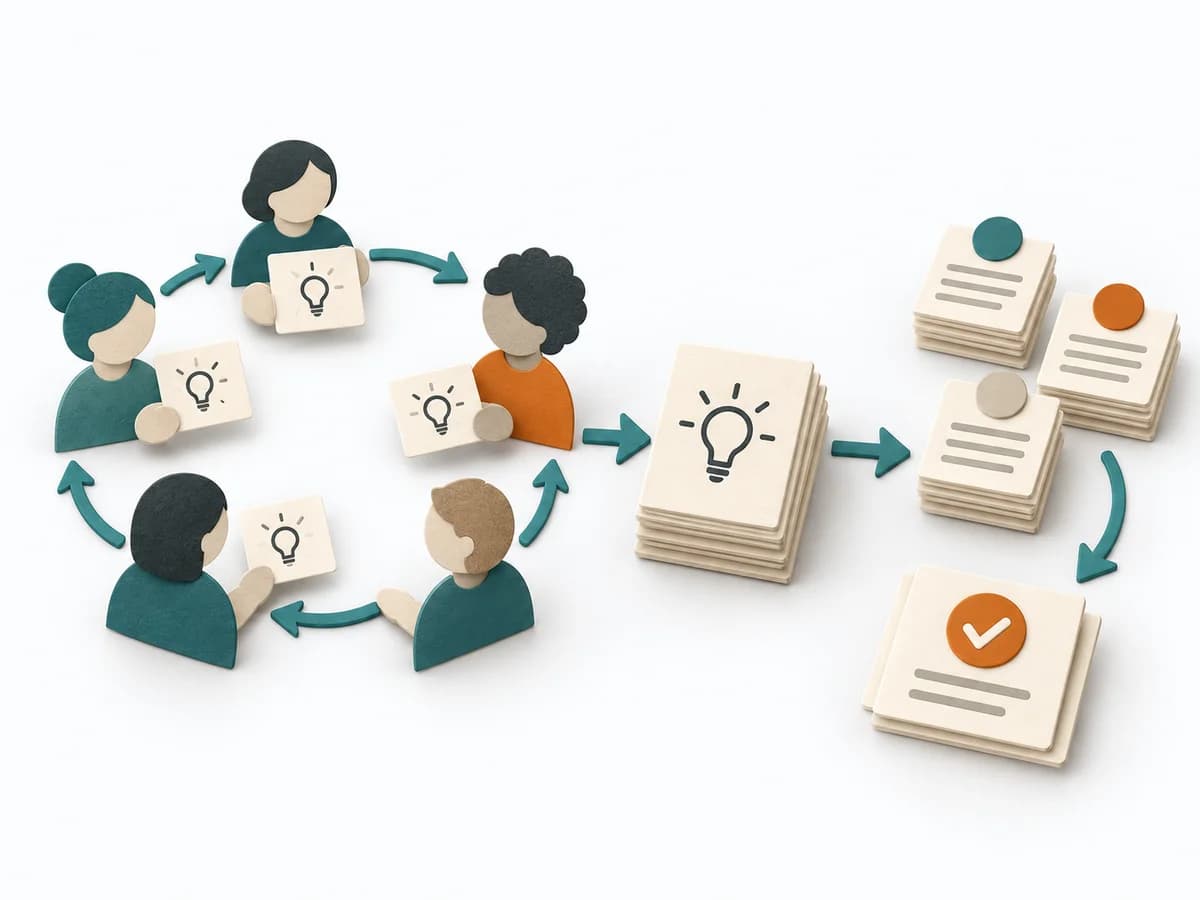 Innovation Round Robin Brainstorming |
|---|---|---|---|---|
Purposedifferent | When teams derive needs only from assumptions and real motives are missing, user interviews give direct access to behavior and meaning. Conversations from the target group's everyday life make patterns, tensions, and open questions solidly visible. | When a topic is still unclear and too many thoughts surface at once, Mind Mapping creates an open surface for ordering them. It makes connections, subtopics, and starting points visible without fixing them too early. | Helps clarify ideas, open questions, and testable next steps in concrete terms. It opens the thinking space, collects ideas, and leads to testable options. The result is captured as a star-shaped question map, question list, and assumption list. | With unevenly distributed speaking time, the method brings every person into the contribution one after another. It prevents early voices from setting the direction while still producing a shared idea space. This makes participation plannable and the team's diversity visible. |
Complexitysame | Low | Low | Low | Low |
Timedifferent | 30–60 min per interview | 15-45 min | 30-60 min | 20-45 min |
Participantsdifferent | 1 participant per interview | 1-10 | 3-10 | 4-10 |
Formatdifferent | Workshop + async | Workshop + async | Workshop + async | Workshop |
Outputdifferent | Interview Notes, Themes, Insight Summary | Mind Map, Topic Clusters, Open Questions | Star-Shaped Question Map, Question List, Assumption List | Idea List, Cluster, Shortlist |
Tagsno overlap | QualitativeResearchCustomerDiscovery | BrainstormingIdeasMappingStructureFacilitation | BrainstormingIdeationWorkshopDiscovery | BrainstormingIdeationFacilitationInclusionCreativity |