View methods side by side.
Choose up to four methods. Add them using the search and share the comparison by copying its link.
| Criterion |  UX Research User Interviews | 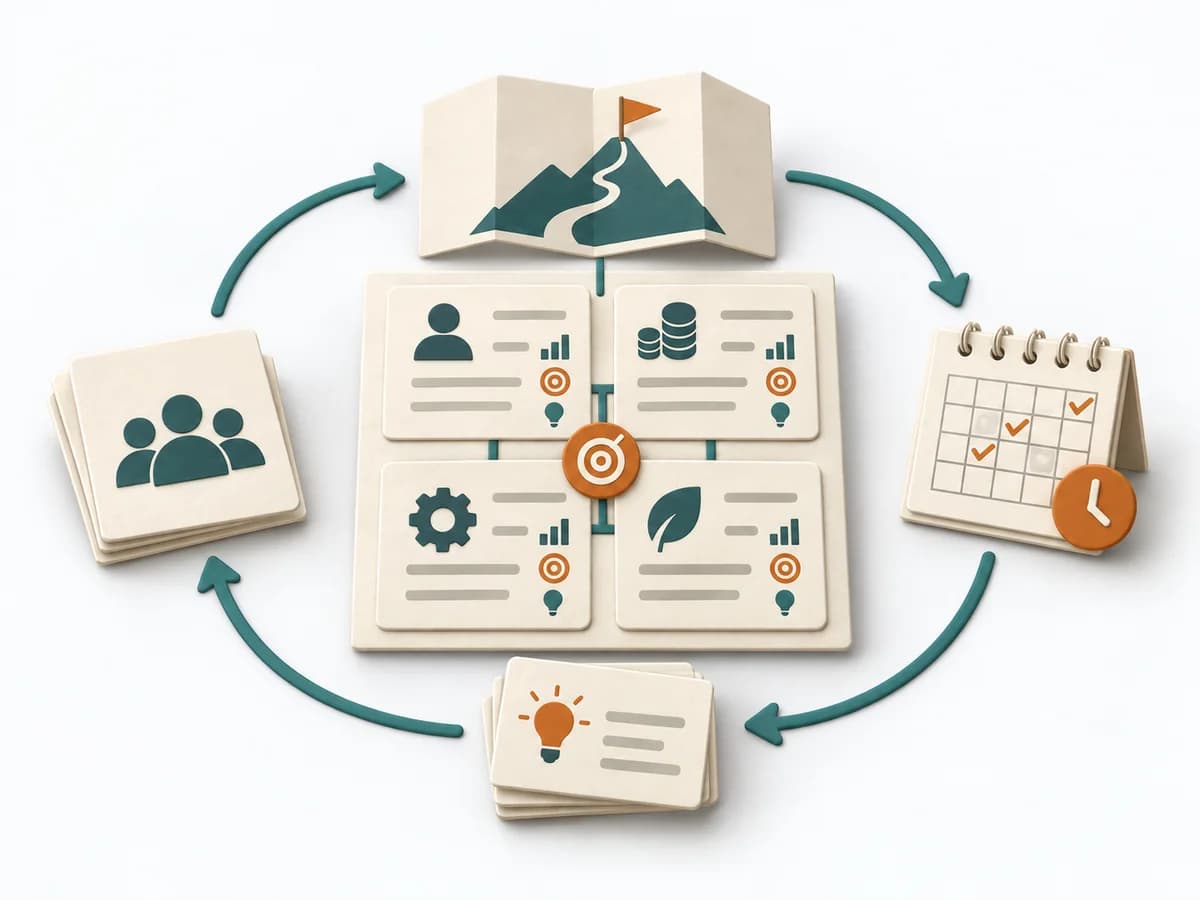 Business Strategy Balanced Scorecard |  UX Research Personas | 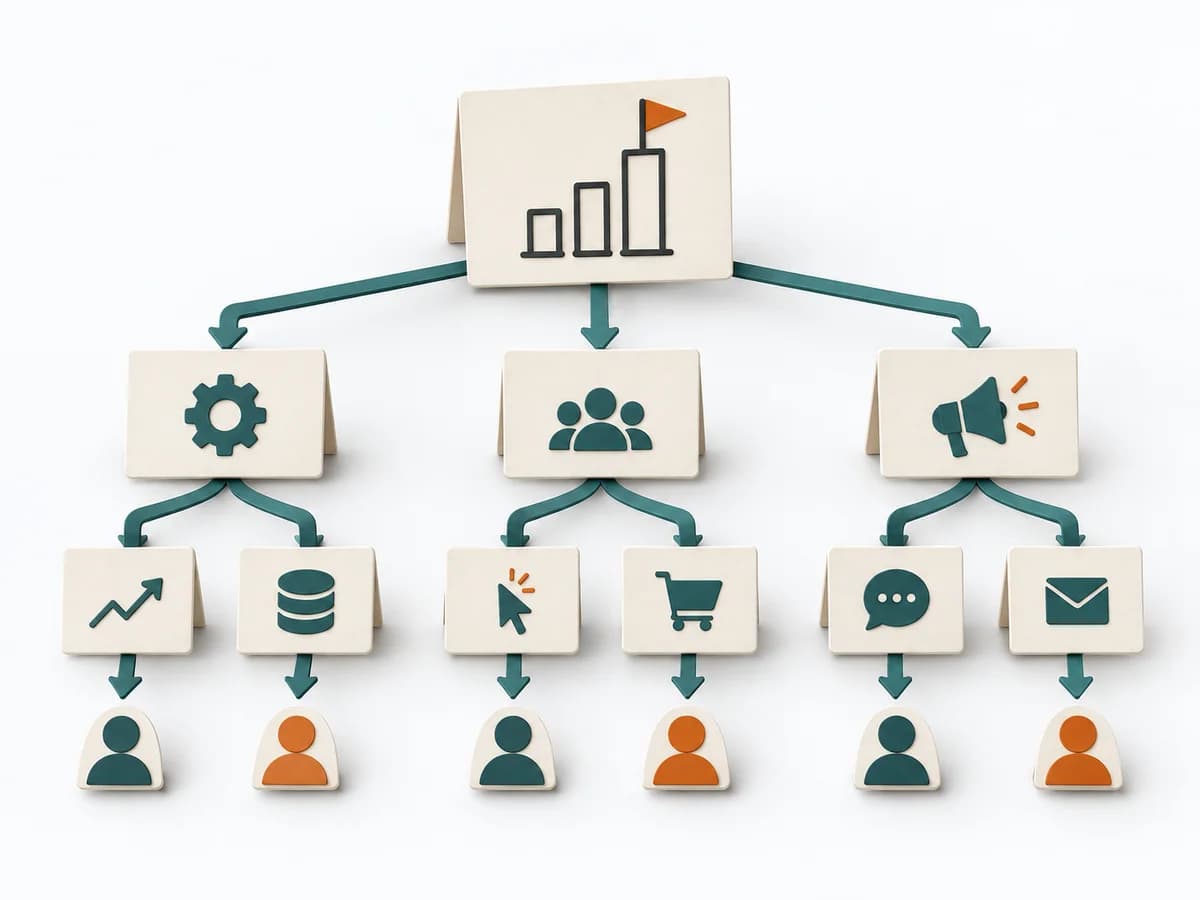 Product Strategy KPI Tree |
|---|---|---|---|---|
Purposedifferent | When teams derive needs only from assumptions and real motives are missing, user interviews give direct access to behavior and meaning. Conversations from the target group's everyday life make patterns, tensions, and open questions solidly visible. | Balanced Scorecard translates strategy into a few interconnected perspectives and metrics. It holds impact, steering, and learning together in daily work instead of narrowing strategy down to financial figures. | When target groups stay too vague and teams talk about the same people differently, personas create a shared, solid picture of usage. Condensed profiles make needs, contexts, and differences tangible enough for decisions. | When metrics across the organization drift apart, it arranges drivers and effects under one shared logic. It connects customer value, product logic, and decision priorities. The result is captured as a KPI tree and owner list. |
Complexitydifferent | Low | High | Medium | Medium |
Timedifferent | 30–60 min per interview | Halber Tag bis mehrere Wochen | 1-3 Tage | 90-180 min initial, dann laufend |
Participantsdifferent | 1 participant per interview | 4-12 | Internes Team | 3-8 |
Formatsame | Workshop + async | Workshop + async | Workshop + async | Workshop + async |
Outputdifferent | Interview Notes, Themes, Insight Summary | Balanced Scorecard, Strategic Measures, Initiative Map | Persona Profiles, Needs Summary, Scenario Notes | KPI Tree, Owner List |
Tagsno overlap | QualitativeResearchCustomerDiscovery | StrategyMetricsExecution | ResearchCustomerSynthesis | MetricsStrategyAlignmentMeasurement |