View methods side by side.
Choose up to four methods. Add them using the search and share the comparison by copying its link.
| Criterion | 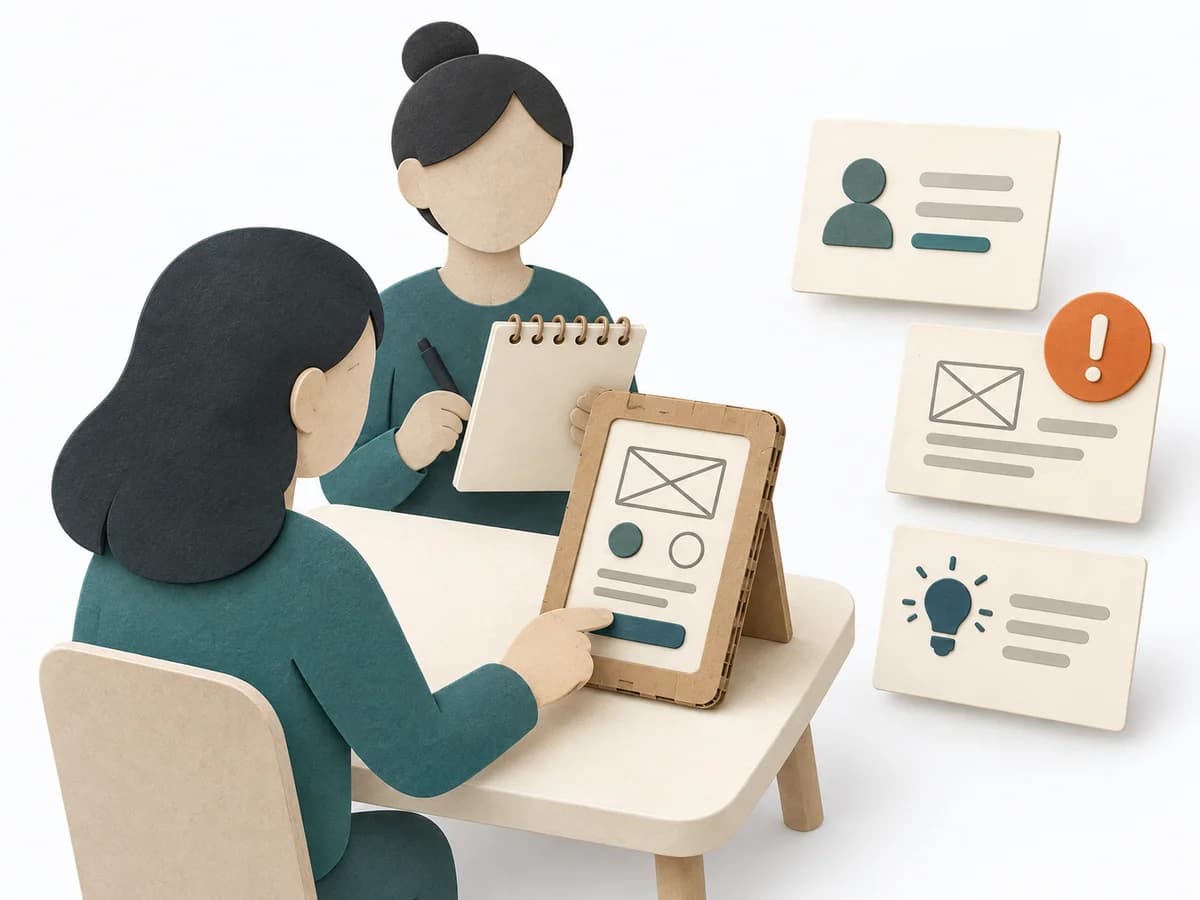 UX Research Usability Testing | 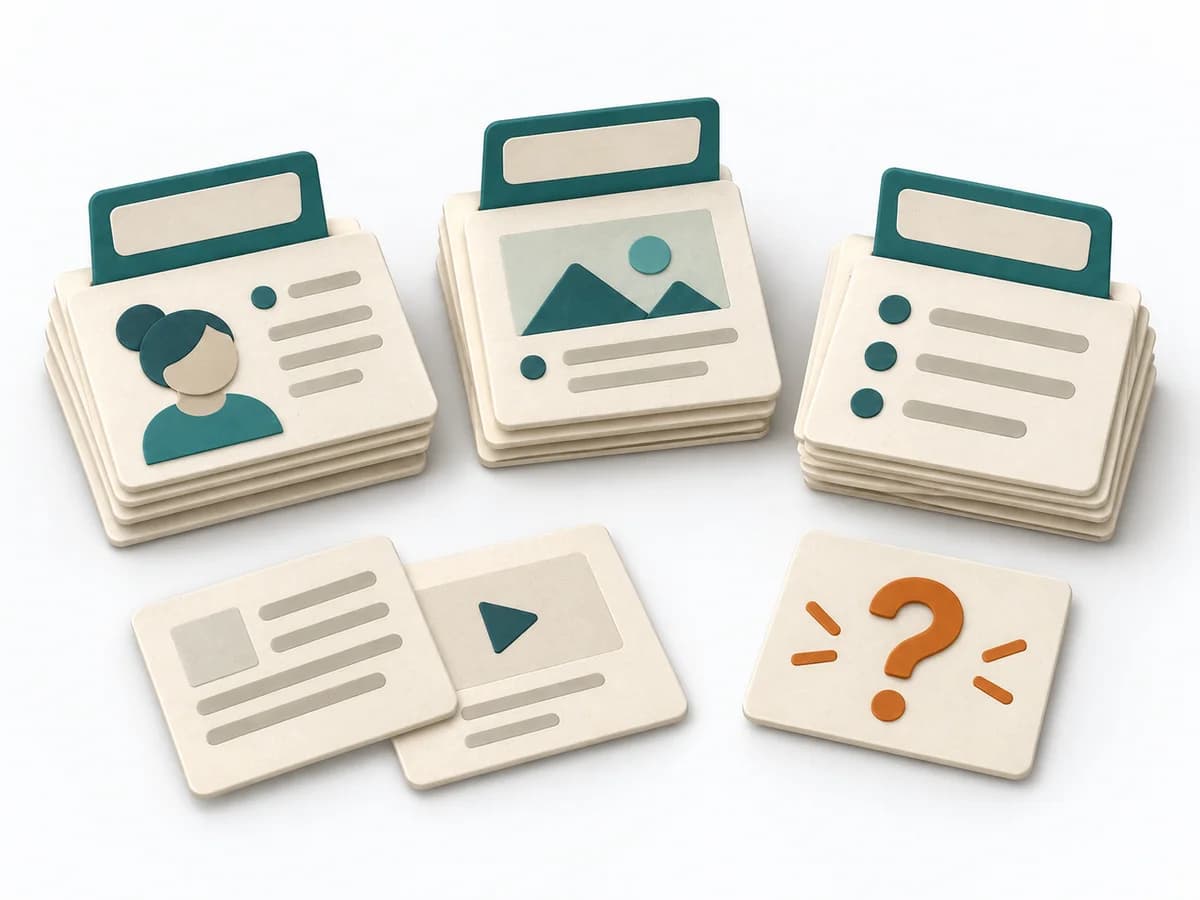 UX Research Card Sorting | 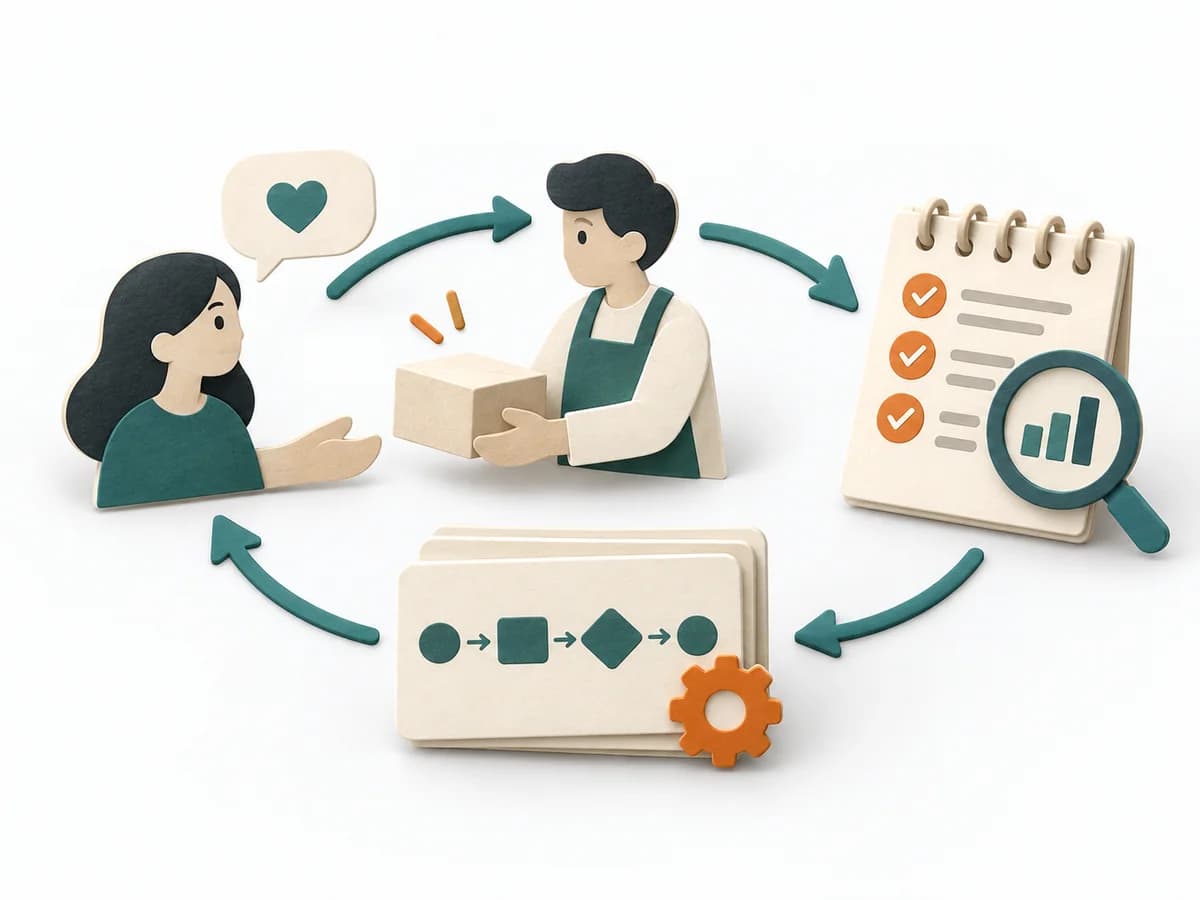 Product Discovery Concierge MVP | 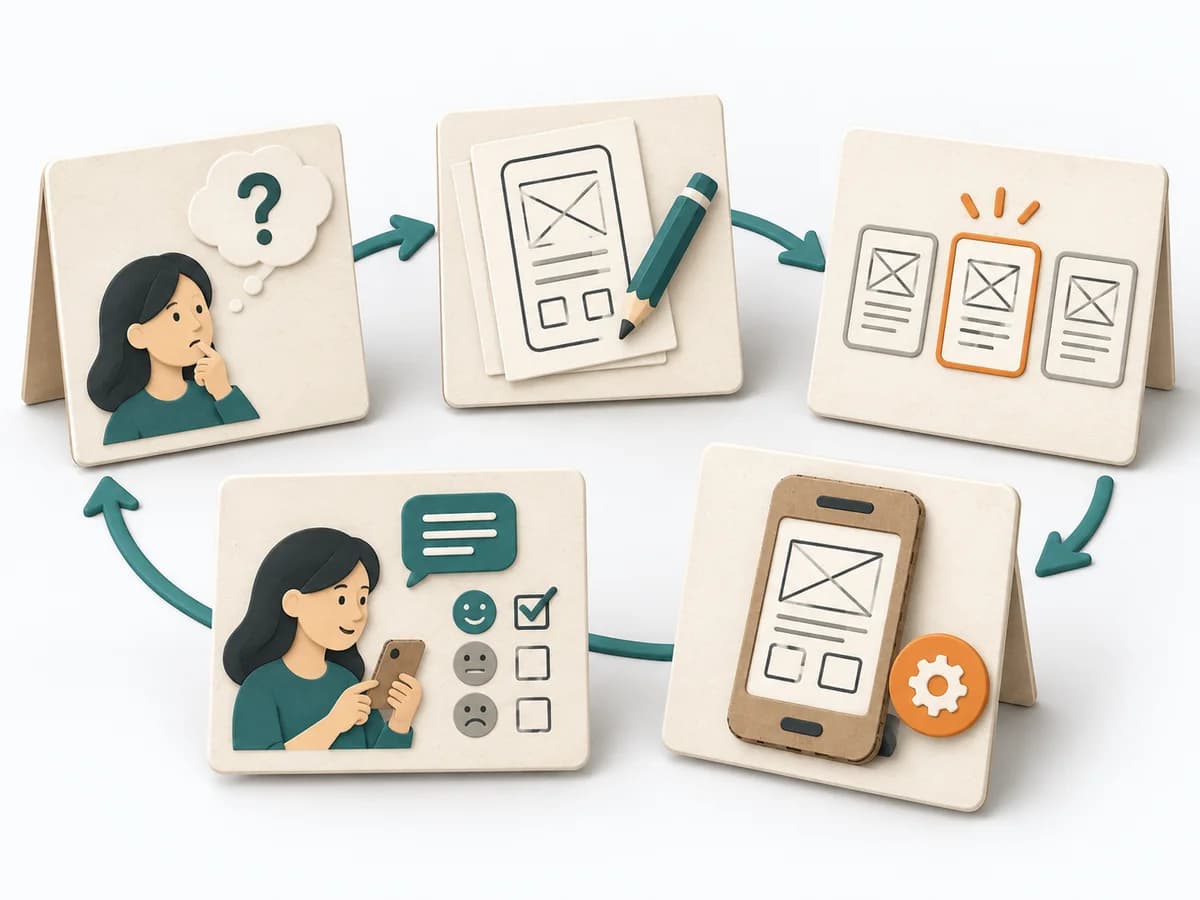 Innovation Design Sprint |
|---|---|---|---|---|
Purposedifferent | When a product is built but people get stuck on tasks, usability testing shows the friction at concrete points. Observed use instead of self-report makes visible where orientation, understanding, or interaction breaks down. | When content only makes sense internally and users can't find the structure again, card sorting exposes their mental order. Terms, groups, and naming are then aligned with the target group's expectations. | When an idea can first fail or grow through genuine hands-on support, it relies on manual work instead of automation. It shows whether user value holds up even under manual execution. | When the product question is unclear and time pressure is high, the method takes a team from an open idea to a testable solution. It connects problem understanding, decision, and learning in one compact format, lowering the risk of spending a lot of energy on a mere guess. |
Complexitydifferent | Medium | Low | Medium | High |
Timedifferent | 1-2 h je Session | 20-45 min | 1-4 Wochen | 4-5 Tage |
Participantsdifferent | Based on research question | Based on research question | 3-10 Kunden | 5-8 |
Formatdifferent | Workshop + async | Workshop + async | Workshop + async | Workshop |
Outputdifferent | Usability Issues, Severity List, Recommendations | Content groups, Label set, IA hypotheses | Concierge Learnings, Service Blueprint, MVP Risks | Prototype, Test Findings, Decision Rationale |
Tagsno overlap | ValidationUXPrototype | Information architectureNavigationStructure | MVPValidationServiceDiscovery | Design sprintPrototypeValidationInnovation |