View methods side by side.
Choose up to four methods. Add them using the search and share the comparison by copying its link.
| Criterion |  UX Research Usability Testing | 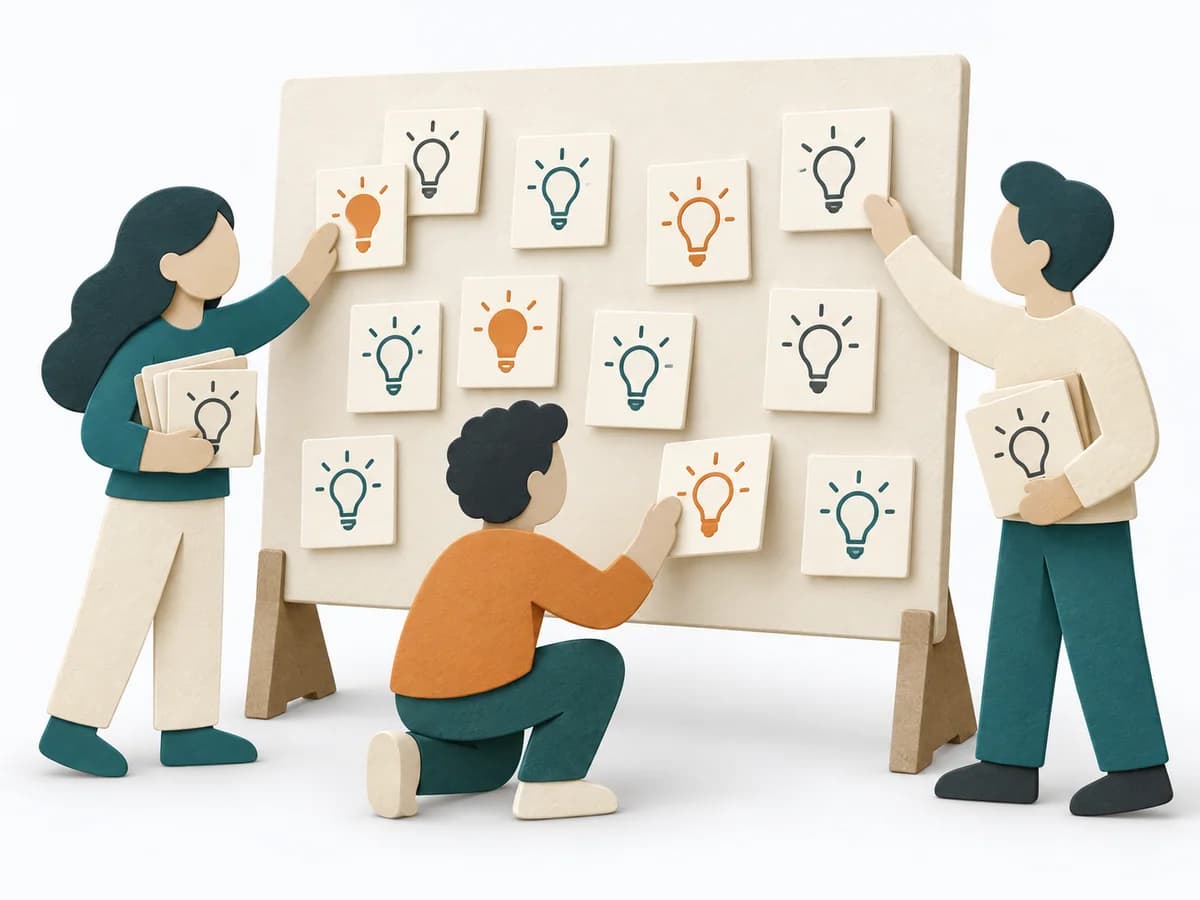 Innovation Brainstorming | 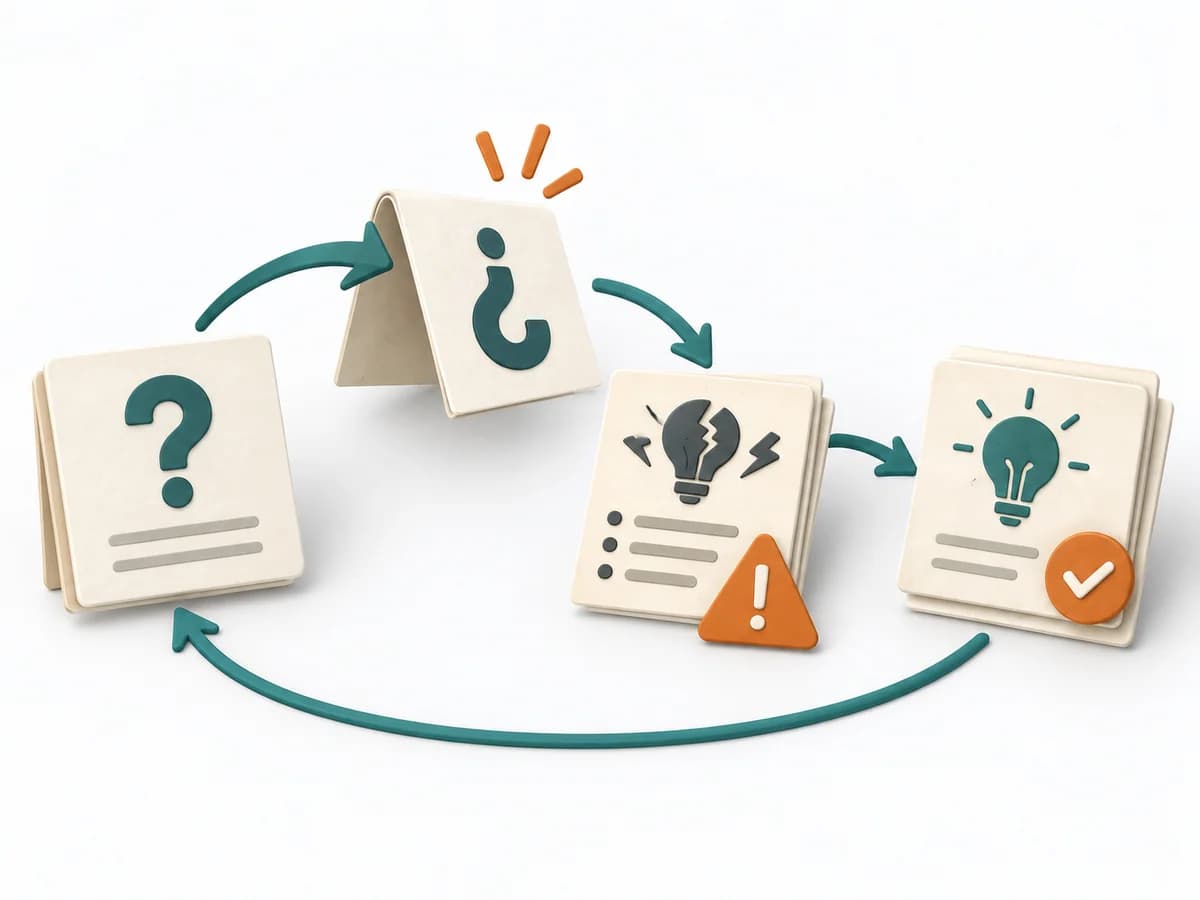 Innovation Reverse Brainstorming | 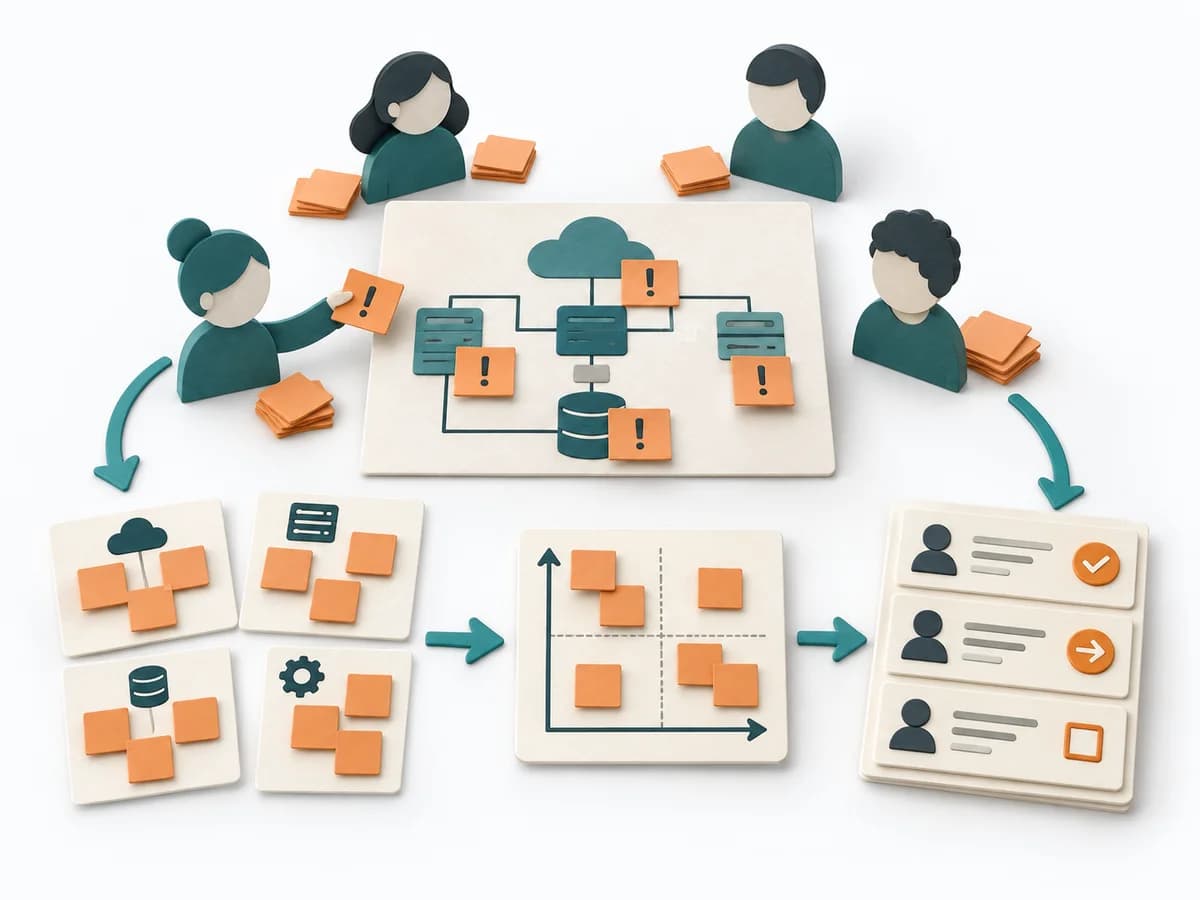 Architecture Risk Storming |
|---|---|---|---|---|
Purposedifferent | When a product is built but people get stuck on tasks, usability testing shows the friction at concrete points. Observed use instead of self-report makes visible where orientation, understanding, or interaction breaks down. | When a team faces an open question with many obvious directions, the method first creates breadth instead of premature commitment. It separates idea flow from evaluation and makes lines of thought visible, creating a pool for selection and further development. | For persistent errors or blockages, the method shifts the view to the opposite of the desired effect. It exposes the mechanics of failure and makes hidden causes easier to grasp. This makes improvement more concrete and the problem clearer. | Helps clarify architecture context, options, and consequences in concrete terms. It organizes technical context, alternatives, and consequences. The result is captured as an Annotated Diagram, a Prioritized Risk List, and an Action Backlog. |
Complexitydifferent | Medium | Low | Low | Low |
Timedifferent | 1-2 h je Session | 30-60 min | 30-60 min | 60-90 min |
Participantsdifferent | Based on research question | 4-12 | 3-12 | 4-12 |
Formatdifferent | Workshop + async | Workshop | Workshop | Workshop |
Outputdifferent | Usability Issues, Severity List, Recommendations | Idea pool, Theme clusters, Shortlist | Reverse Ideas, Risk Themes, Solution Ideas | Annotated Diagram, Prioritized Risk List, Action Backlog |
Tagsno overlap | ValidationUXPrototype | BrainstormingIdeationCreativityWorkshopDivergence | BrainstormingIdeationCreativityRisk | RiskArchitectureWorkshopValidation |