View methods side by side.
Choose up to four methods. Add them using the search and share the comparison by copying its link.
| Criterion | 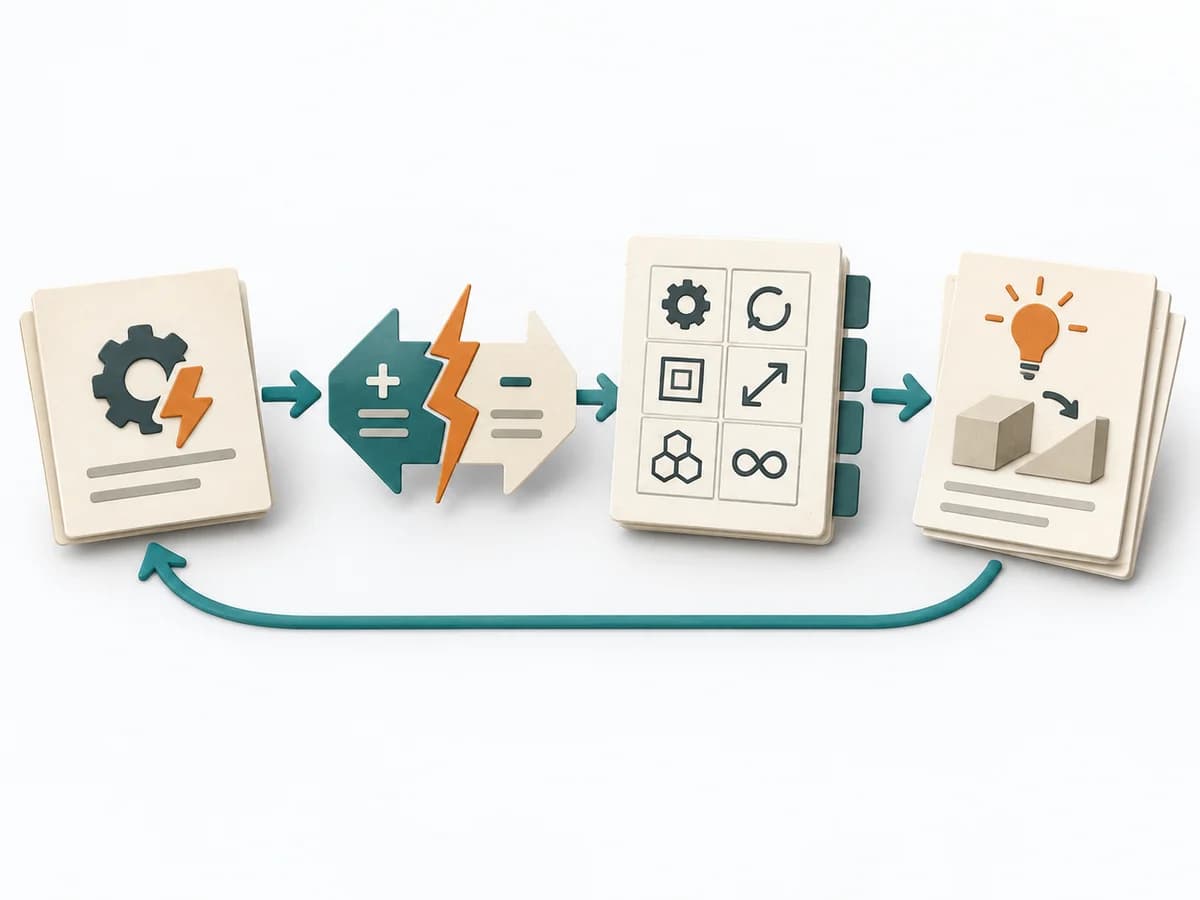 Innovation TRIZ | 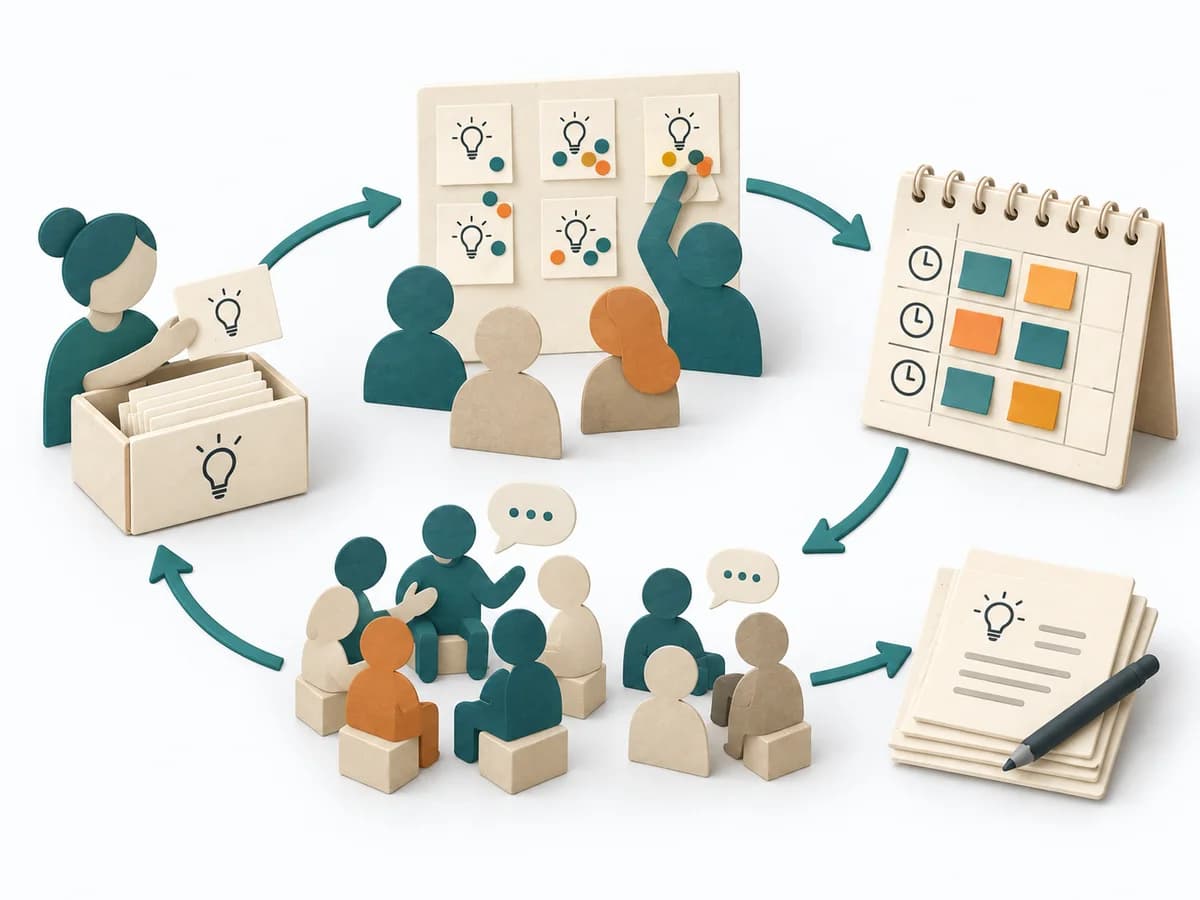 Facilitation Barcamp |  Decision Making Force Field Analysis |  Facilitation Alignment Mapping |
|---|---|---|---|---|
Purposedifferent | For technical contradictions or trade-offs, the method looks for solutions that resolve opposing requirements at the same time. It translates limits into an explicit picture of conflict that becomes workable. This produces not just compromises but more elegant principles. | When many people can contribute knowledge and the flow should stay open, Barcamp provides a framework for self-organized sessions. The format channels energy without defining the content too narrowly in advance. | In change initiatives, supporting and restraining forces sit at the table at the same time. Force Field Analysis makes these tensions explicit and shows where change can be pushed forward by strengthening or relieving. | When several people work toward one goal but hold different mental maps, Alignment Mapping makes the discrepancies visible. It arranges goals, assumptions, and priorities so shared direction becomes verifiable. |
Complexitydifferent | High | Medium | Low | Medium |
Timedifferent | 1-4 h | Halber Tag bis 2 Tage | 45-90 min | 1-2 h |
Participantsdifferent | 2-8 | 15-200 | 3-12 | 4-12 |
Formatdifferent | Workshop + async | Workshop | Workshop | Workshop |
Outputdifferent | Contradiction Statement, Inventive Principles, Solution Concepts | Session Board, Session Notes, Community Learnings | Force Field Map, Change Levers, Risk Notes | Alignment Map, Open Issues, Decision Questions |
Tagsno overlap | InnovationProblem solvingContradictionsCreativity | FacilitationLarge groupLearning | ChangeDecisionStrategy | AlignmentStakeholdersStrategyFacilitation |