View methods side by side.
Choose up to four methods. Add them using the search and share the comparison by copying its link.
| Criterion | 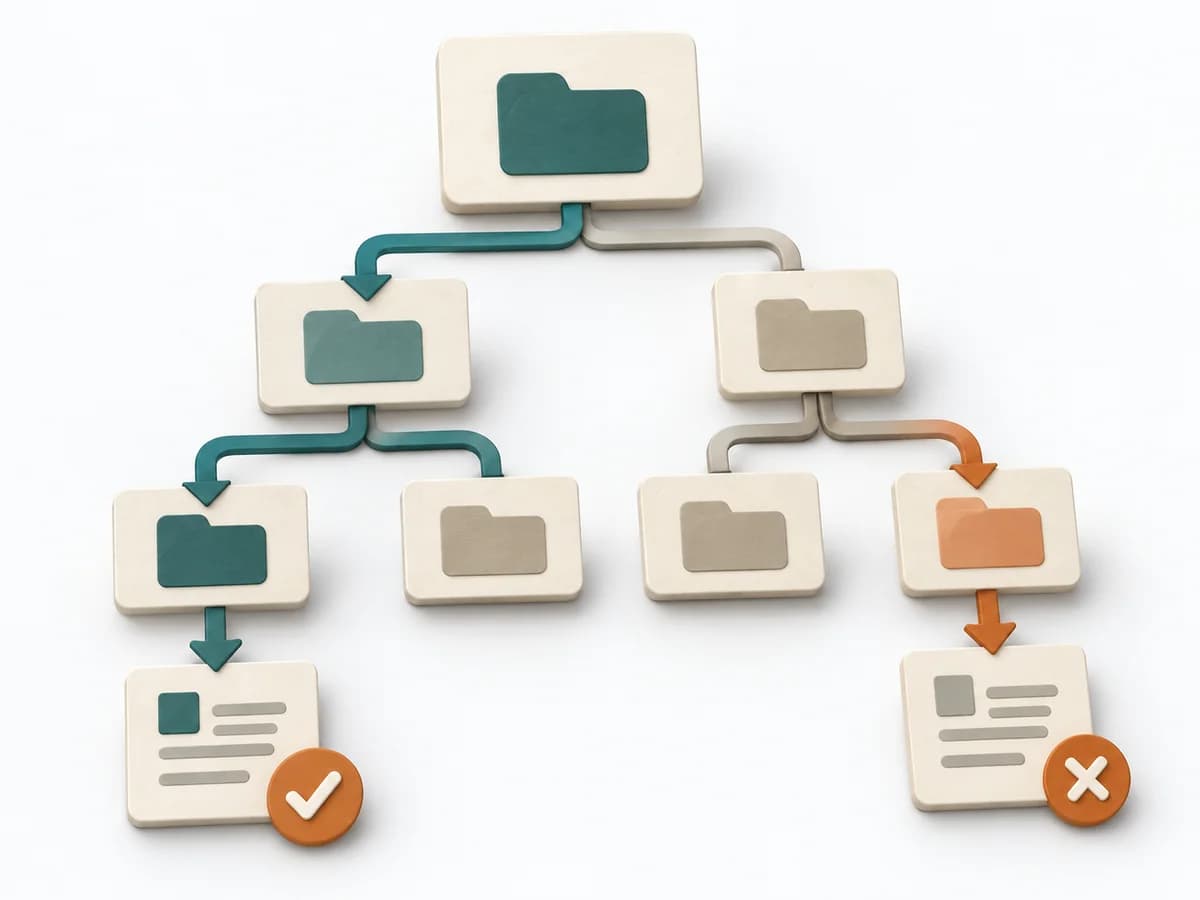 UX Research Tree Testing | 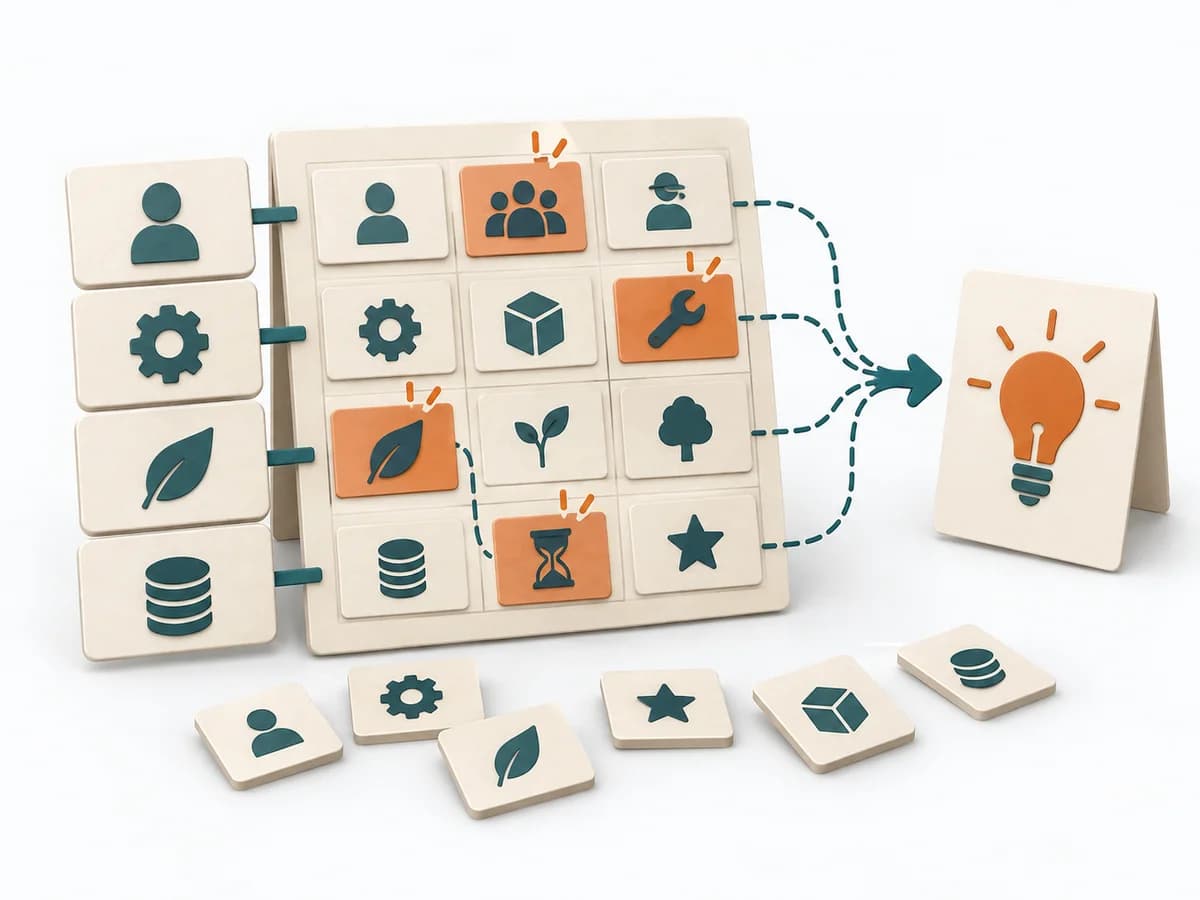 Innovation Morphological Analysis |  Innovation Design Sprint |  Innovation Brainstorming |
|---|---|---|---|---|
Purposedifferent | When a navigation exists but search paths still fail, tree testing checks findability without visual distraction. The method shows whether labels, levels, and paths really lead to the intended destination. | For a search for solutions with many degrees of freedom, a grid emerges for systematic combinations. The method separates features, variants, and exclusion criteria, so the space gets explored deliberately. | When the product question is unclear and time pressure is high, the method takes a team from an open idea to a testable solution. It connects problem understanding, decision, and learning in one compact format, lowering the risk of spending a lot of energy on a mere guess. | When a team faces an open question with many obvious directions, the method first creates breadth instead of premature commitment. It separates idea flow from evaluation and makes lines of thought visible, creating a pool for selection and further development. |
Complexitydifferent | Medium | Medium | High | Low |
Timedifferent | 1-2 Tage | 1-3 h | 4-5 Tage | 30-60 min |
Participantsdifferent | Based on research question | 2-8 | 5-8 | 4-12 |
Formatdifferent | Async | Workshop + async | Workshop | Workshop |
Outputdifferent | Findability Metrics, Path Analysis, Revised IA | Morphological Box, Concept Combinations, Idea Shortlist | Prototype, Test Findings, Decision Rationale | Idea pool, Theme clusters, Shortlist |
Tagsno overlap | Information architectureNavigationFindability | IdeationInnovationCreativity | Design sprintPrototypeValidationInnovation | BrainstormingIdeationCreativityWorkshopDivergence |