View methods side by side.
Choose up to four methods. Add them using the search and share the comparison by copying its link.
| Criterion | 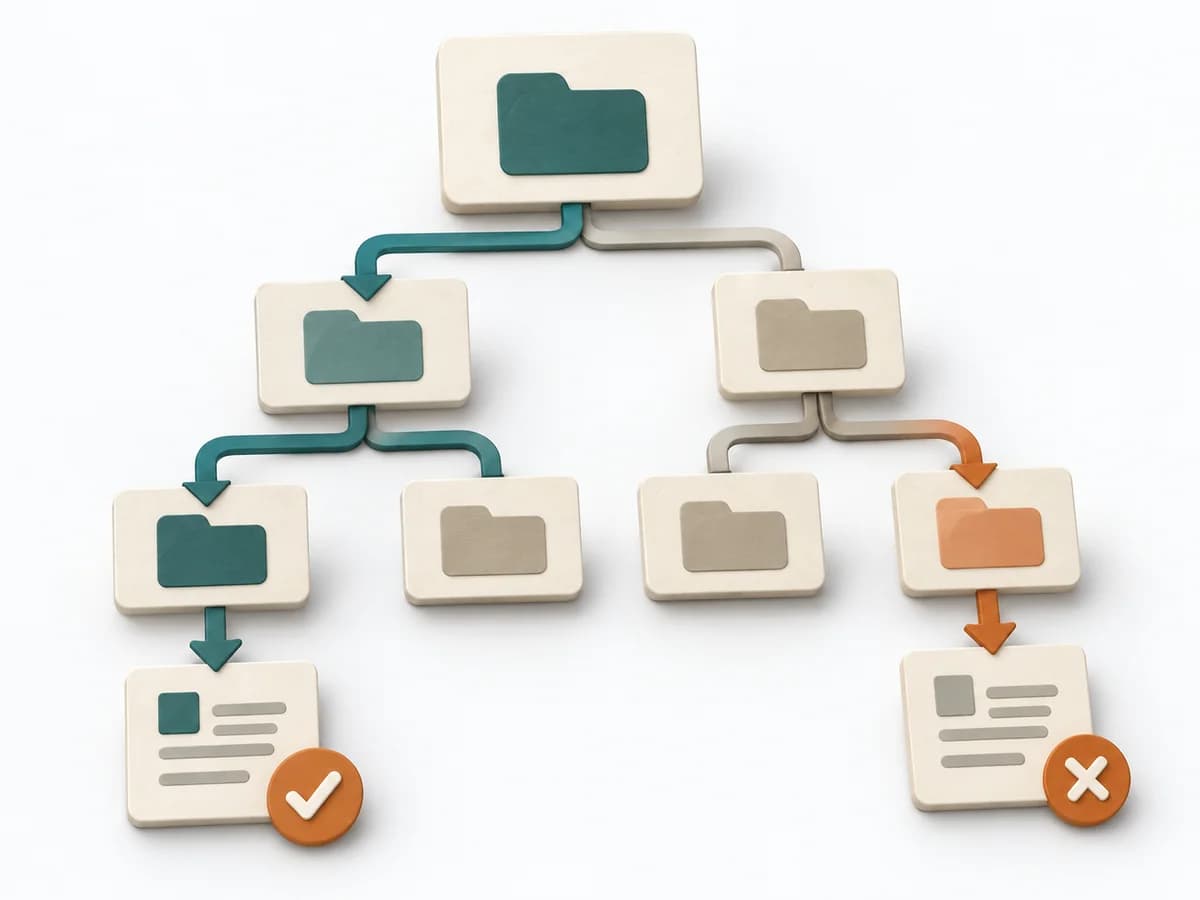 UX Research Tree Testing |  Architecture arc42 |  Architecture Architecture Decision Record |  UX Research Card Sorting |
|---|---|---|---|---|
Purposedifferent | When a navigation exists but search paths still fail, tree testing checks findability without visual distraction. The method shows whether labels, levels, and paths really lead to the intended destination. | arc42 structures architecture knowledge so teams can document system, decisions, and risks consistently. The template builds a living understanding of the architecture instead of scattered notes. | An ADR permanently records an architecture decision with context, trade-offs, and consequence. It creates continuity for later changes because the decision path stays traceable. | When content only makes sense internally and users can't find the structure again, card sorting exposes their mental order. Terms, groups, and naming are then aligned with the target group's expectations. |
Complexitydifferent | Medium | Low | Low | Low |
Timedifferent | 1-2 Tage | 1-2 Tage | 15-45 min | 20-45 min |
Participantsdifferent | Based on research question | 1-4 | 1-3 | Based on research question |
Formatdifferent | Async | Workshop + async | Async | Workshop + async |
Outputdifferent | Findability Metrics, Path Analysis, Revised IA | Architecture Document, Context View, Runtime View, Deployment View | ADR File, Decision Log, Rationale | Content groups, Label set, IA hypotheses |
Tagsno overlap | Information architectureNavigationFindability | ArchitectureDocumentationCommunication | ArchitectureRationaleDocumentationGovernance | Information architectureNavigationStructure |