View methods side by side.
Choose up to four methods. Add them using the search and share the comparison by copying its link.
| Criterion | 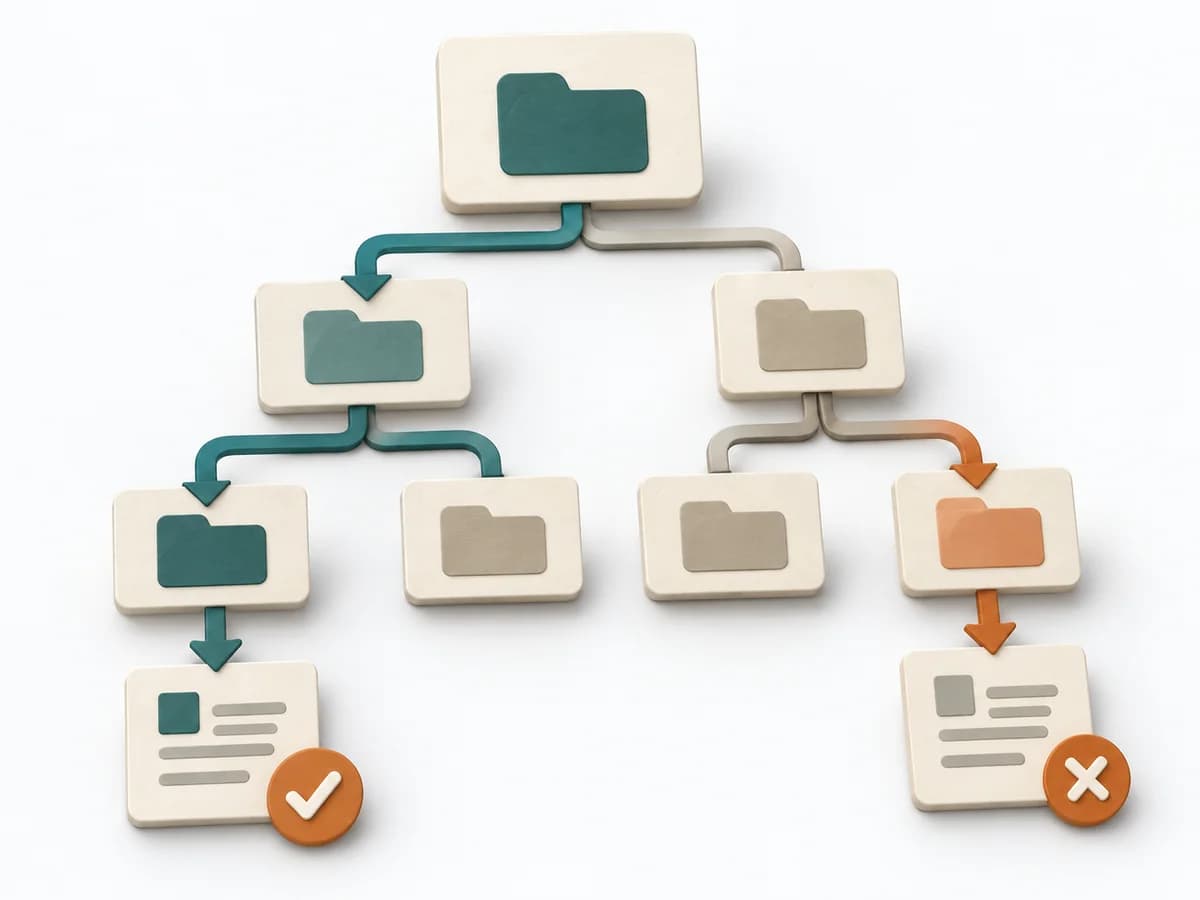 UX Research Tree Testing |  Operations After-Action Review |  UX Research Card Sorting |  Operations Process Mapping |
|---|---|---|---|---|
Purposedifferent | When a navigation exists but search paths still fail, tree testing checks findability without visual distraction. The method shows whether labels, levels, and paths really lead to the intended destination. | After missions or project phases with unclear outcomes, the method makes visible what actually happened and what can be learned from it. It separates course, effect, and causes so experience turns into solid improvement. | When content only makes sense internally and users can't find the structure again, card sorting exposes their mental order. Terms, groups, and naming are then aligned with the target group's expectations. | With a confusing workflow that has many handoffs, the method makes the actual process visible. It shows where work is passed on, delayed, or duplicated, so improvement targets the right spots. |
Complexitydifferent | Medium | Low | Low | Medium |
Timedifferent | 1-2 Tage | 20-45 min | 20-45 min | 1-3 h |
Participantsdifferent | Based on research question | 3-12 | Based on research question | 3-10 |
Formatdifferent | Async | Workshop + async | Workshop + async | Workshop |
Outputdifferent | Findability Metrics, Path Analysis, Revised IA | Lessons learned, Action items, Event summary | Content groups, Label set, IA hypotheses | Process Map, Handoff List, Improvement Backlog |
Tagsno overlap | Information architectureNavigationFindability | LearningOperationsImprovement | Information architectureNavigationStructure | ProcessOperationsImprovement |