View methods side by side.
Choose up to four methods. Add them using the search and share the comparison by copying its link.
| Criterion | 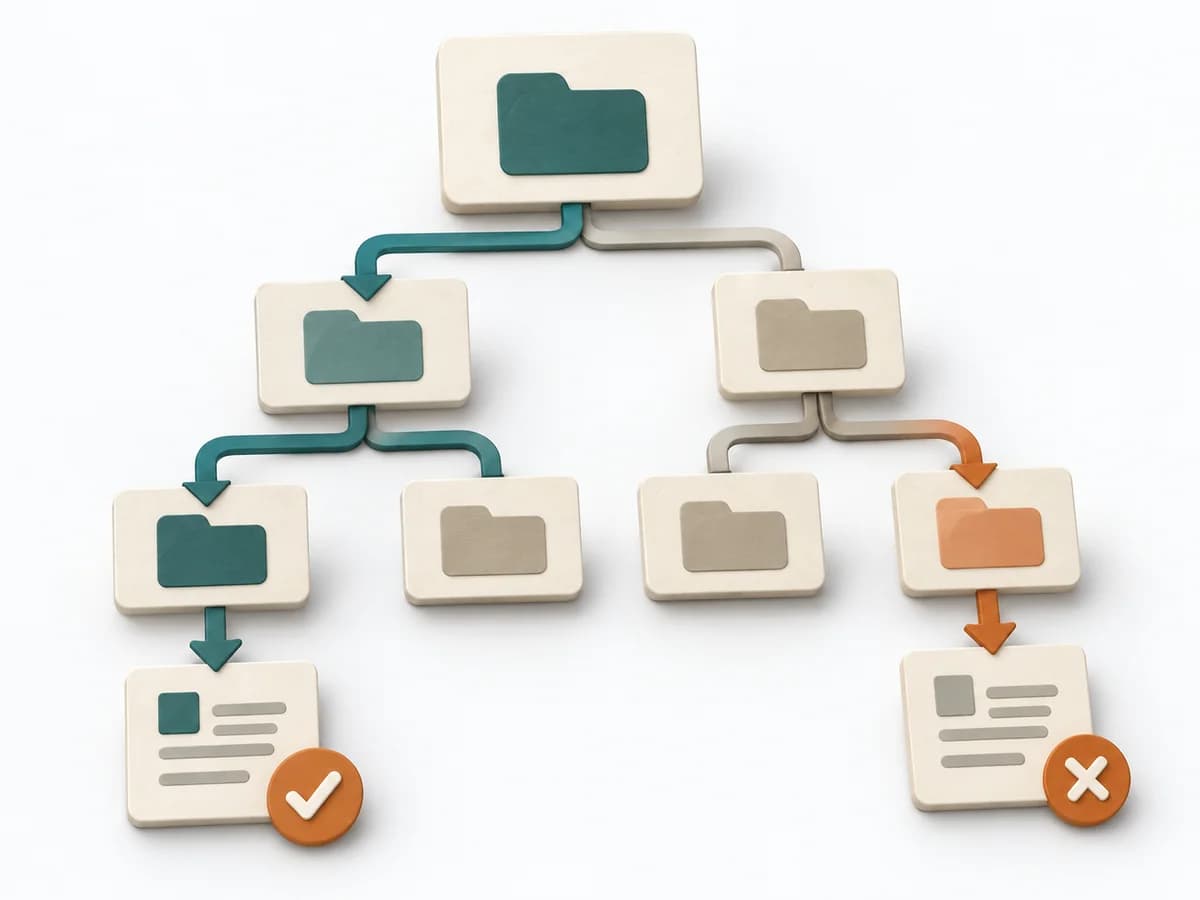 UX Research Tree Testing | 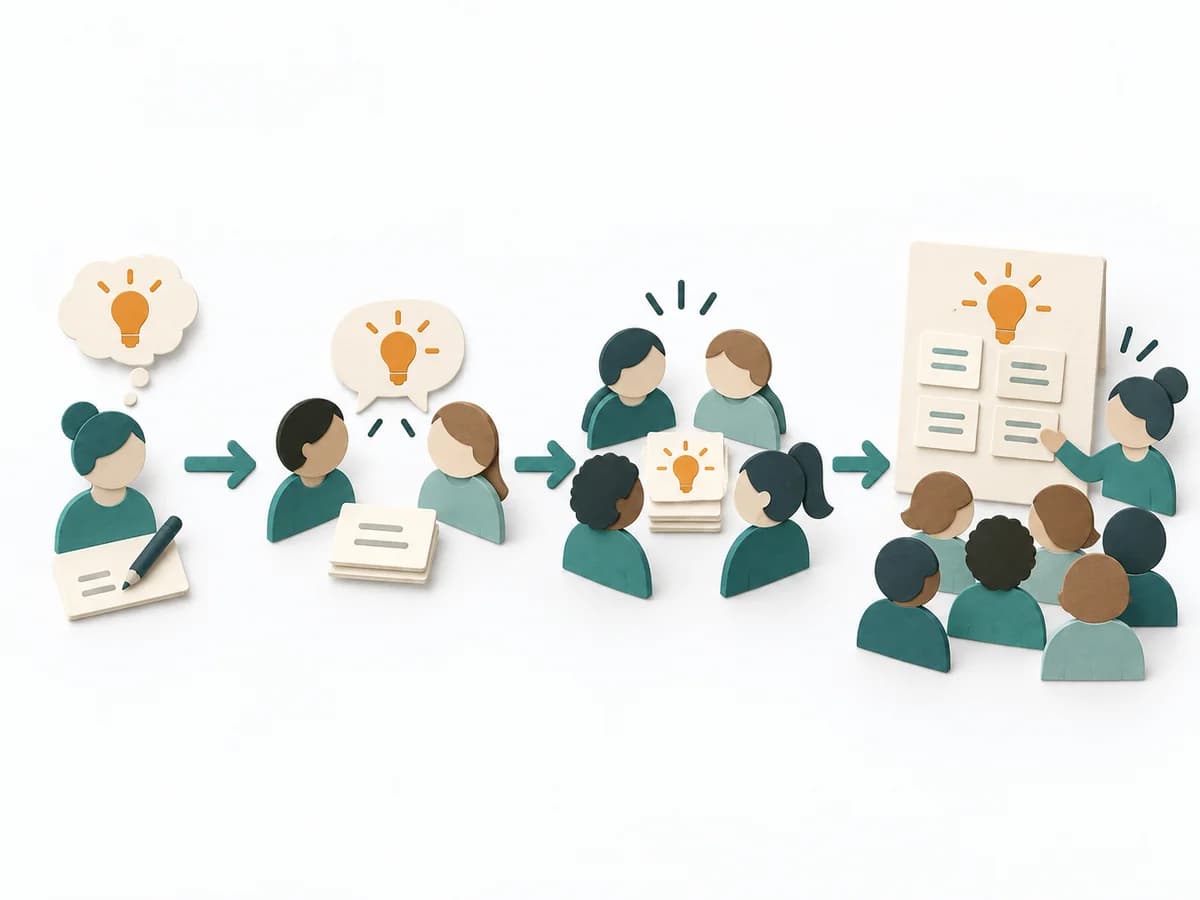 Facilitation 1-2-4-All | 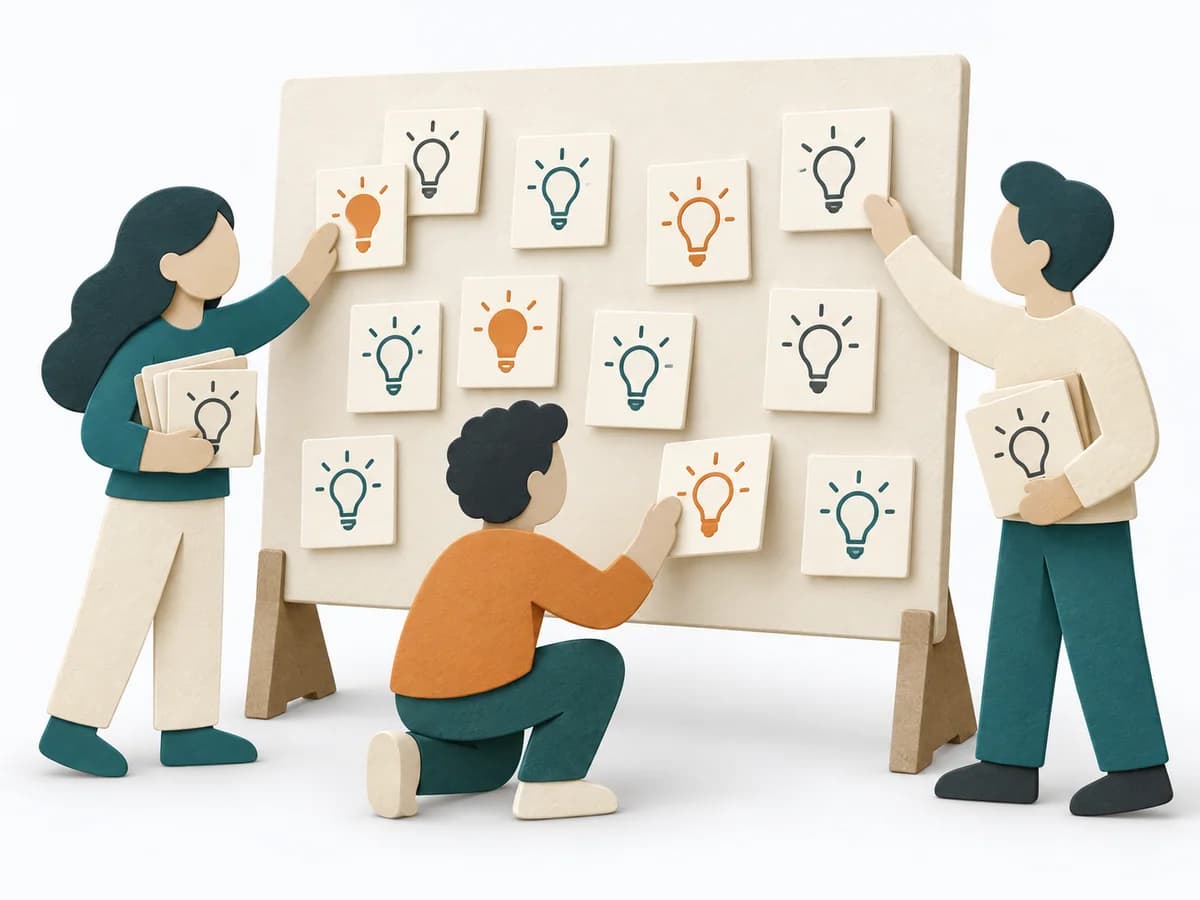 Innovation Brainstorming |  Innovation Rapid Ideation |
|---|---|---|---|---|
Purposedifferent | When a navigation exists but search paths still fail, tree testing checks findability without visual distraction. The method shows whether labels, levels, and paths really lead to the intended destination. | When many people in a group too rarely get to speak, 1-2-4-All distributes thinking time more fairly. The format builds participation step by step and makes quiet or still-unformed thoughts usable faster. | When a team faces an open question with many obvious directions, the method first creates breadth instead of premature commitment. It separates idea flow from evaluation and makes lines of thought visible, creating a pool for selection and further development. | When a decision needs to be prepared quickly, the method generates many solution-close variants in a short time. It deliberately relies on pace to undercut self-censorship and perfectionism. This quickly produces a usable field for prioritization and further work. |
Complexitydifferent | Medium | Low | Low | Low |
Timedifferent | 1-2 Tage | 10-20 min | 30-60 min | 5-20 min |
Participantsdifferent | Based on research question | 4-100+ | 4-12 | 1-20 |
Formatdifferent | Async | Workshop | Workshop | Workshop + async |
Outputdifferent | Findability Metrics, Path Analysis, Revised IA | Idea List, Shared Insights, Emergent Themes | Idea pool, Theme clusters, Shortlist | Ideenpool, Roh-Shortlist, Cluster |
Tagsno overlap | Information architectureNavigationFindability | FacilitationInclusionIdeation | BrainstormingIdeationCreativityWorkshopDivergence | BrainstormingIdeationDivergenceSpeed |