View methods side by side.
Choose up to four methods. Add them using the search and share the comparison by copying its link.
| Criterion | 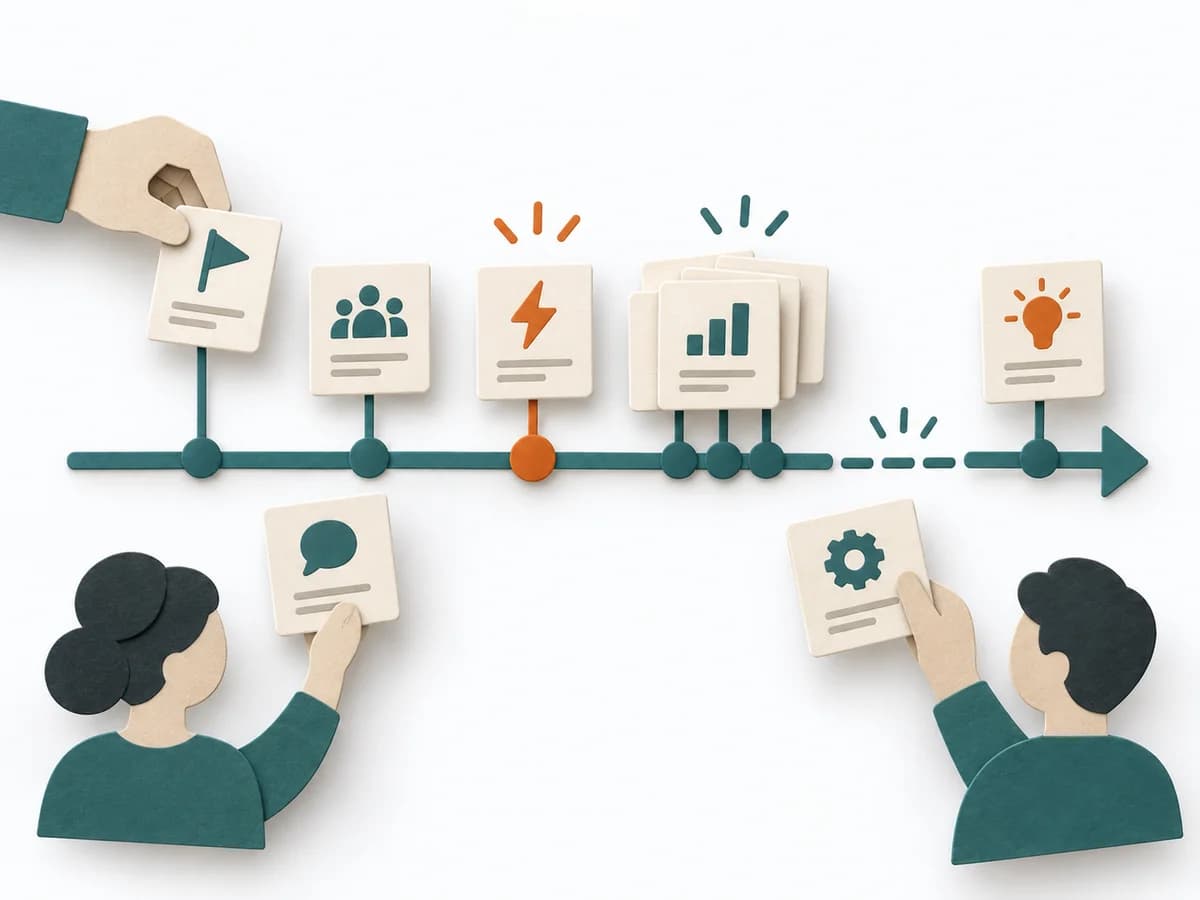 Facilitation Timeline | 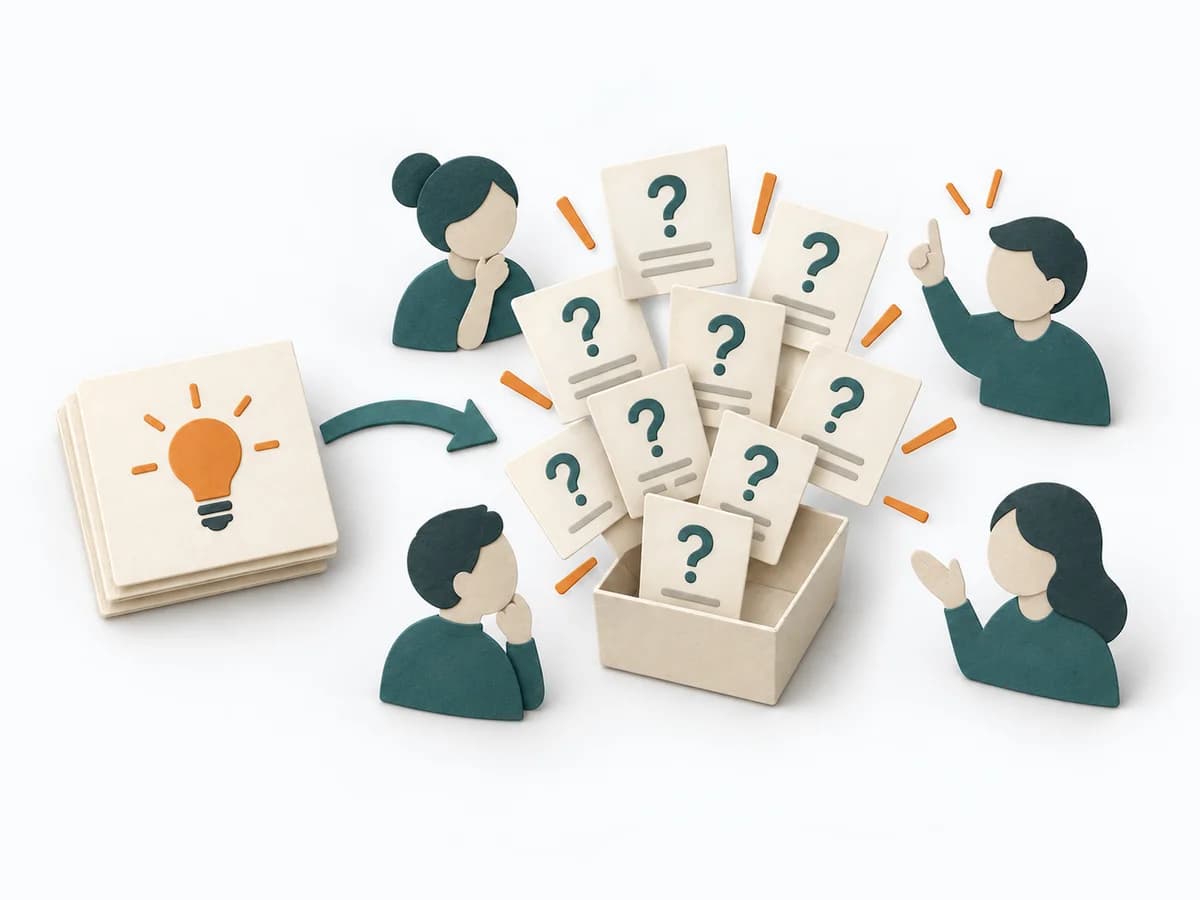 Facilitation Question Burst |  Facilitation Mind Mapping | 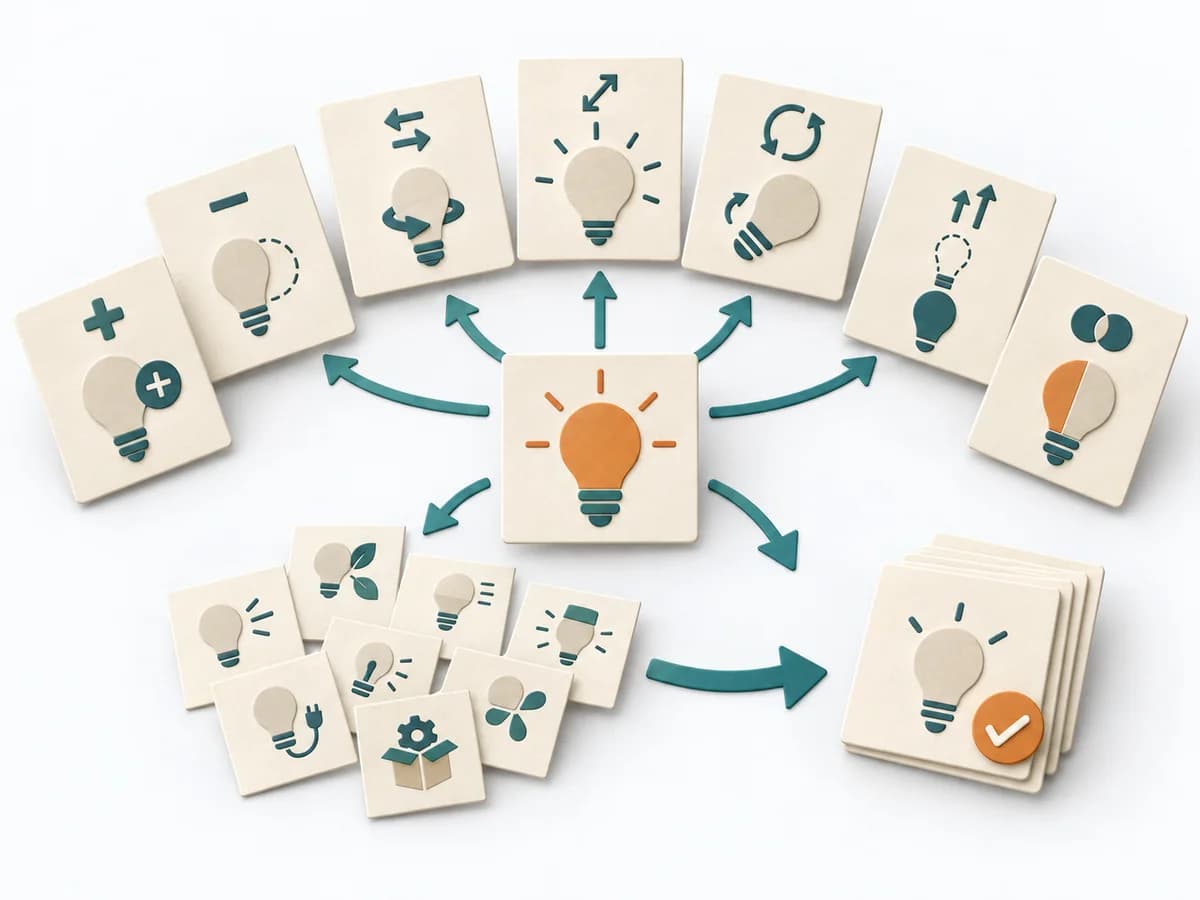 Innovation SCAMPER |
|---|---|---|---|---|
Purposedifferent | When a project, incident, or change process is only remembered in fragments, Timeline brings the sequence back into a readable form. It makes turning points, precursors, and after-effects recognizable over the course of time. | When a problem gets covered up too quickly with answers, Question Burst puts the better question at the center. The format opens the thinking space before the group commits to an interpretation. | When a topic is still unclear and too many thoughts surface at once, Mind Mapping creates an open surface for ordering them. It makes connections, subtopics, and starting points visible without fixing them too early. | For an existing solution under pressure to change, the method deliberately opens space for systematic variants. It directs attention to rebuilding, combining, and repurposing rather than only new basic ideas. This produces concrete evolution paths for products, offerings, or workflows. |
Complexitysame | Low | Low | Low | Low |
Timedifferent | 30-90 min | 15-30 min | 15-45 min | 30-60 min |
Participantsdifferent | 2-12 | 2-8 | 1-10 | 2-10 |
Formatdifferent | Workshop + async | Workshop | Workshop + async | Workshop |
Outputdifferent | Timeline, Milestones, Insight Notes | Question List, Reframed Challenge, Learning Prompts | Mind Map, Topic Clusters, Open Questions | SCAMPER Idea List, Concept Shortlist, Variation Notes |
Tagsno overlap | TimelineFacilitationSequence | QuestionsReframingFacilitationSensemaking | BrainstormingIdeasMappingStructureFacilitation | BrainstormingIdeationCreativityReframingInnovation |