View methods side by side.
Choose up to four methods. Add them using the search and share the comparison by copying its link.
| Criterion | 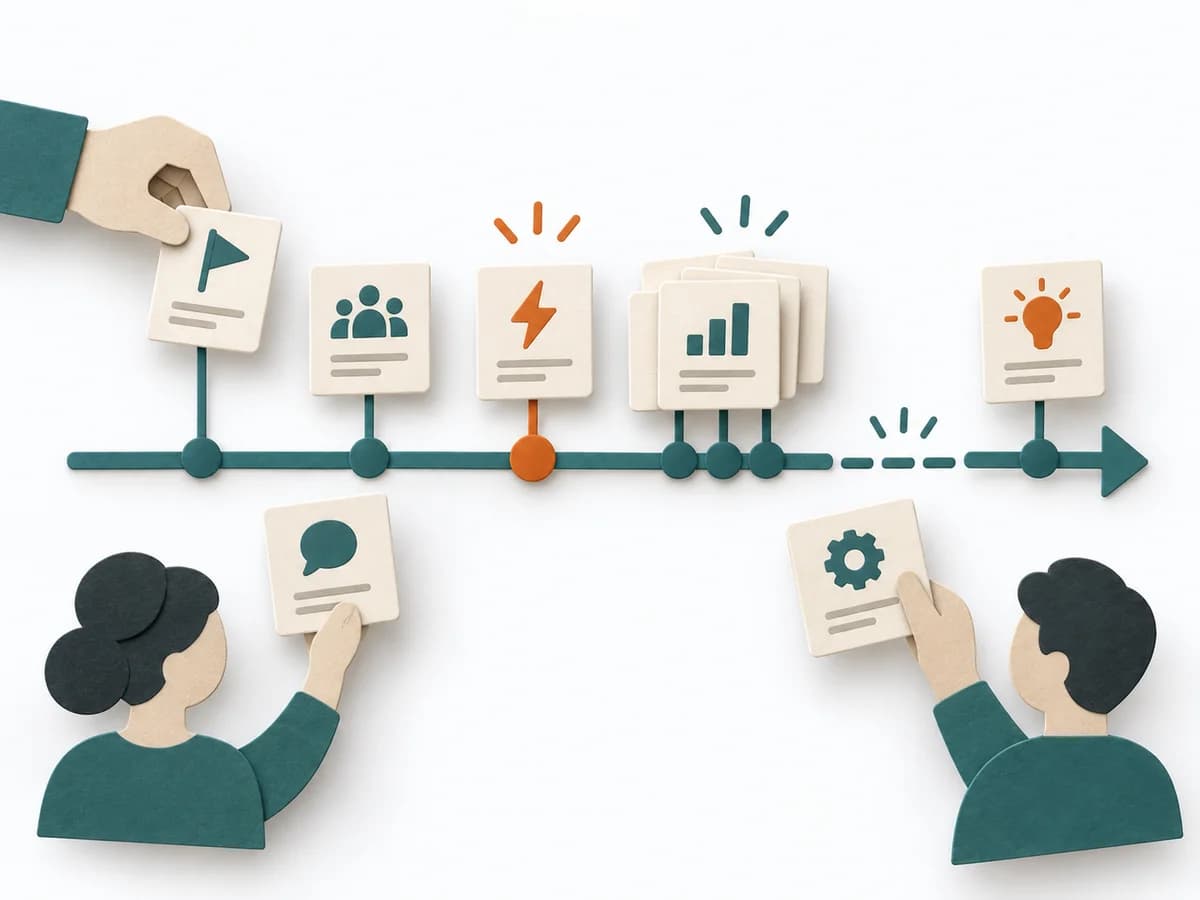 Facilitation Timeline |  Knowledge Modeling IBIS |  Facilitation Decision Jam | 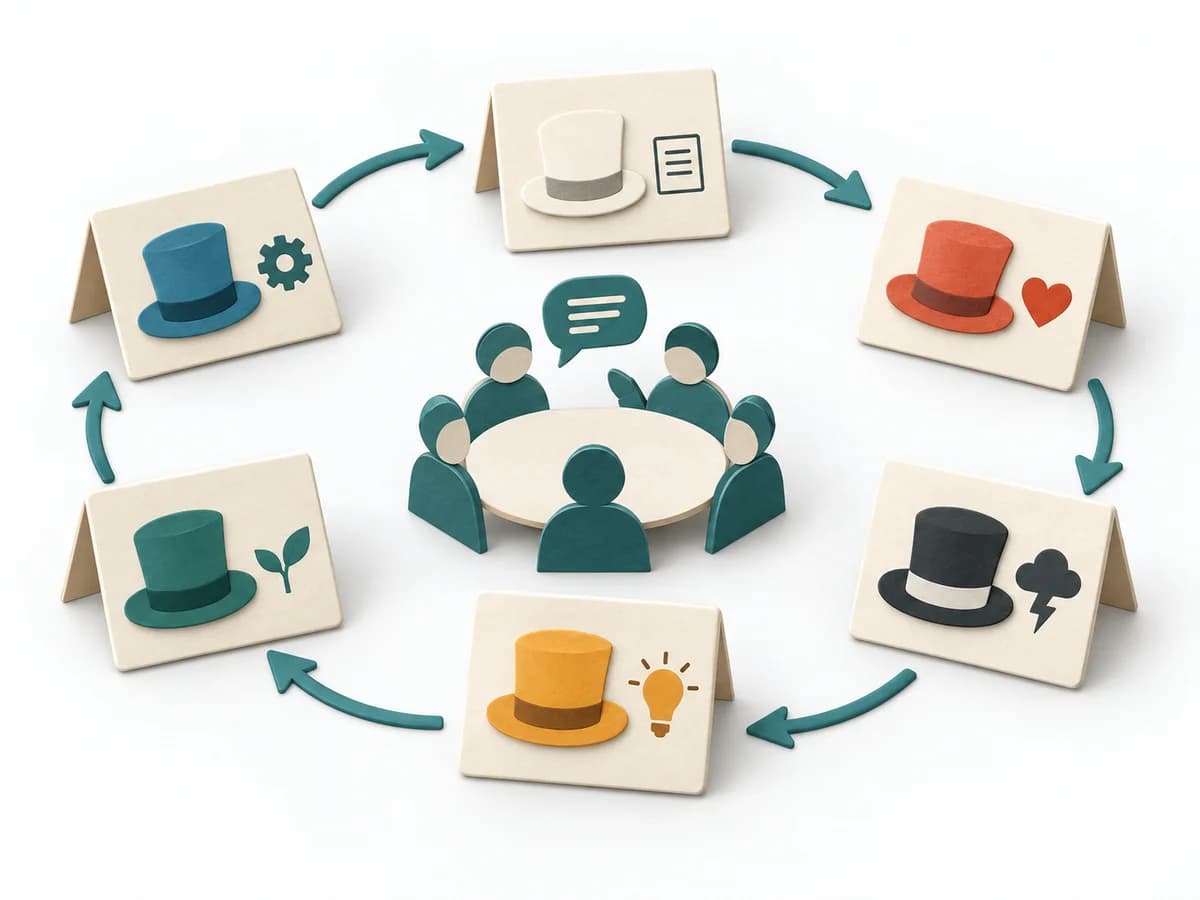 Facilitation Six Thinking Hats |
|---|---|---|---|---|
Purposedifferent | When a project, incident, or change process is only remembered in fragments, Timeline brings the sequence back into a readable form. It makes turning points, precursors, and after-effects recognizable over the course of time. | IBIS structures thinking about complex questions as a sequence of issues, ideas, and arguments. The method keeps discussions open without forcing them into premature consensus. | When a decision is stuck, Decision Jam loosens the knot through structured separation of problem, idea, and selection. The format creates movement without jumping prematurely at the first seemingly elegant answer. | When a topic gets stuck too quickly in the same thinking mode, Six Thinking Hats deliberately separates the perspectives. This means facts, risks, creativity, and emotional signals get worked through one after another instead of mixed together. |
Complexitydifferent | Low | Medium | Low | Medium |
Timedifferent | 30-90 min | 1-3 h | 60-90 min | 45-90 min |
Participantsdifferent | 2-12 | 2-8 | 4-10 | 4-12 |
Formatdifferent | Workshop + async | Workshop + async | Workshop | Workshop |
Outputdifferent | Timeline, Milestones, Insight Notes | Issue Map, Positions, Argument Notes | Problem Cluster, Prioritized Challenge, Experiment | Perspective Notes, Decision Inputs, Action Items |
Tagsno overlap | TimelineFacilitationSequence | RationaleKnowledgeDecision | FacilitationDecisionProblem solvingWorkshop | FacilitationOptionsDecision |