View methods side by side.
Choose up to four methods. Add them using the search and share the comparison by copying its link.
| Criterion | 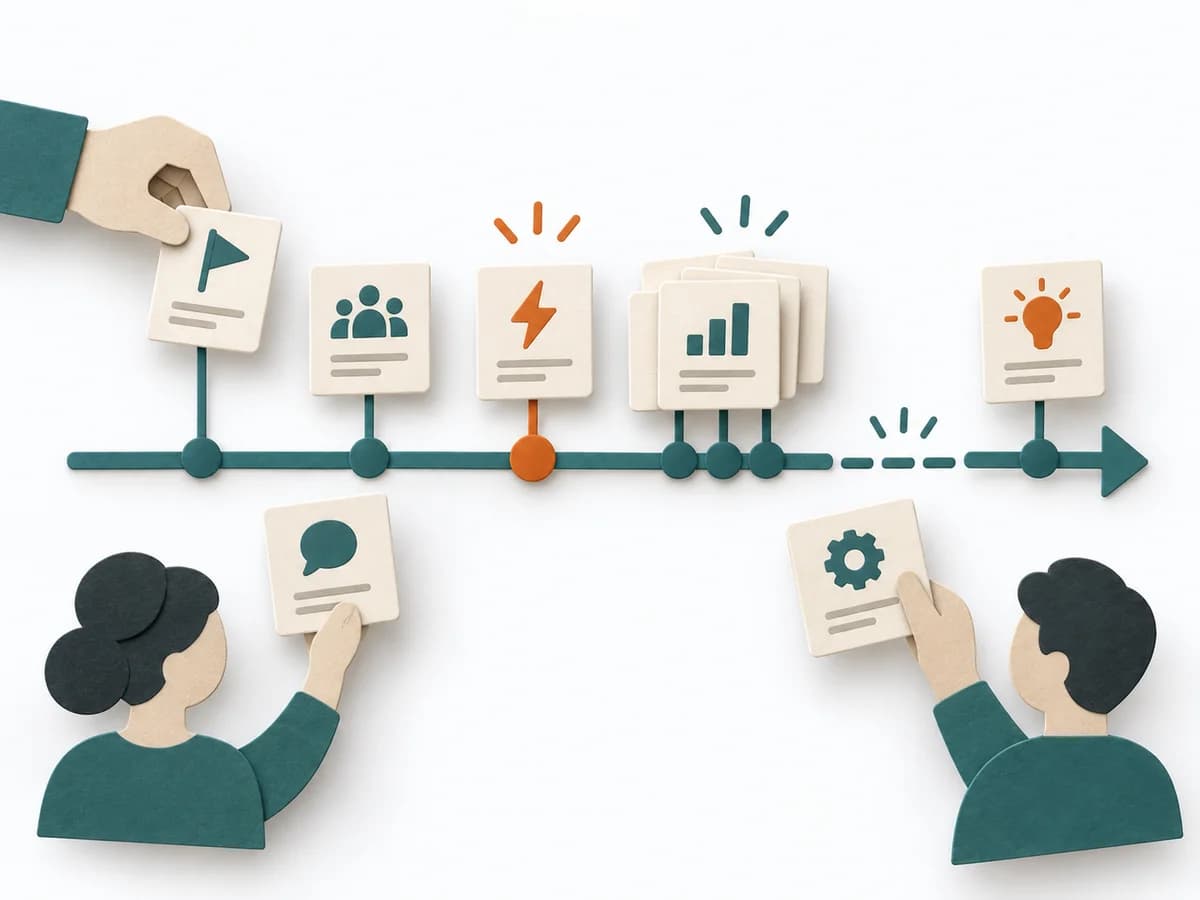 Facilitation Timeline |  Operations Failure Mode and Effects Analysis |  Facilitation Stakeholder Mapping |  Operations Fishbone Diagram |
|---|---|---|---|---|
Purposedifferent | When a project, incident, or change process is only remembered in fragments, Timeline brings the sequence back into a readable form. It makes turning points, precursors, and after-effects recognizable over the course of time. | For a process, product, or service with noticeable failure risks, the method assesses possible failure modes in advance. It directs attention to combinations of occurrence, effect, and detectability. | When an initiative depends on many people, interests, and power dynamics, Stakeholder Mapping systematically orders the environment. It shows who influences, who is affected, and where relationship management or safeguarding matters first. | When a problem has several possible contributing factors, the method sorts causes by cause areas. It prevents an initial hunch from blocking the view of other plausible drivers. |
Complexitydifferent | Low | High | Low | Low |
Timedifferent | 30-90 min | 2-6 h | 60–90 min | 30-60 min |
Participantsdifferent | 2-12 | 3-10 | 2-8 | 2-8 |
Formatdifferent | Workshop + async | Workshop | Workshop + async | Workshop |
Outputdifferent | Timeline, Milestones, Insight Notes | FMEA Table, Risk Priority, Mitigation Actions | Stakeholder Map, Engagement Plan, Risk Notes | Fishbone Diagram, Cause Categories, Investigation Backlog |
Tagsno overlap | TimelineFacilitationSequence | RiskQualityOperationsRoot cause | StakeholdersAlignmentFacilitationChange | Root causeQualityOperations |