View methods side by side.
Choose up to four methods. Add them using the search and share the comparison by copying its link.
| Criterion | 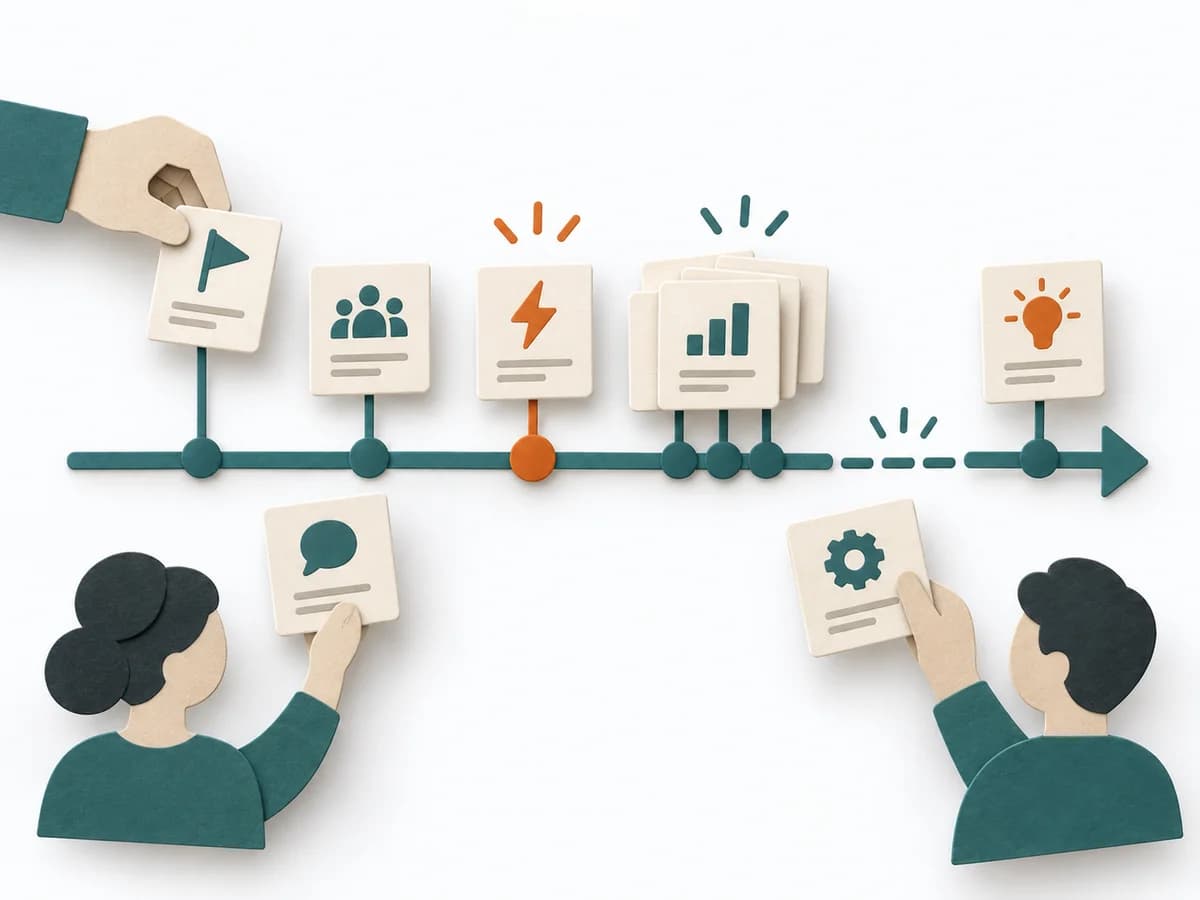 Facilitation Timeline | 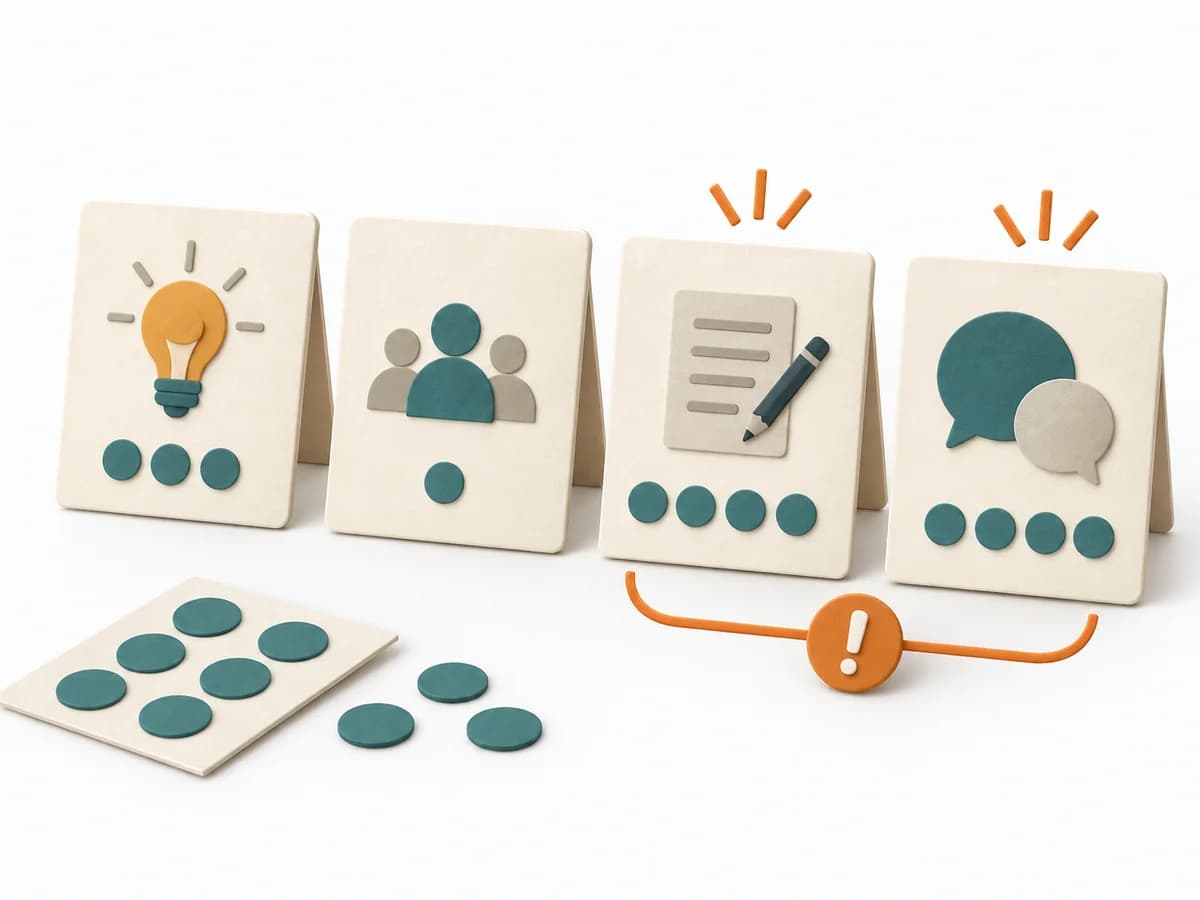 Facilitation Dot Voting |  Knowledge Modeling Event Modeling | 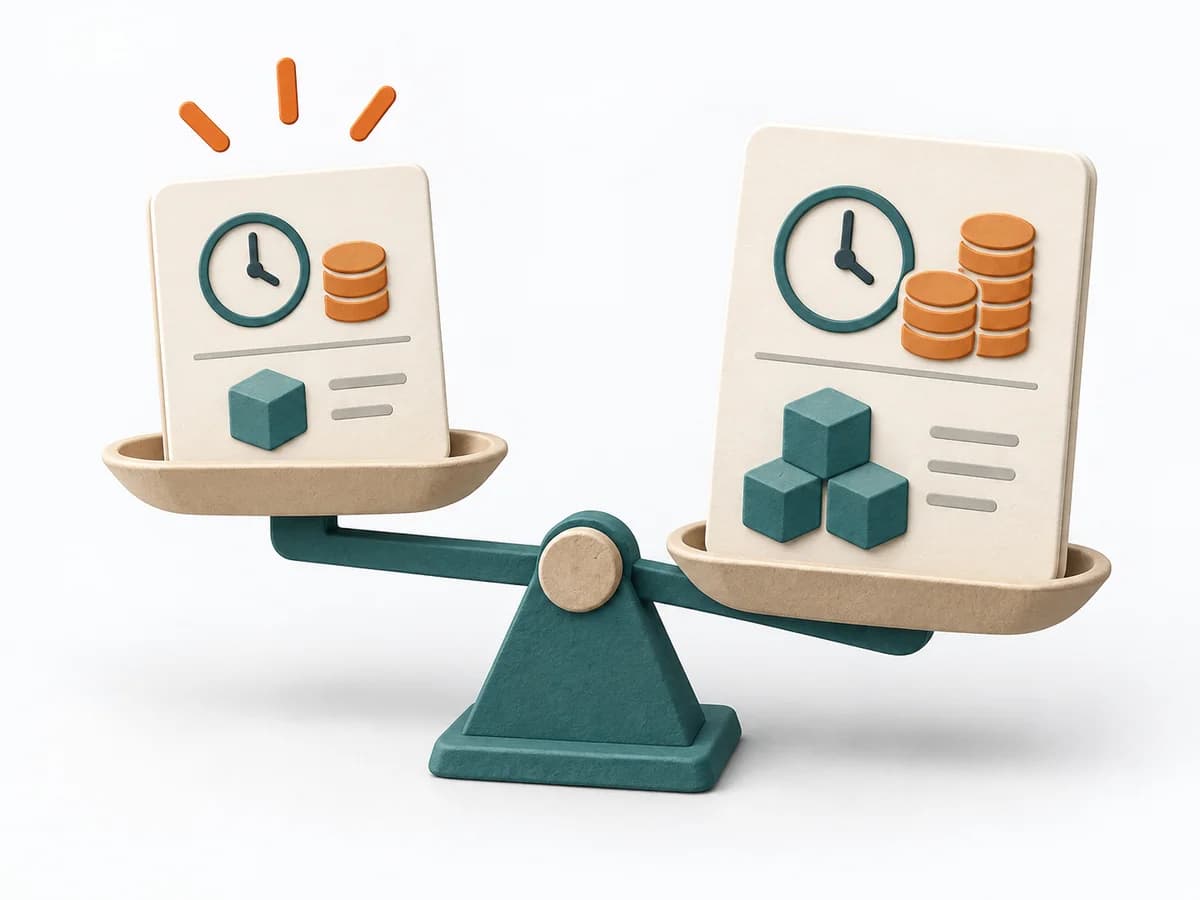 Agile WSJF |
|---|---|---|---|---|
Purposedifferent | When a project, incident, or change process is only remembered in fragments, Timeline brings the sequence back into a readable form. It makes turning points, precursors, and after-effects recognizable over the course of time. | When a workshop has produced too many options and the group needs to condense quickly, dot voting makes preferences visible in a short time. It bundles individual votes into a solid signal for the next selection. | Event Modeling connects business workflows with commands, events, and views into one coherent mental model. It helps design behavior, UI, and technical slices from the same underlying logic. | When many tasks compete for the same capacity, it orders work by economic impact. It makes time lost, benefit, and effort comparable together. |
Complexitydifferent | Low | Low | Medium | High |
Timedifferent | 30-90 min | 5-15 min | 2-6 h | 45-90 min |
Participantsdifferent | 2-12 | 3-20 | 2-8 | 3-10 |
Formatdifferent | Workshop + async | Workshop | Workshop + async | Workshop |
Outputdifferent | Timeline, Milestones, Insight Notes | Ranked list, Consensus signal, Shortlist | Event Model, UI Flow, Commands, Read Models | Ranked Backlog, Cost-of-Delay Assumptions |
Tagsno overlap | TimelineFacilitationSequence | FacilitationVotingConsensusPrioritization | EventsBlueprintDomain-Driven DesignBehavior | LeanEconomicsSequencePrioritization |