View methods side by side.
Choose up to four methods. Add them using the search and share the comparison by copying its link.
| Criterion | 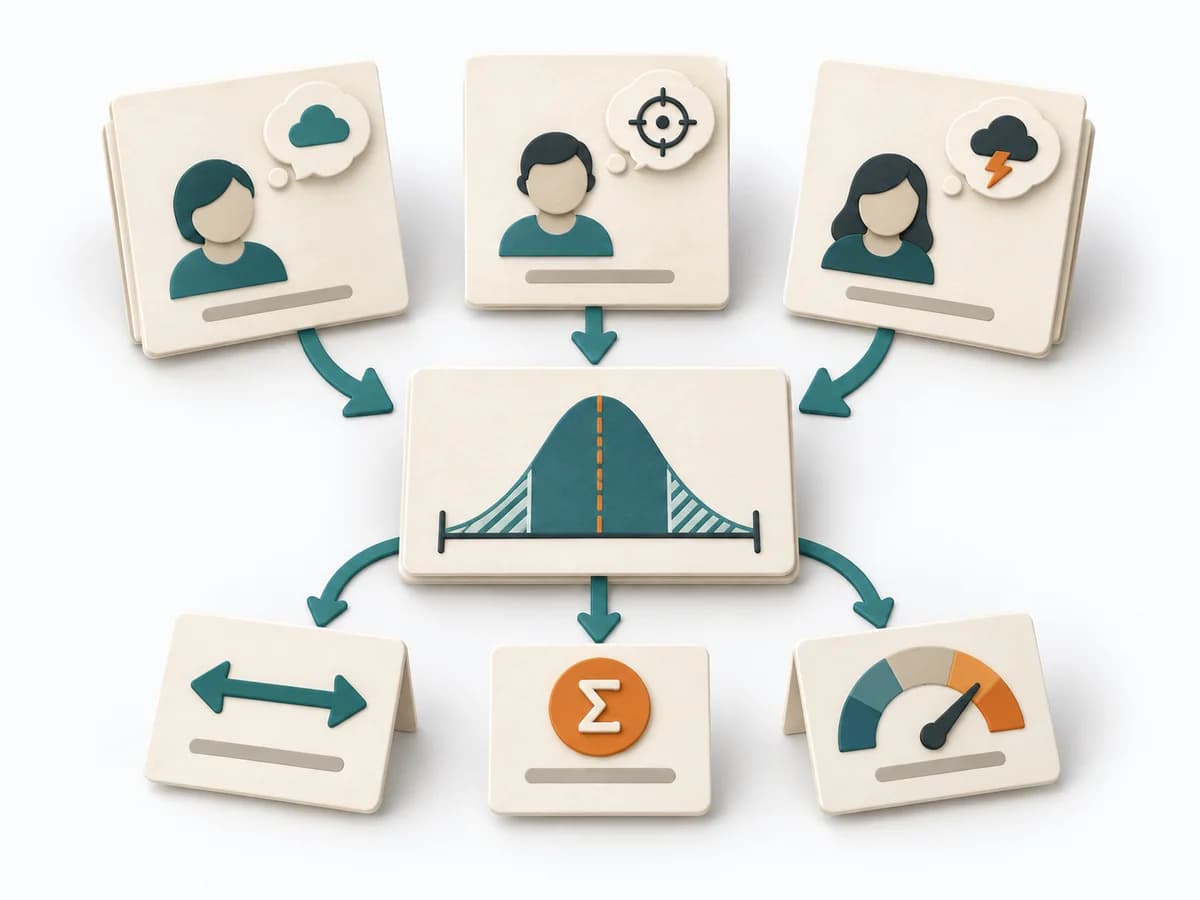 Decision Making Three-Point Estimation |  Operations Bottleneck Analysis | 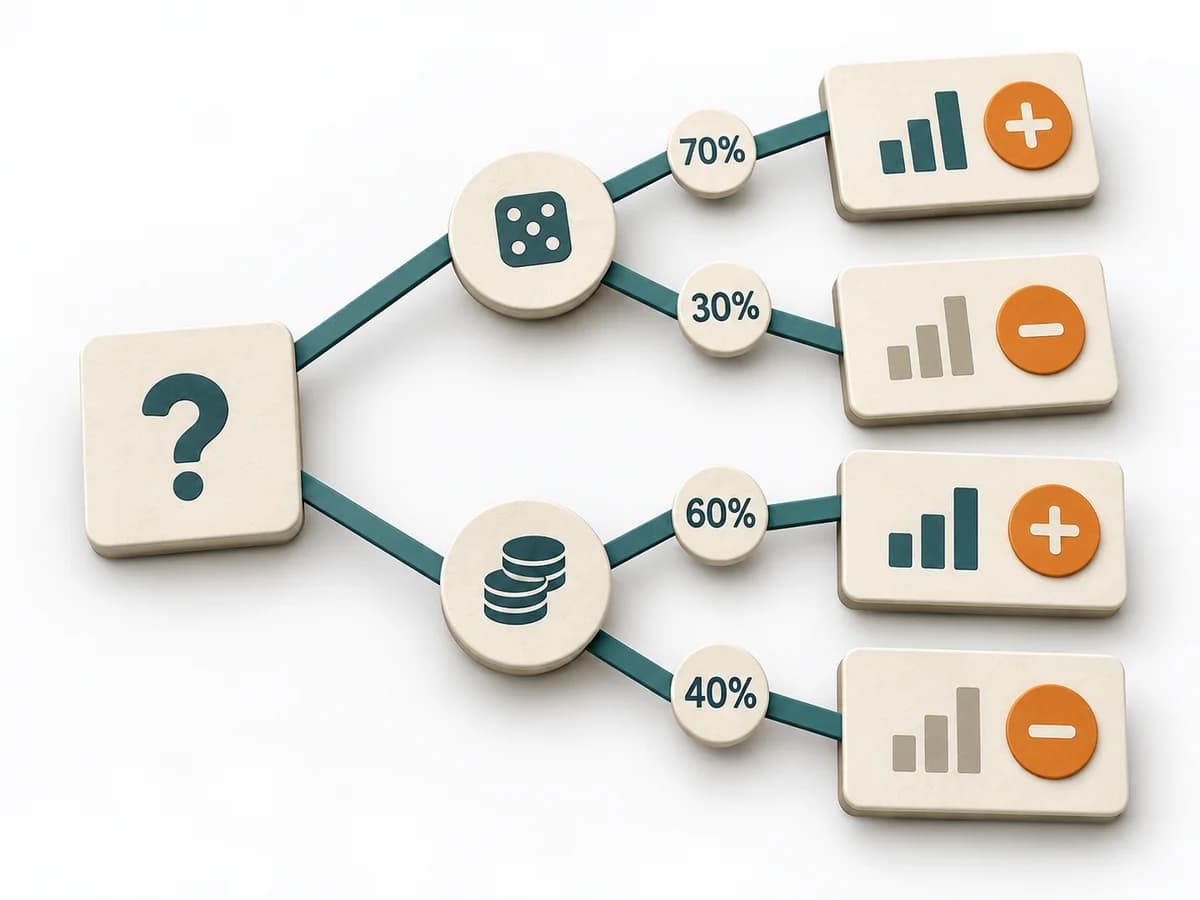 Decision Making Decision Tree |  Decision Making Delphi Method |
|---|---|---|---|---|
Purposedifferent | A single estimate for effort, time, or risk often looks too smooth for the real uncertainty behind it. It separates options, evaluation criteria, and open risks. The result is captured as a Three-Point Estimate, Risk Range, and Assumption Notes. | For a flow that backs up at one point, the method looks for the capacity limit with the greatest leverage. It explains why extra effort elsewhere barely improves throughput. | For decisions with follow-on paths and dependencies, a linear comparison is often not enough. A Decision Tree shows how options branch under conditions and which consequences hang on each branch. | When knowledge is distributed and direct dominance should be avoided, groups quickly fall under the sway of their opinion leaders. The Delphi Method gathers assessments iteratively and gradually brings expert judgments closer together. |
Complexitydifferent | Medium | Medium | Medium | High |
Timedifferent | 10-30 min je Item | 1-3 h | 30-90 min | 1-4 Wochen |
Participantsdifferent | 1-8 | 3-8 | 1-6 | 6-30 Experten |
Formatdifferent | Workshop + async | Workshop + async | Workshop + async | Async |
Outputdifferent | Three-Point Estimate, Risk Range, Assumption Notes | Bottleneck Map, Flow Metrics, Improvement Options, Follow-up Measures | Decision Tree, Option Map, Assumption List | Expert Forecast, Consensus Range, Assumption Notes |
Tagsno overlap | EstimationUncertaintyForecasting | FlowMeasurementConstraints | DecisionTreeOptions | ForecastingExpertsDecisionStrategy |