View methods side by side.
Choose up to four methods. Add them using the search and share the comparison by copying its link.
| Criterion | 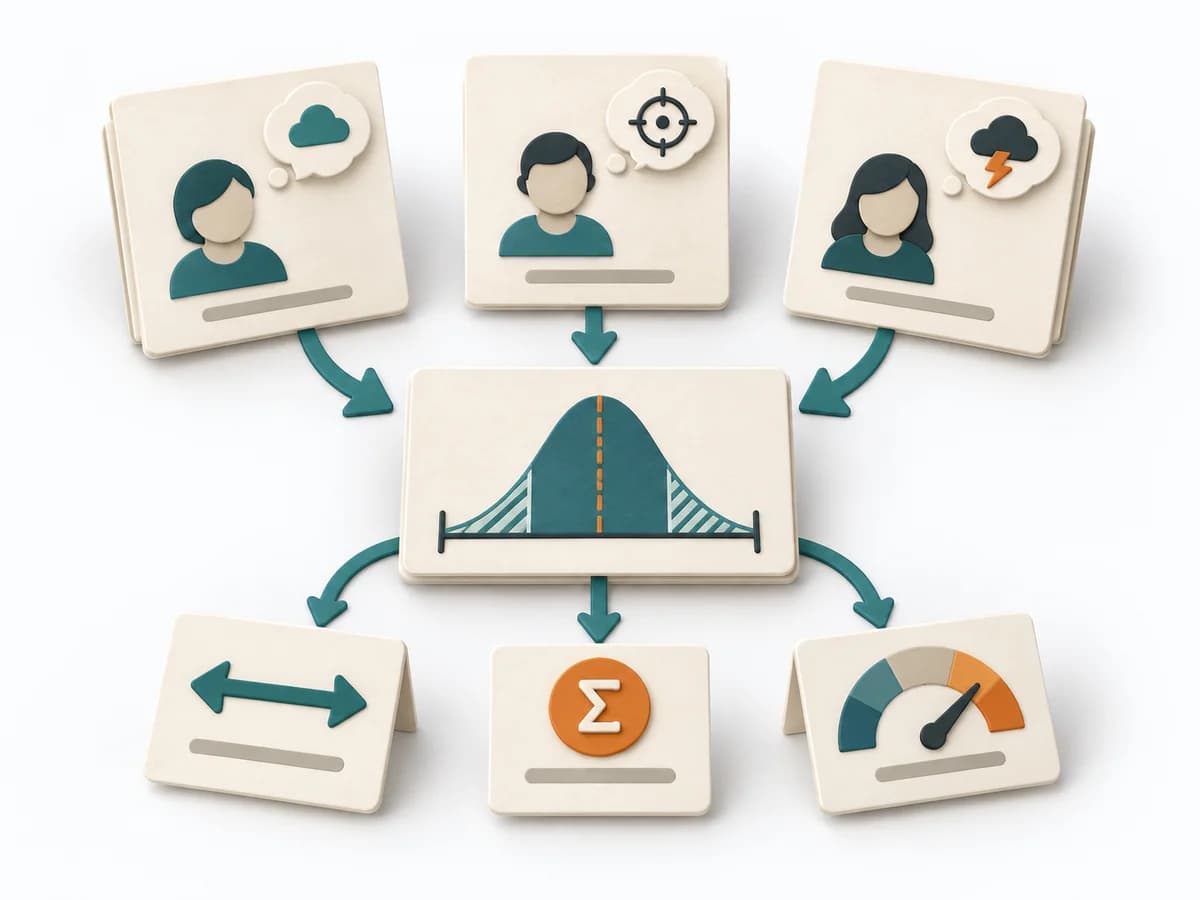 Decision Making Three-Point Estimation |  Operations After-Action Review | 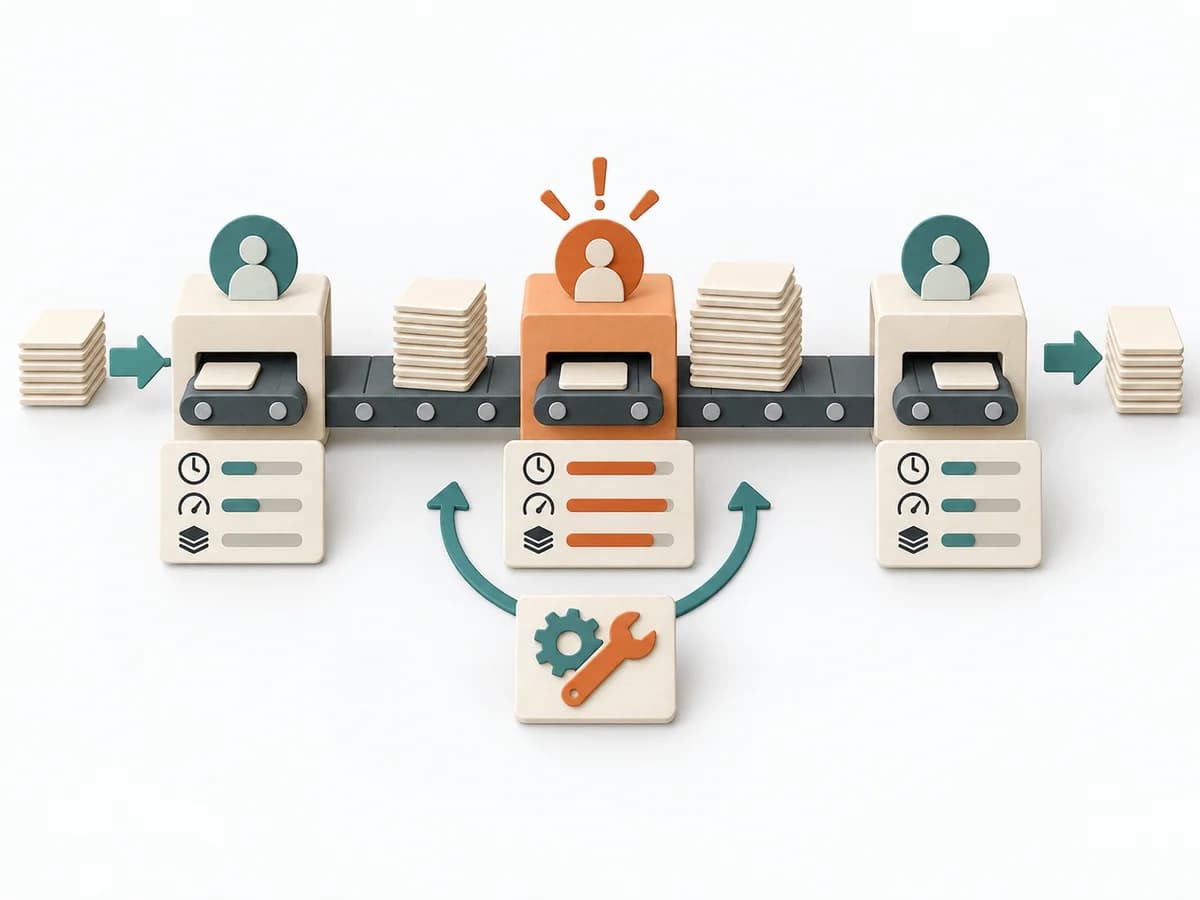 Operations Bottleneck Analysis | 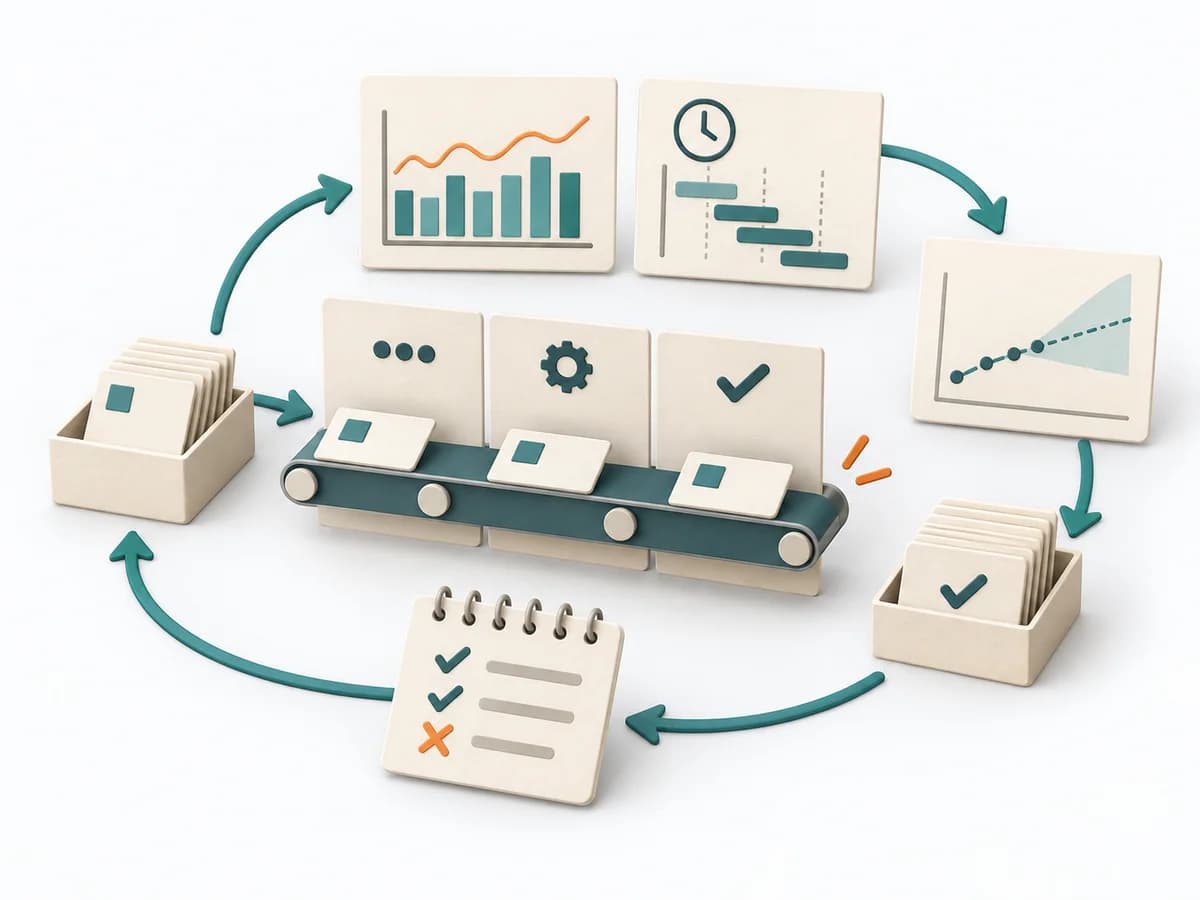 Agile NoEstimates |
|---|---|---|---|---|
Purposedifferent | A single estimate for effort, time, or risk often looks too smooth for the real uncertainty behind it. It separates options, evaluation criteria, and open risks. The result is captured as a Three-Point Estimate, Risk Range, and Assumption Notes. | After missions or project phases with unclear outcomes, the method makes visible what actually happened and what can be learned from it. It separates course, effect, and causes so experience turns into solid improvement. | For a flow that backs up at one point, the method looks for the capacity limit with the greatest leverage. It explains why extra effort elsewhere barely improves throughput. | When estimating slows a team down more than it helps, it shifts the focus to flow, small slices, and real lead time. It sorts work by value, risk, and delivery ability. The result is captured as Throughput Data, Flow Forecast, and Slicing Rules. |
Complexitydifferent | Medium | Low | Medium | Medium |
Timedifferent | 10-30 min je Item | 20-45 min | 1-3 h | laufend |
Participantsdifferent | 1-8 | 3-12 | 3-8 | 2-12 |
Formatsame | Workshop + async | Workshop + async | Workshop + async | Workshop + async |
Outputdifferent | Three-Point Estimate, Risk Range, Assumption Notes | Lessons learned, Action items, Event summary | Bottleneck Map, Flow Metrics, Improvement Options, Follow-up Measures | Throughput Data, Flow Forecast, Slicing Rules |
Tagsno overlap | EstimationUncertaintyForecasting | LearningOperationsImprovement | FlowMeasurementConstraints | EstimationForecastingFlow |