View methods side by side.
Choose up to four methods. Add them using the search and share the comparison by copying its link.
| Criterion |  Systems Thinking Systems Mapping |  Product Discovery Outcome-Driven Innovation | 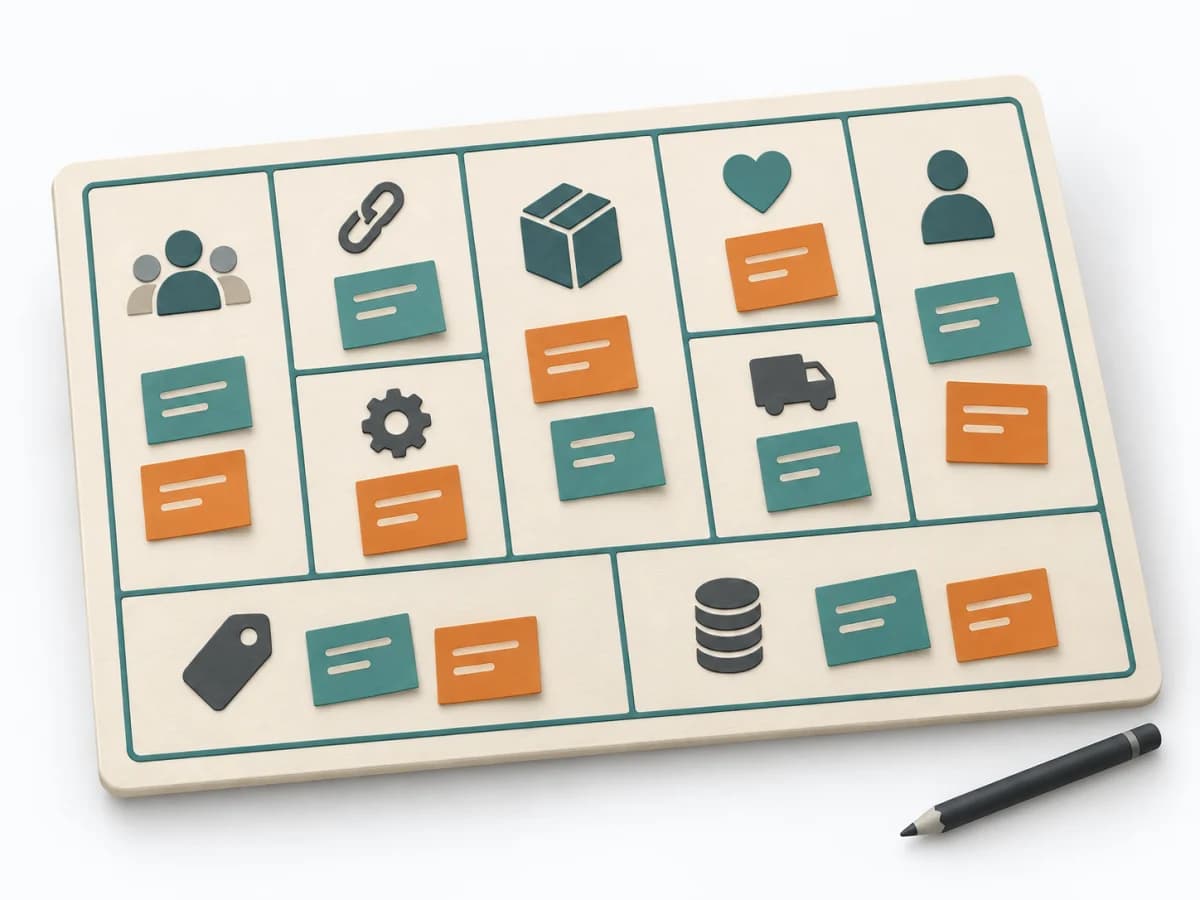 Business Strategy Business Model Canvas | 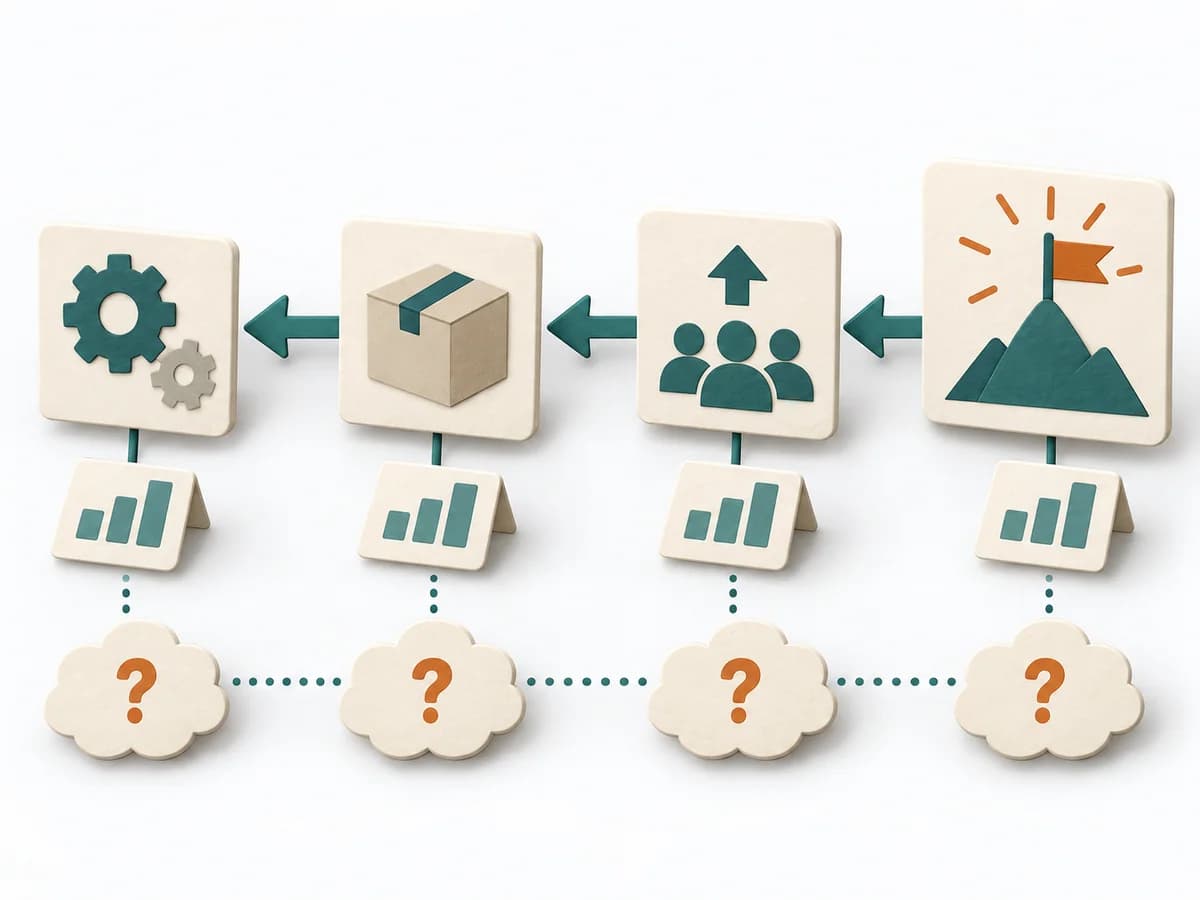 Systems Thinking Theory of Change |
|---|---|---|---|---|
Purposedifferent | Systems Mapping arranges elements, relationships, and boundaries so a complex field becomes legible at a glance. The overview stabilizes the overall picture before detail work or steering begins. | Outcome-Driven Innovation clarifies customer problems, solution opportunities, and evidence. It separates jobs, desired outcomes, importance, satisfaction, and opportunity, and captures results as desired outcome statements, an opportunity landscape, and segments by underserved needs. | The Business Model Canvas condenses a business model to its key building blocks and assumptions. It makes variants quickly comparable and reveals gaps before validation or implementation begins. | Theory of Change translates a desired impact into a traceable chain of change. It makes assumptions, intermediate goals, and measurement points visible before a program is rolled out at scale. |
Complexitydifferent | Medium | High | Medium | High |
Timedifferent | 1-3 h | Mehrere Wochen | 1-2 h | 2-6 h |
Participantsdifferent | 3-12 | 2-6 researchers plus sample | 2-8 | 4-12 |
Formatdifferent | Workshop + async | Workshop + async | Workshop + async | Workshop |
Outputdifferent | System Map, Dependencies, Leverage Points | Desired outcome statements, Opportunity landscape, Segmentation by underserved needs, Innovation hypotheses | Business Model Canvas, Assumption List, Business Hypotheses | Theory of Change Map, Assumptions, Outcome Measures |
Tagsno overlap | Systems thinkingMappingBoundariesChange | OutcomesInnovationResearchQuantitative | Business modelStrategyValueInnovation | ImpactOutcomesSystems thinkingStrategy |