View methods side by side.
Choose up to four methods. Add them using the search and share the comparison by copying its link.
Selected:System Dynamics SimulationAssumption SurfacingARID (Active Reviews for Intermediate Designs)Causal Loop Diagram
| Criterion | 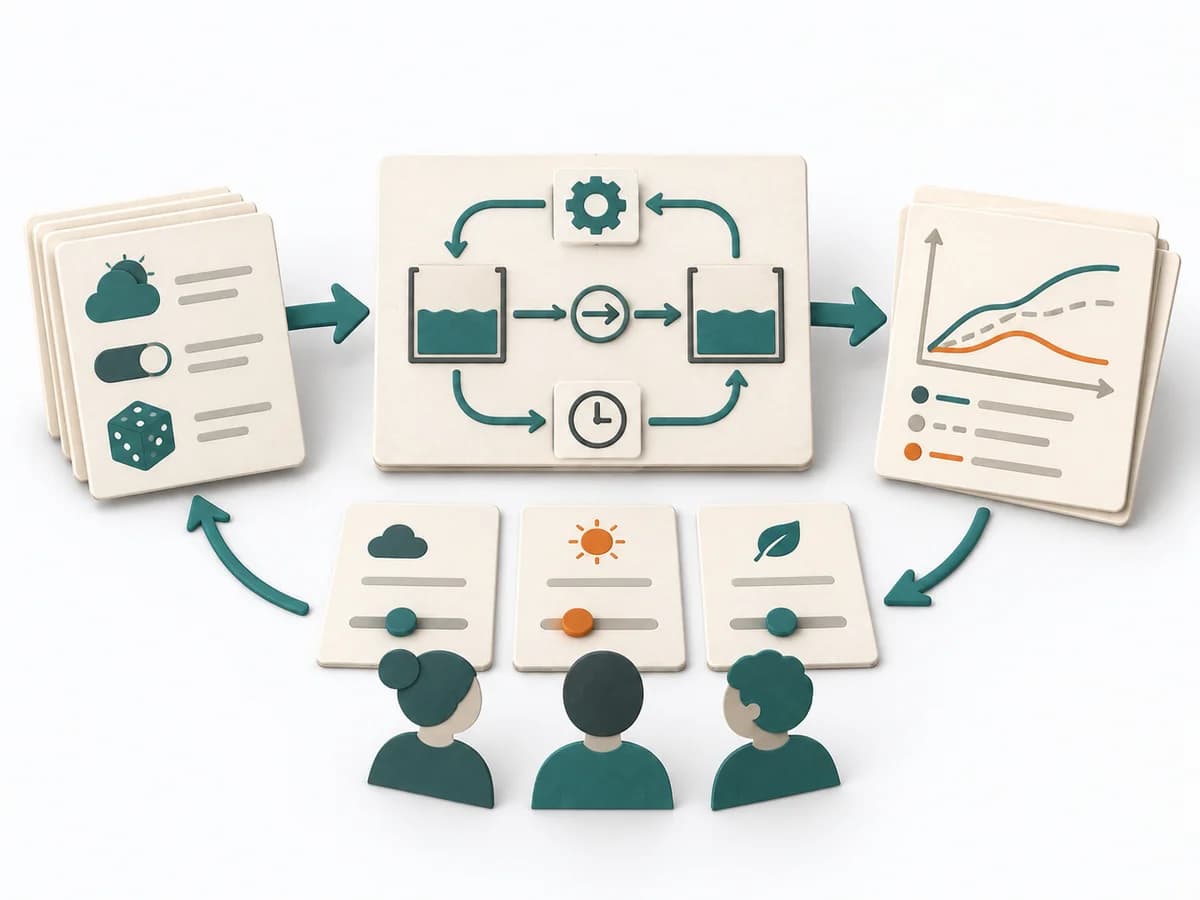 Systems Thinking System Dynamics Simulation |  Decision Making Assumption Surfacing |  Architecture ARID (Active Reviews for Intermediate Designs) | 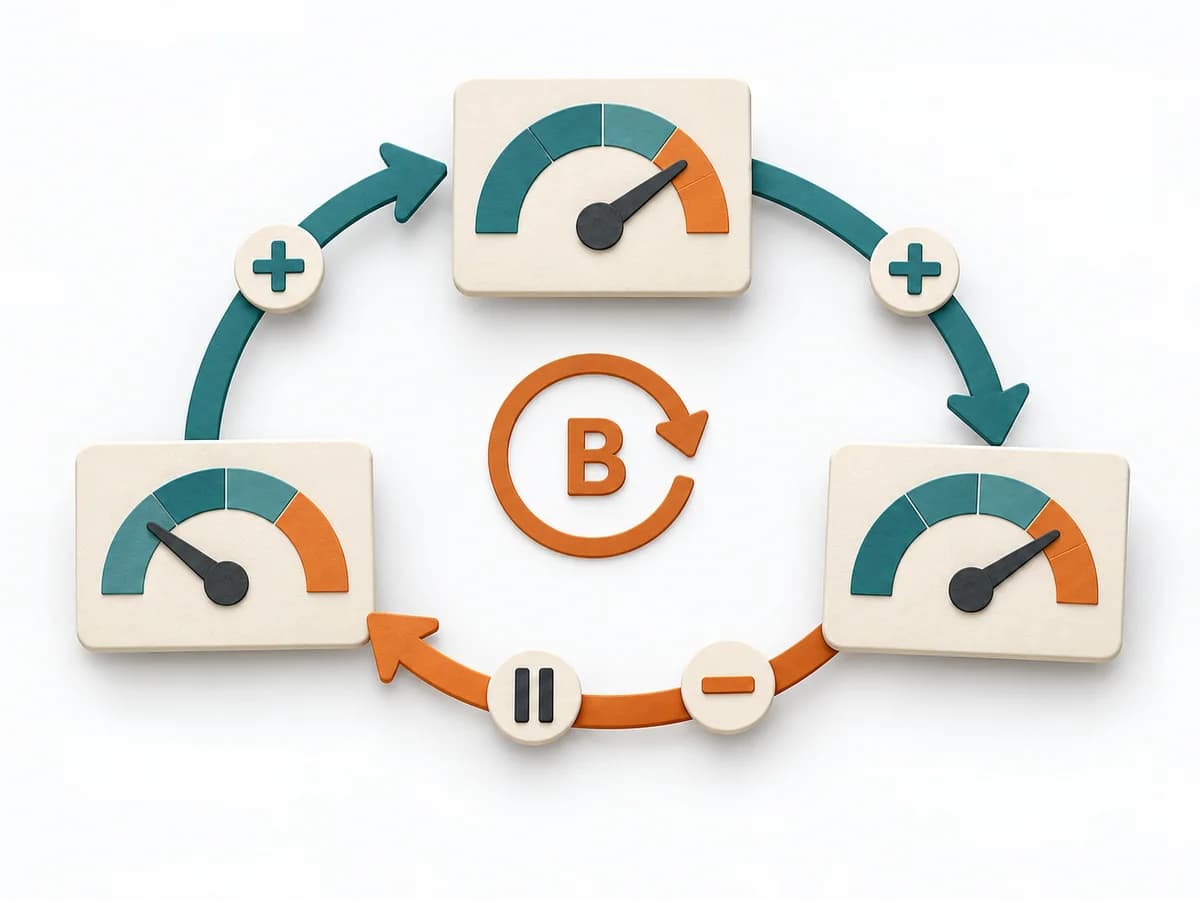 Systems Thinking Causal Loop Diagram |
|---|---|---|---|---|
Purposedifferent | System Dynamics Simulation makes assumptions about time, delay, and feedback testable through experiments. It draws relationships, patterns, and feedback loops. The result is captured as a simulation model and scenario reports. | Plans often contain assumptions that were never openly stated and remain dangerous precisely because of that. Assumption Surfacing makes these silent premises visible and prioritizes which of them carry the initiative or could sink it. | ARID examines how well developers can work with a technical design. It focuses on a part of the system that can still be revised, between the architecture overview and the detailed specification. | A Causal Loop Diagram makes feedback, reinforcement, and balance in a system legible. It uncovers side effects and self-reinforcement that stay hidden in linear explanations. |
Complexitydifferent | High | Low | Medium | Medium |
Timedifferent | Mehrere Tage bis Wochen | 45-90 min | 2–4 h review as a planning range; preparation and evaluation additional | 1-3 h |
Participantsdifferent | 1-5 Modellierende, Stakeholder asynchron | 2-8 | Designers, developers as users, and facilitation | 2-8 |
Formatdifferent | Async | Workshop + async | Workshop + async | Workshop |
Outputdifferent | Simulation Model, Scenario Reports | Assumption List, Critical Assumptions, Learning Plan | Prioritized development tasks, Jointly produced code or pseudocode, Observed difficulties and open design questions, Proposed design revisions | Causal Loop Diagram, Feedback Notes, Leverage Points |
Tagsno overlap | Systems thinkingDynamicsSimulationAnalysis | AssumptionsRiskDecisionDiscovery | ArchitectureEngineeringFeedbackValidationTasks | FeedbackSystems thinkingCausalityDynamics |