View methods side by side.
Choose up to four methods. Add them using the search and share the comparison by copying its link.
| Criterion |  UX Research Surveys | 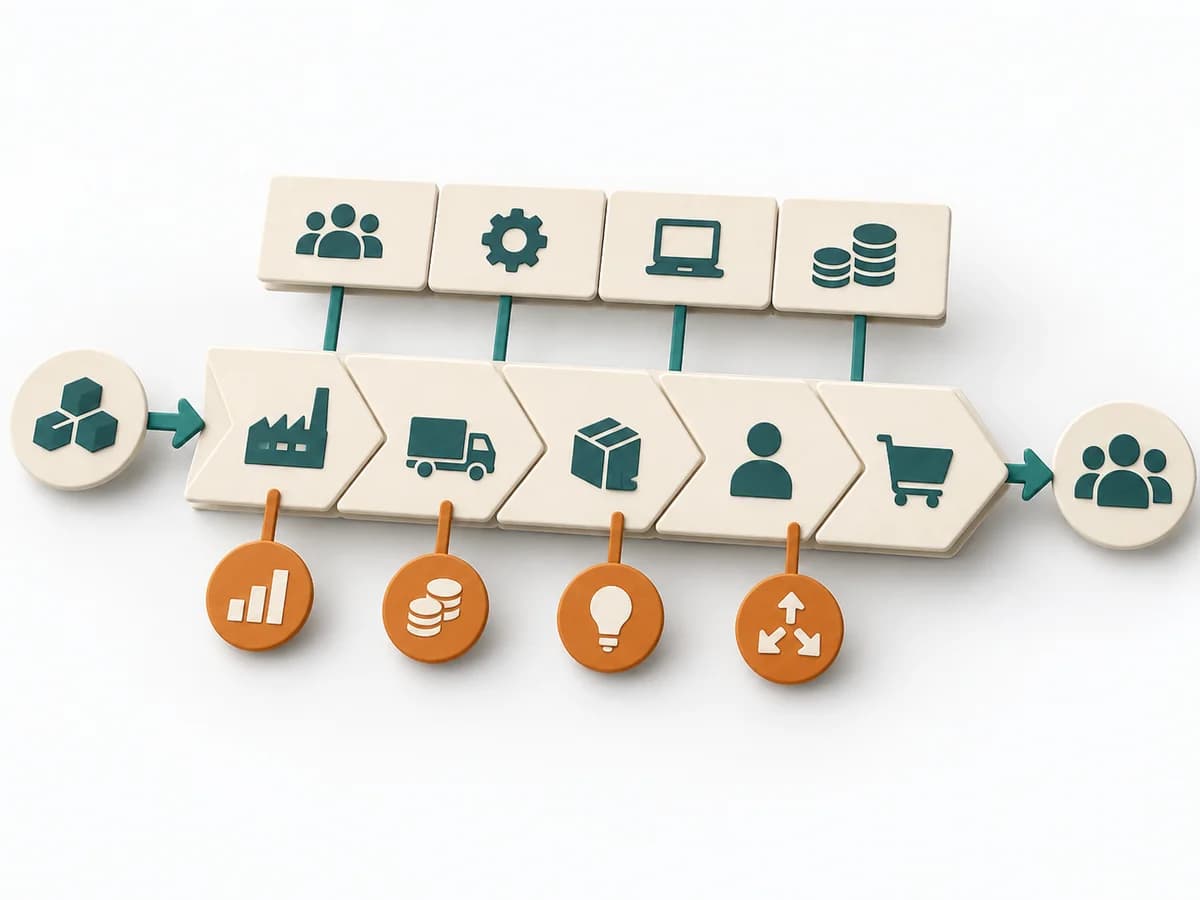 Business Strategy Value Chain Analysis | 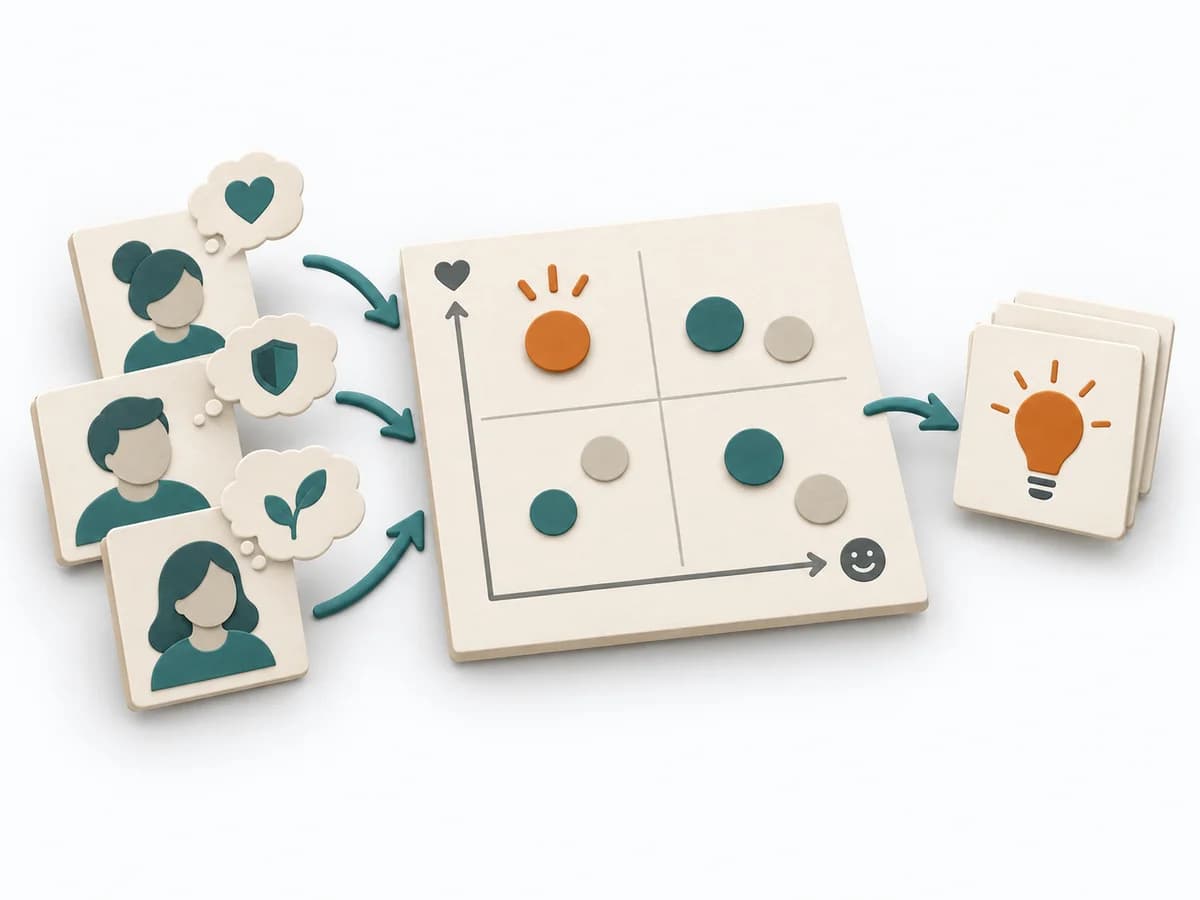 Product Discovery Outcome-Driven Innovation | 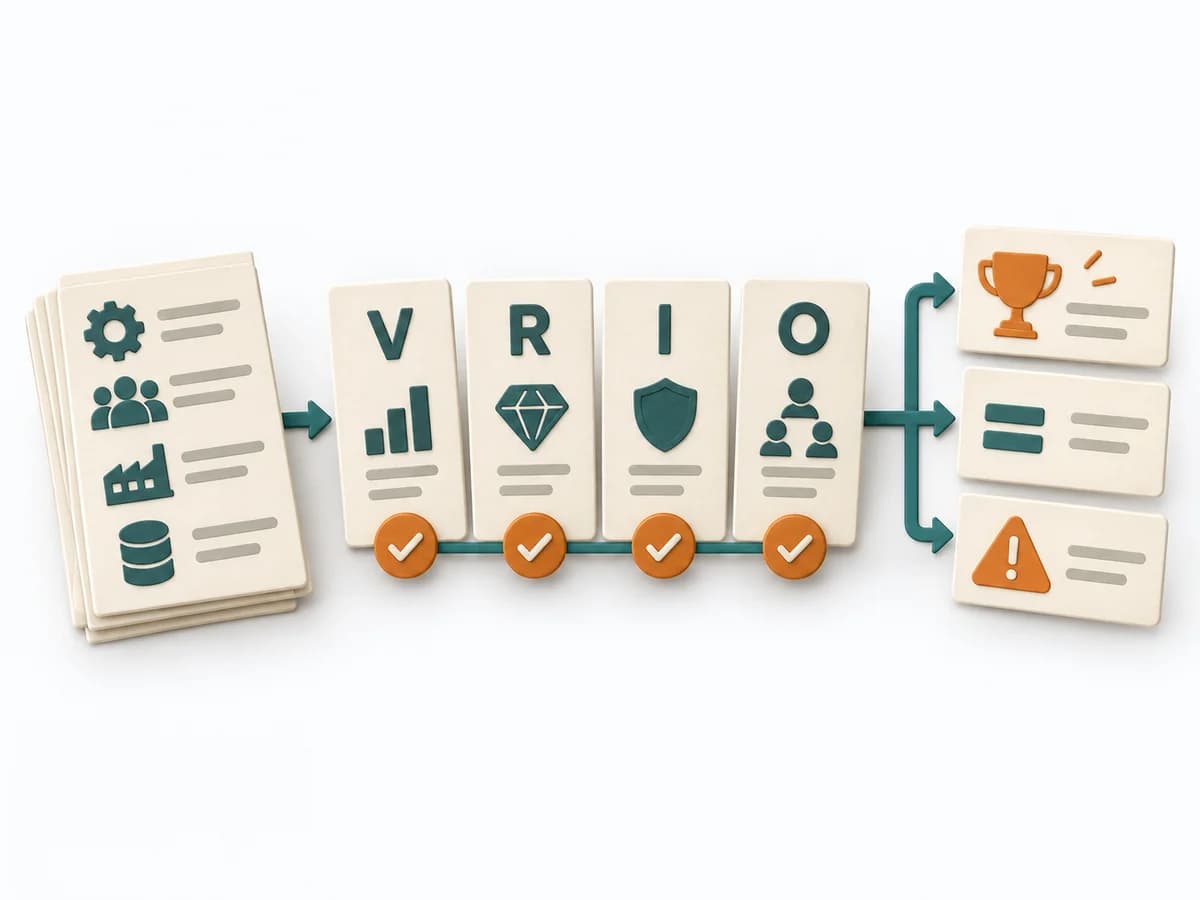 Business Strategy VRIO Framework |
|---|---|---|---|---|
Purposedifferent | When a topic needs to be validated broadly and many people can answer the same question, surveys gather structured feedback in a scalable form. Answers become comparable and segmentable instead of remaining merely anecdotal. | Value Chain Analysis shows where value is created, costs accrue, and differentiation becomes possible along the process. It compares strengths, risks, market logic, and courses of action. The result is captured as a value-chain map and lever list. | Outcome-Driven Innovation clarifies customer problems, solution opportunities, and evidence. It separates jobs, desired outcomes, importance, satisfaction, and opportunity, and captures results as desired outcome statements, an opportunity landscape, and segments by underserved needs. | The VRIO Framework rates resources and capabilities on whether they are Valuable, Rare, Inimitable, and Organized. It compares strengths, risks, market logic, and courses of action. The result is captured as a VRIO table and strategic actions. |
Complexitydifferent | Medium | High | High | Medium |
Timedifferent | 3-14 Tage | Half day | Mehrere Wochen | 90-180 min |
Participantsdifferent | 50+ | 3-8 | 2-6 researchers plus sample | 3-6 |
Formatdifferent | Async | Workshop | Workshop + async | Workshop |
Outputdifferent | Survey Results, Charts, Segment Insights | Value Chain Map, Lever List | Desired outcome statements, Opportunity landscape, Segmentation by underserved needs, Innovation hypotheses | VRIO Table, Strategic Actions |
Tagsno overlap | QuantitativeResearchValidation | StrategyBusiness modelDiagnosisAnalysis | OutcomesInnovationResearchQuantitative | StrategyDiagnosisBusiness modelCapability |