View methods side by side.
Choose up to four methods. Add them using the search and share the comparison by copying its link.
| Criterion |  UX Research Surveys | 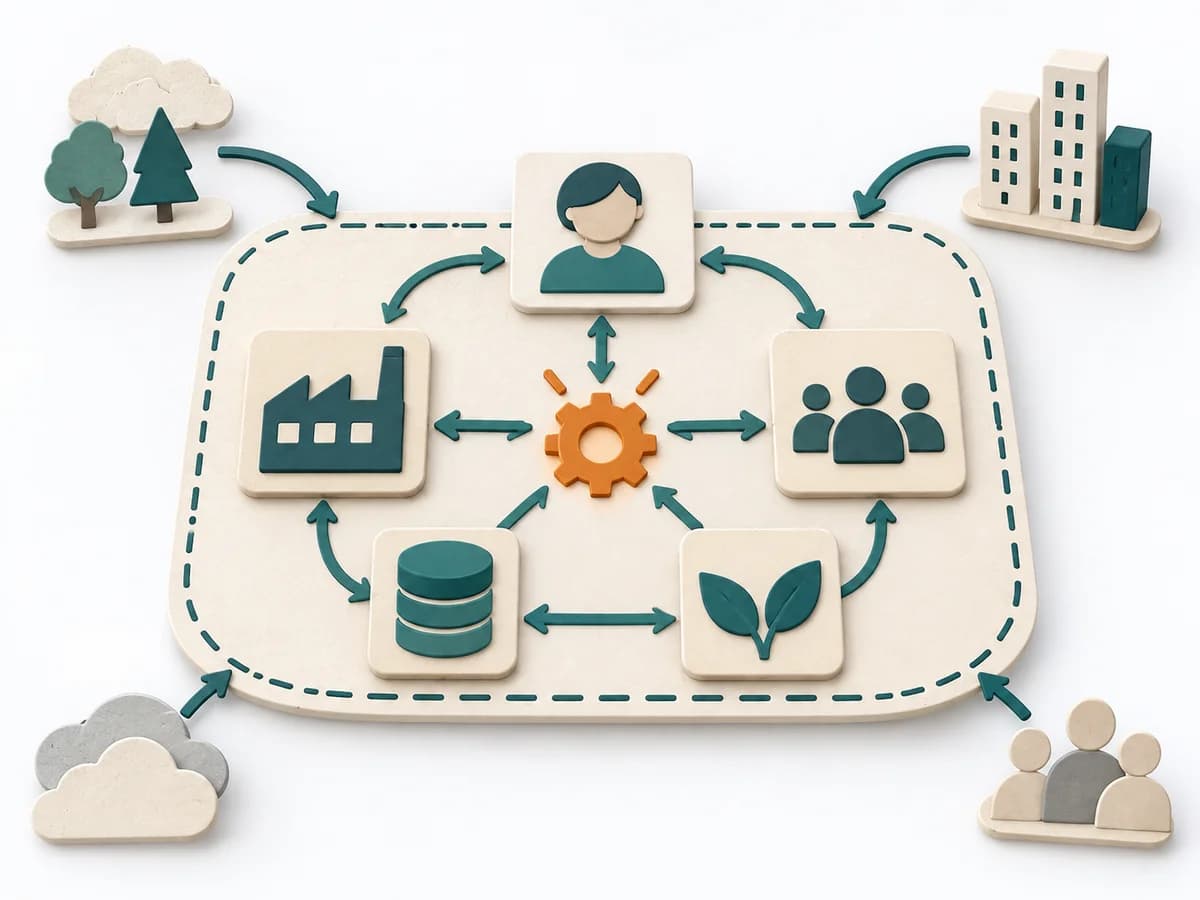 Systems Thinking Systems Mapping |  Product Discovery Outcome-Driven Innovation |  Innovation Design Sprint |
|---|---|---|---|---|
Purposedifferent | When a topic needs to be validated broadly and many people can answer the same question, surveys gather structured feedback in a scalable form. Answers become comparable and segmentable instead of remaining merely anecdotal. | Systems Mapping arranges elements, relationships, and boundaries so a complex field becomes legible at a glance. The overview stabilizes the overall picture before detail work or steering begins. | Outcome-Driven Innovation clarifies customer problems, solution opportunities, and evidence. It separates jobs, desired outcomes, importance, satisfaction, and opportunity, and captures results as desired outcome statements, an opportunity landscape, and segments by underserved needs. | When the product question is unclear and time pressure is high, the method takes a team from an open idea to a testable solution. It connects problem understanding, decision, and learning in one compact format, lowering the risk of spending a lot of energy on a mere guess. |
Complexitydifferent | Medium | Medium | High | High |
Timedifferent | 3-14 Tage | 1-3 h | Mehrere Wochen | 4-5 Tage |
Participantsdifferent | 50+ | 3-12 | 2-6 researchers plus sample | 5-8 |
Formatdifferent | Async | Workshop + async | Workshop + async | Workshop |
Outputdifferent | Survey Results, Charts, Segment Insights | System Map, Dependencies, Leverage Points | Desired outcome statements, Opportunity landscape, Segmentation by underserved needs, Innovation hypotheses | Prototype, Test Findings, Decision Rationale |
Tagsno overlap | QuantitativeResearchValidation | Systems thinkingMappingBoundariesChange | OutcomesInnovationResearchQuantitative | Design sprintPrototypeValidationInnovation |