View methods side by side.
Choose up to four methods. Add them using the search and share the comparison by copying its link.
| Criterion |  UX Research Surveys |  Innovation Morphological Analysis | 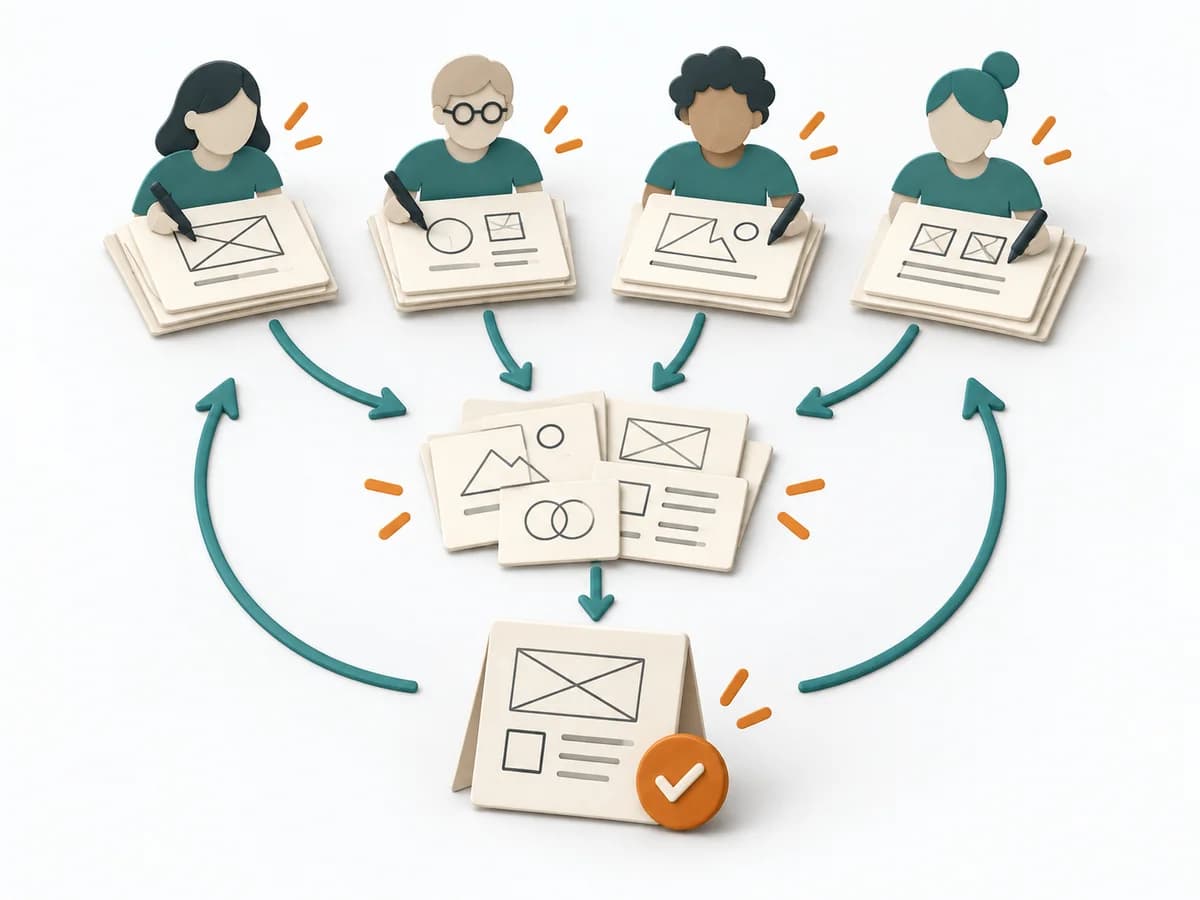 Innovation Design Charrette |  Product Discovery Outcome-Driven Innovation |
|---|---|---|---|---|
Purposedifferent | When a topic needs to be validated broadly and many people can answer the same question, surveys gather structured feedback in a scalable form. Answers become comparable and segmentable instead of remaining merely anecdotal. | For a search for solutions with many degrees of freedom, a grid emerges for systematic combinations. The method separates features, variants, and exclusion criteria, so the space gets explored deliberately. | In a tightly timed design process with many participants, the method pools several lines of thinking in a short time. It brings parallel design energy without letting the discussion tip into endless coordination. This quickly produces solid directions for architecture or space. | Outcome-Driven Innovation clarifies customer problems, solution opportunities, and evidence. It separates jobs, desired outcomes, importance, satisfaction, and opportunity, and captures results as desired outcome statements, an opportunity landscape, and segments by underserved needs. |
Complexitydifferent | Medium | Medium | Medium | High |
Timedifferent | 3-14 Tage | 1-3 h | Halber Tag bis mehrere Tage | Mehrere Wochen |
Participantsdifferent | 50+ | 2-8 | 10-50 | 2-6 researchers plus sample |
Formatdifferent | Async | Workshop + async | Workshop | Workshop + async |
Outputdifferent | Survey Results, Charts, Segment Insights | Morphological Box, Concept Combinations, Idea Shortlist | Sketches and Concepts, Consolidated Solution Sketch, Prioritized Direction | Desired outcome statements, Opportunity landscape, Segmentation by underserved needs, Innovation hypotheses |
Tagsno overlap | QuantitativeResearchValidation | IdeationInnovationCreativity | BrainstormingWorkshopCollaborationIdeation | OutcomesInnovationResearchQuantitative |