View methods side by side.
Choose up to four methods. Add them using the search and share the comparison by copying its link.
| Criterion | 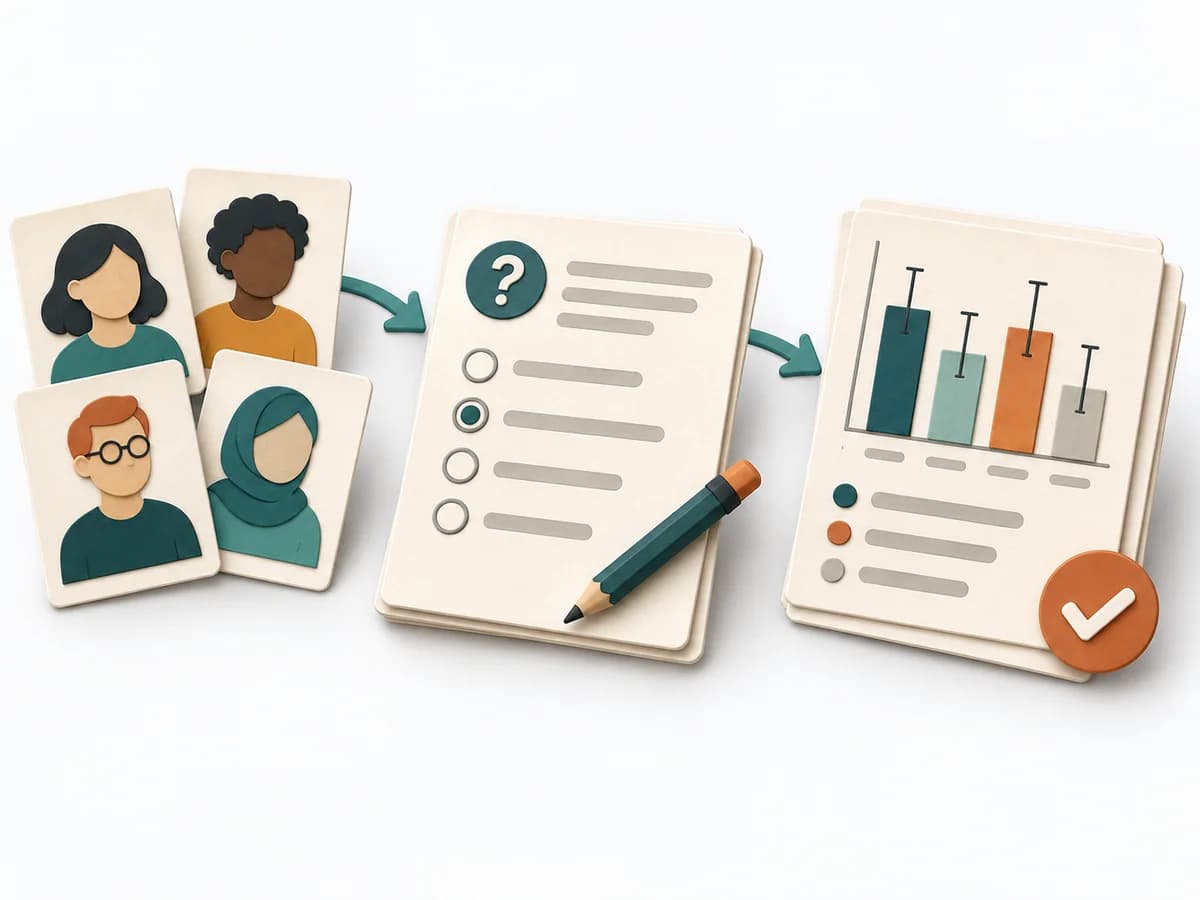 UX Research Surveys |  Knowledge Modeling IBIS | 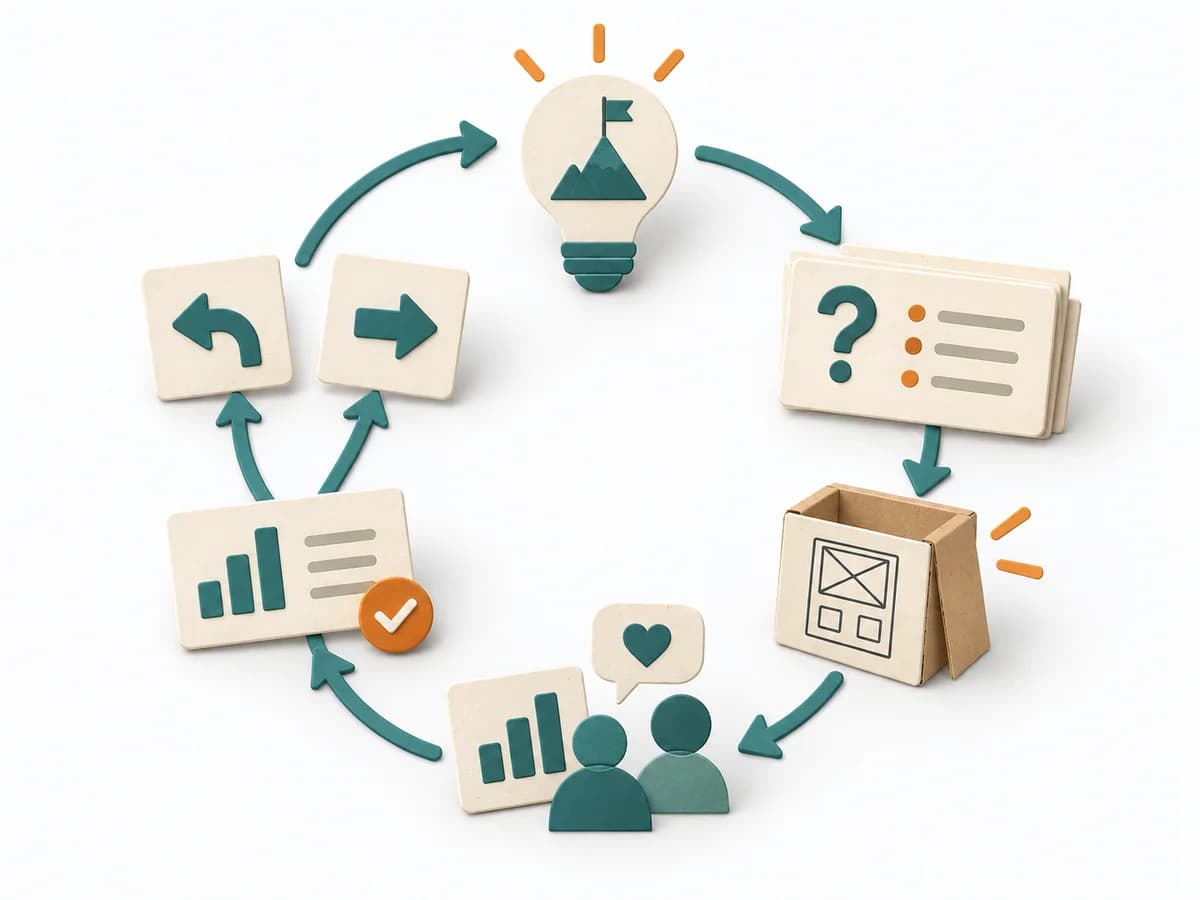 Innovation Lean Startup |  Product Discovery Outcome-Driven Innovation |
|---|---|---|---|---|
Purposedifferent | When a topic needs to be validated broadly and many people can answer the same question, surveys gather structured feedback in a scalable form. Answers become comparable and segmentable instead of remaining merely anecdotal. | IBIS structures thinking about complex questions as a sequence of issues, ideas, and arguments. The method keeps discussions open without forcing them into premature consensus. | For uncertain business assumptions, the method forces the idea into contact with real market reactions early. It separates wishful picture, assumption, and observable behavior, so that learning becomes faster than planning. This translates uncertainty into measurable insight. | Outcome-Driven Innovation clarifies customer problems, solution opportunities, and evidence. It separates jobs, desired outcomes, importance, satisfaction, and opportunity, and captures results as desired outcome statements, an opportunity landscape, and segments by underserved needs. |
Complexitydifferent | Medium | Medium | Medium | High |
Timedifferent | 3-14 Tage | 1-3 h | Wochen bis Monate je Lernzyklus | Mehrere Wochen |
Participantsdifferent | 50+ | 2-8 | 2-8 | 2-6 researchers plus sample |
Formatdifferent | Async | Workshop + async | Workshop + async | Workshop + async |
Outputdifferent | Survey Results, Charts, Segment Insights | Issue Map, Positions, Argument Notes | Hypothesis list, MVPs, Learning reports, Pivot or persevere decision | Desired outcome statements, Opportunity landscape, Segmentation by underserved needs, Innovation hypotheses |
Tagsno overlap | QuantitativeResearchValidation | RationaleKnowledgeDecision | LeanStartupValidationMVP | OutcomesInnovationResearchQuantitative |