View methods side by side.
Choose up to four methods. Add them using the search and share the comparison by copying its link.
| Criterion | 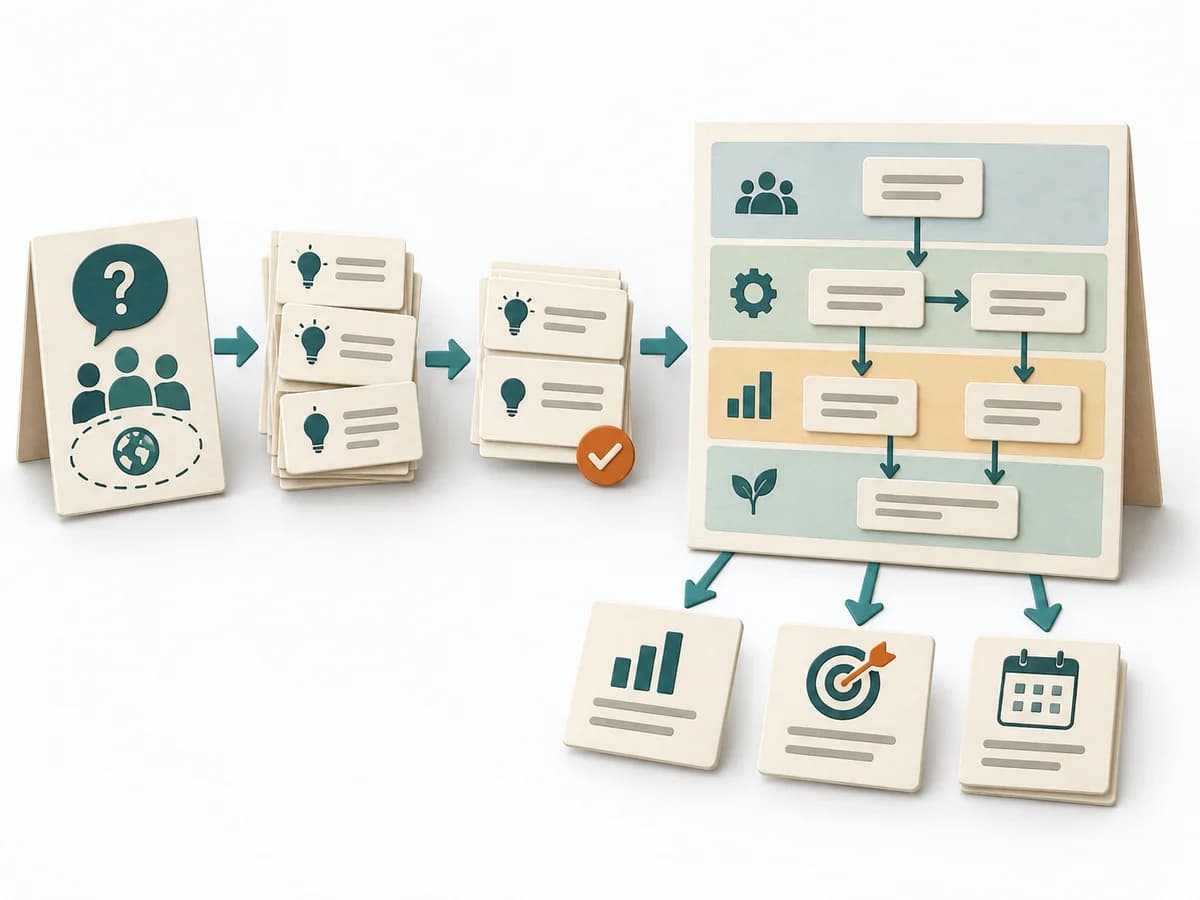 Business Strategy Strategy Map | 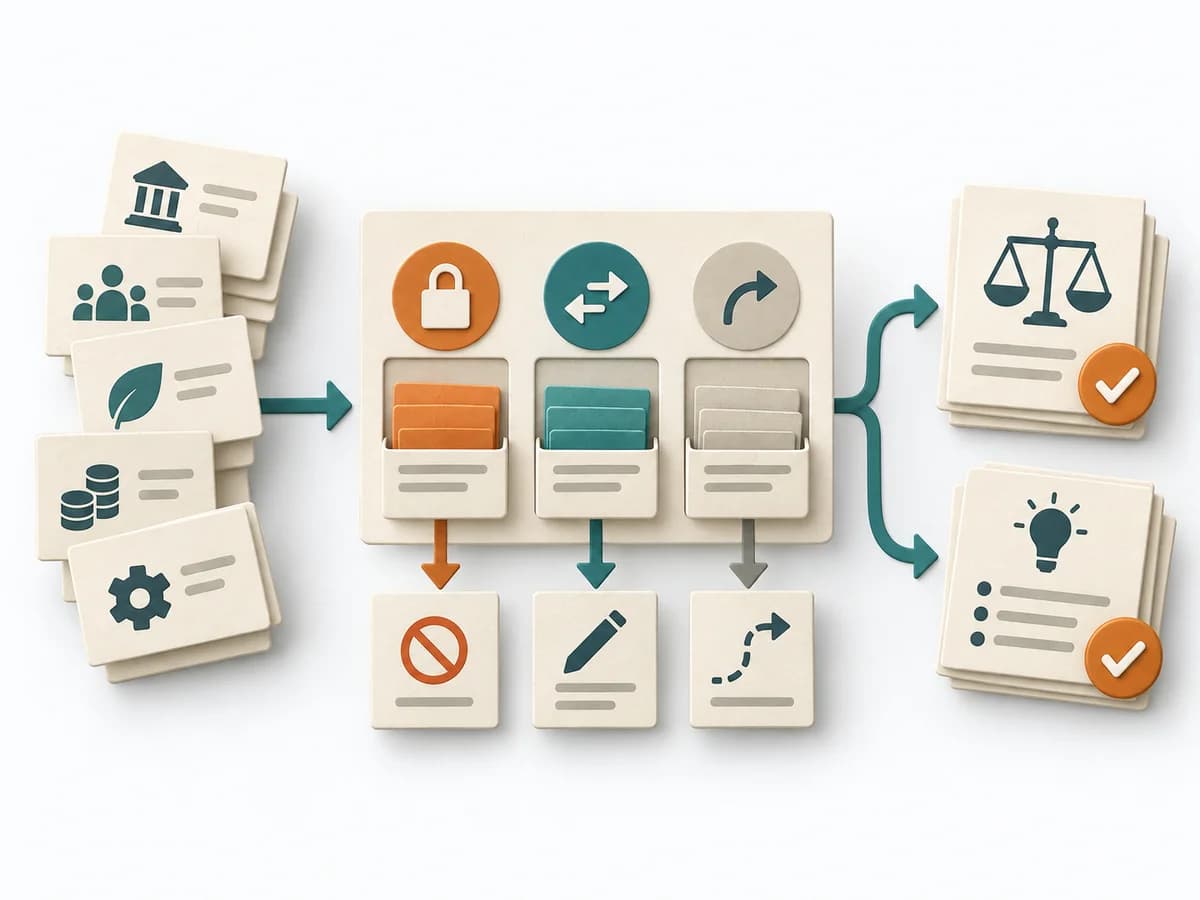 Decision Making Constraint Analysis | 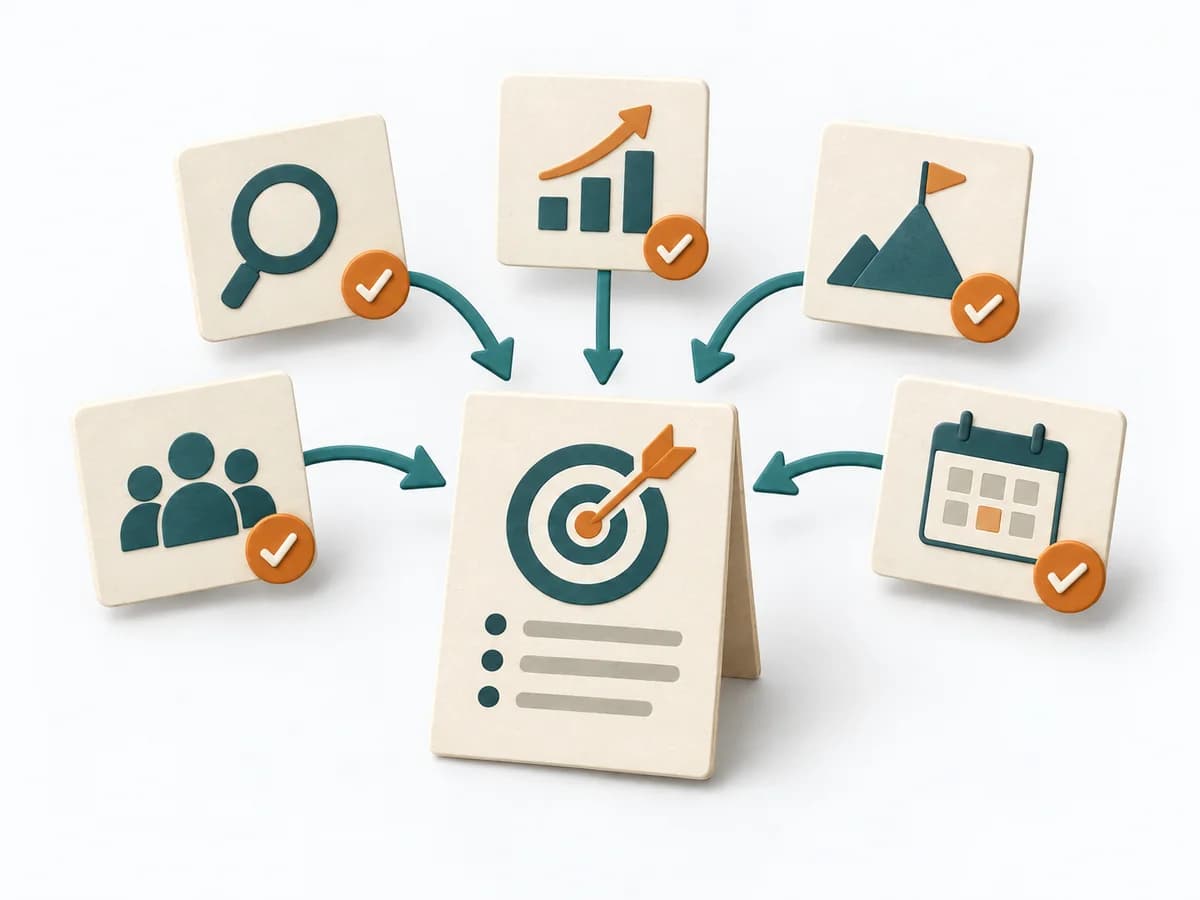 Product Strategy SMART Goals |  Product Strategy OKRs |
|---|---|---|---|---|
Purposedifferent | A Strategy Map translates strategy into a few connected objectives across perspectives such as finance, customers, processes, and learning. This makes visible which capabilities and activities are meant to drive which results. | When an initiative stalls, the limit often lies not in the idea but in hard or soft boundary conditions. Constraint Analysis separates these limits and shows which of them can actually be shaped. | When goals are formulated too generally, it brings measurability, direction, and timing into shape. It prevents intentions from staying without clear verification. | When strategic direction needs to become measurable, it connects ambition with checkable results. It makes goals connectable to focus and review. |
Complexitydifferent | Medium | Low | Low | Medium |
Timedifferent | 2-4 h workshop plus review | 30-90 min | 15-30 min | 1-2 h Setup |
Participantsdifferent | 4-10 | 2-8 | 1-8 | 2-20 |
Formatdifferent | Workshop | Workshop + async | Workshop + async | Workshop + async |
Outputdifferent | Strategy Map, Objective Set, Cause-Effect Hypotheses | Constraint List, Hard/Soft Classification, Option Impact Notes, Decision Boundaries | SMART Goal, Measurement Note, Deadline | OKR set, Measurement plan, Review cadence |
Tagsno overlap | AlignmentExecutionGoalsCausality | ConstraintsDecisionPlanningOptions | GoalsPlanningMeasurementAlignment | GoalsAlignmentOutcomesMeasurement |