View methods side by side.
Choose up to four methods. Add them using the search and share the comparison by copying its link.
Selected:Strategic, Tactical and Operational PlanningGrowth ExperimentGoal Question MetricCounter Metrics
| Criterion | 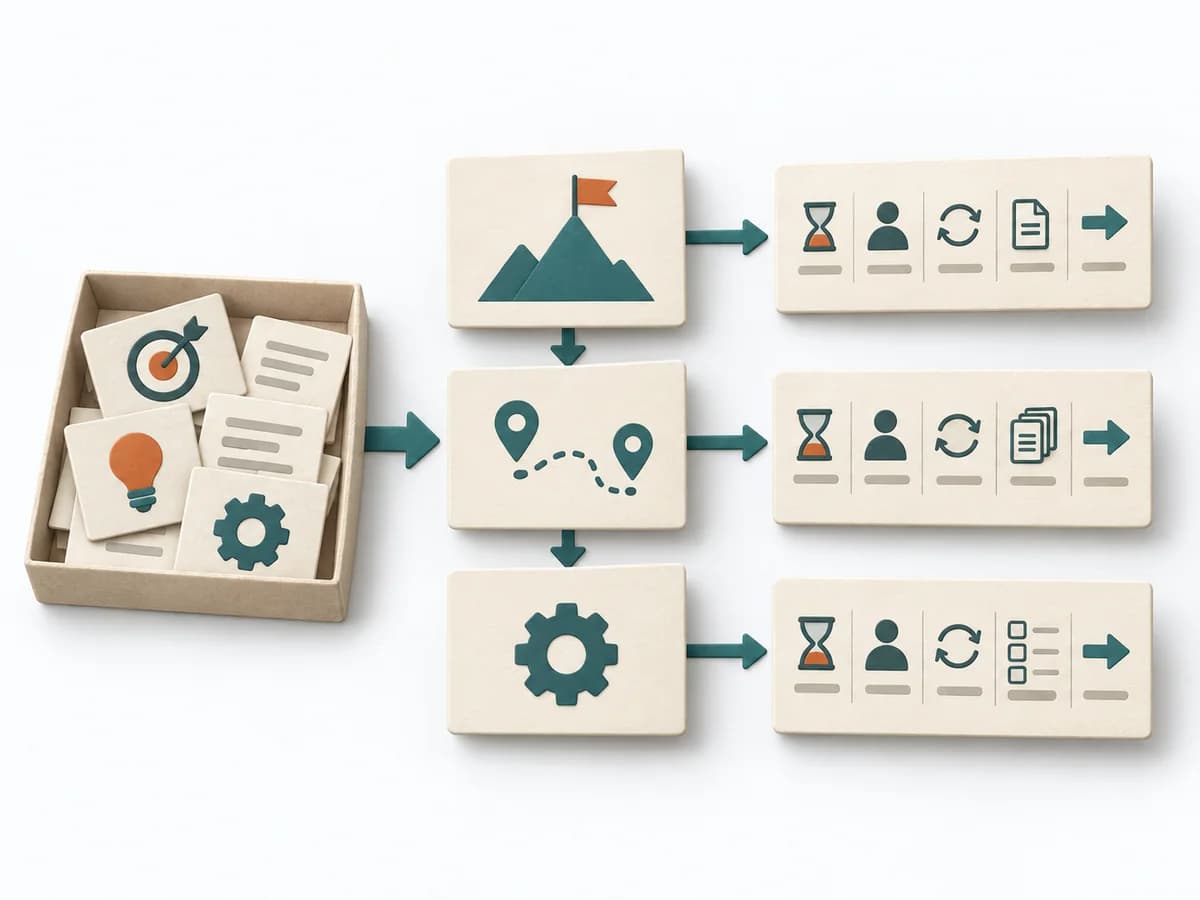 Business Strategy Strategic, Tactical and Operational Planning |  Growth Growth Experiment | 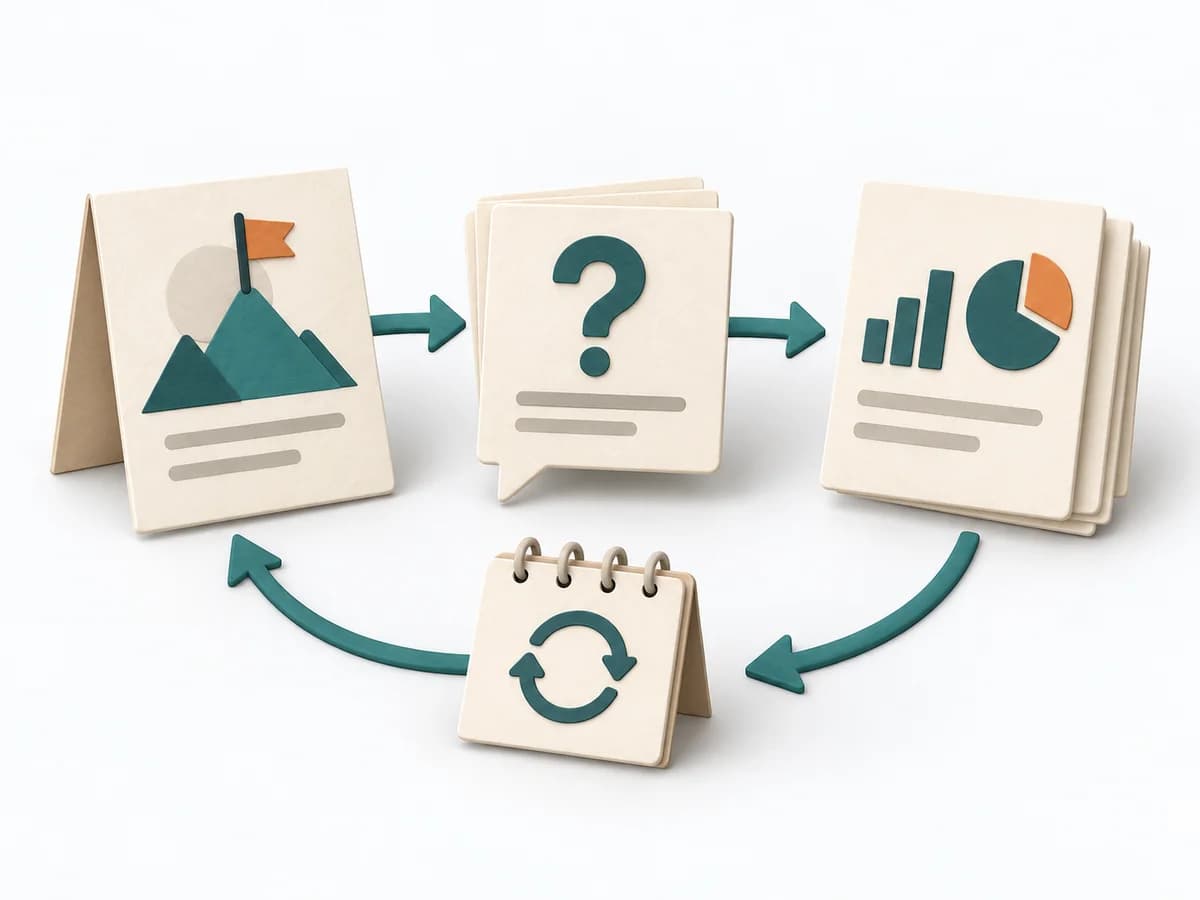 Engineering Goal Question Metric |  Product Strategy Counter Metrics |
|---|---|---|---|---|
Purposedifferent | It places decisions and artifacts at the right level. Strategic planning clarifies direction, tactical planning translates it into programs, and operational planning steers concrete processes. | When growth ideas surface quickly, the temptation to build immediately instead of learning is high. A Growth Experiment frames an assumption so target group, lever, and measurement are clear before the first deployment. | Helps clarify technical problems, hypotheses, and next steps in concrete terms. It breaks a technical problem into testable parts. The result is captured as a GQM table and metric briefs. | When a headline metric could mask side effects, it adds guardrail signals against unwanted outcomes. It connects customer value, product logic, and decision priorities. The result is captured as a counter-metric list and guardrail definitions. |
Complexitydifferent | Medium | Medium | Medium | Low |
Timedifferent | 90-180 min | 1-2 Wochen | 90-180 min | 30-60 min |
Participantsdifferent | 4-12 | 1-6 | 3-6 | 2-6 |
Formatdifferent | Workshop | Workshop + async | Workshop | Workshop + async |
Outputdifferent | Planning Levels Map, Cadence Model, Planning Artifact Inventory | Experiment card, Result summary, Next bet | GQM Table, Metric Profiles | Counter Metric List, Guardrail Definitions |
Tagsno overlap | CadenceGovernanceExecution | MarketingGrowthExperimentsLearning | MetricsMeasurementEngineeringAlignment | MetricsMeasurementStrategyExperiments |