View methods side by side.
Choose up to four methods. Add them using the search and share the comparison by copying its link.
| Criterion | 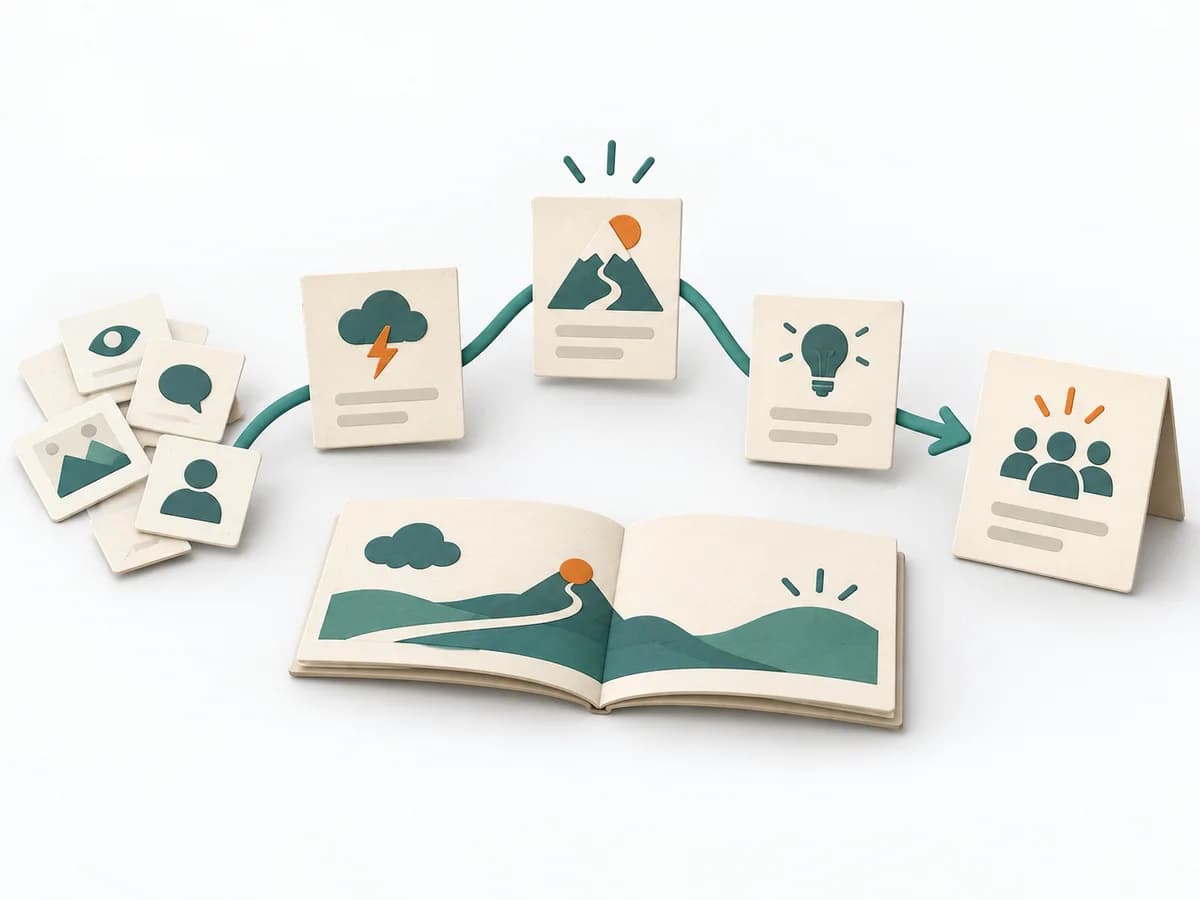 Facilitation Storytelling |  UX Research Affinity Diagramming |  Facilitation Consensus Workshop |  Facilitation Stakeholder Mapping |
|---|---|---|---|---|
Purposedifferent | When an insight needs to have an effect, storytelling translates dry facts into a comprehensible development. It combines context, tension, and consequence into a form that people remember and pass on more easily. | When research notes, feedback, or observations sit unconnected side by side, affinity diagramming sorts the raw material into solid themes. Many individual points turn into patterns that make decisions and opportunities clearer. | When a group needs a solid decision without outvoting individual factions, a Consensus Workshop creates a negotiable common ground. It makes agreement, reservations, and open tensions discussable at the same time. | When an initiative depends on many people, interests, and power dynamics, Stakeholder Mapping systematically orders the environment. It shows who influences, who is affected, and where relationship management or safeguarding matters first. |
Complexitydifferent | Medium | Low | Medium | Low |
Timedifferent | 45-120 min | 45–90 min | 1-3 h | 60–90 min |
Participantsdifferent | 1-6 | 3-10 | 5-30 | 2-8 |
Formatdifferent | Workshop + async | Workshop | Workshop | Workshop + async |
Outputdifferent | Narrative Outline, Key Message, Story Arc | Theme clusters, Insight statements, Opportunity areas | Consensus Clusters, Theme Titles, Priority Areas | Stakeholder Map, Engagement Plan, Risk Notes |
Tagsno overlap | CommunicationNarrativeStakeholdersFacilitation | SynthesisQualitativeRoot cause | FacilitationConsensusWorkshopAlignment | StakeholdersAlignmentFacilitationChange |