View methods side by side.
Choose up to four methods. Add them using the search and share the comparison by copying its link.
| Criterion | 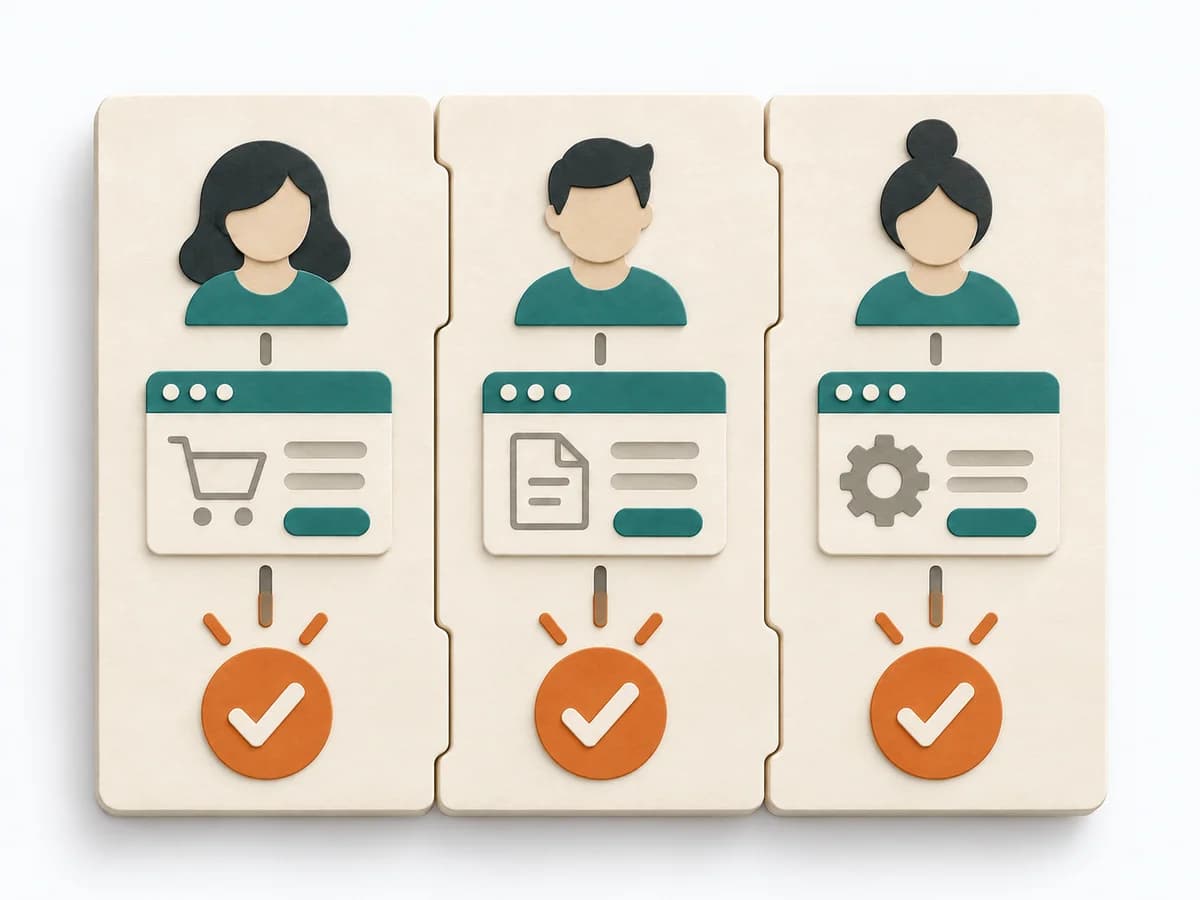 Agile Story Splitting | 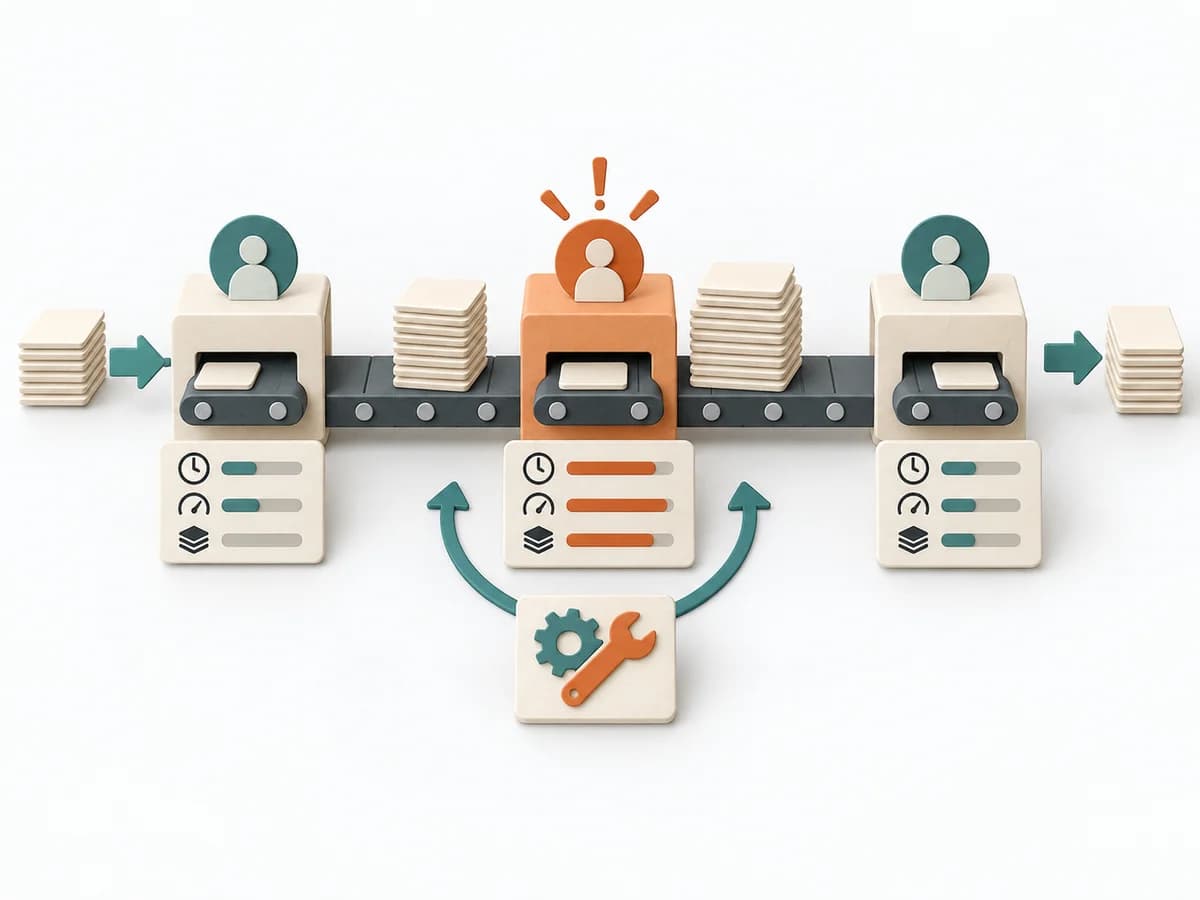 Operations Bottleneck Analysis | 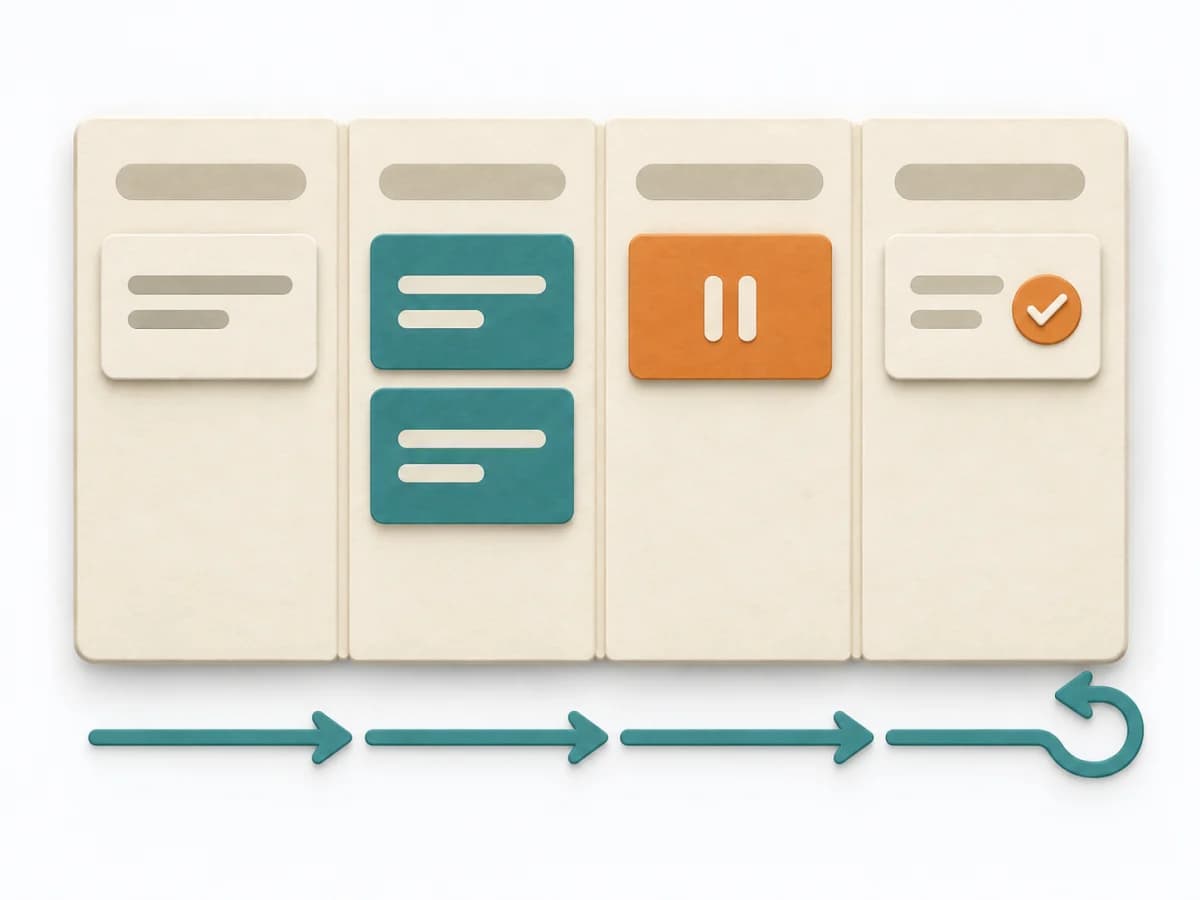 Engineering Kanban | 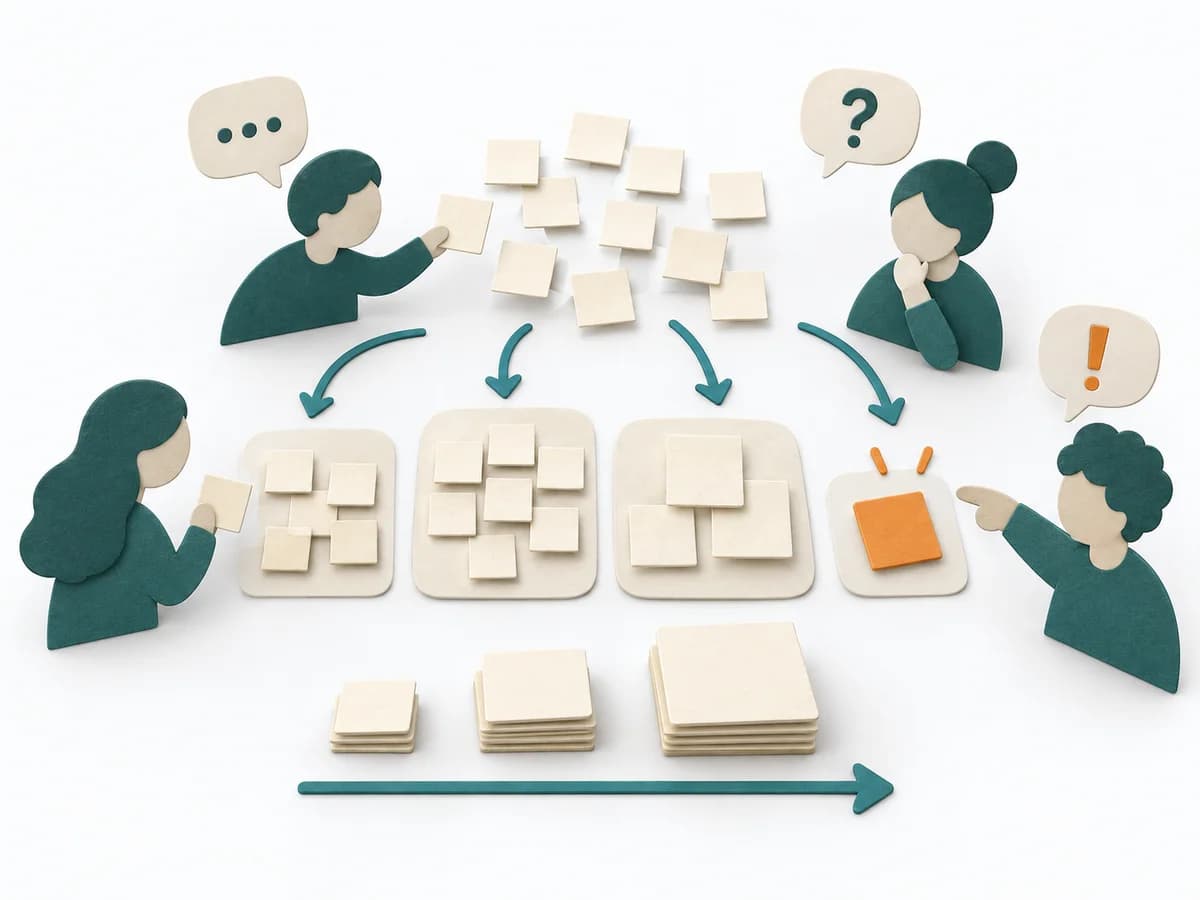 Agile Affinity Estimation |
|---|---|---|---|---|
Purposedifferent | When a story becomes too large for a clean flow, it breaks scope down along value and risk. It shapes the work into a form that ships earlier and is easier to verify. | For a flow that backs up at one point, the method looks for the capacity limit with the greatest leverage. It explains why extra effort elsewhere barely improves throughput. | When work sits in too many parallel streams, throughput suffers and no one sees the bottlenecks. Kanban makes the flow of work visible and limits overload so a system becomes calmer and more predictable. | When many tasks need to be classified quickly, it sorts them by perceived effort and similarity. It reduces the effort of fine-grained estimation for large volumes. |
Complexitysame | Medium | Medium | Medium | Medium |
Timedifferent | 30-60 min | 1-3 h | Ongoing | 30-90 min |
Participantsdifferent | 2-6 | 3-8 | 2-12 | 3-12 |
Formatdifferent | Workshop + async | Workshop + async | Workshop + async | Workshop |
Outputdifferent | Smaller Stories, Acceptance Criteria, Split Rationale | Bottleneck Map, Flow Metrics, Improvement Options, Follow-up Measures | Kanban board, WIP policies, Flow metrics | Affinity Size Map, Grouped Estimates, Unclear Items |
Tagsno overlap | BacklogIterationDelivery | FlowMeasurementConstraints | FlowVisual managementDelivery | EstimationBacklogRelative sizing |