View methods side by side.
Choose up to four methods. Add them using the search and share the comparison by copying its link.
| Criterion | 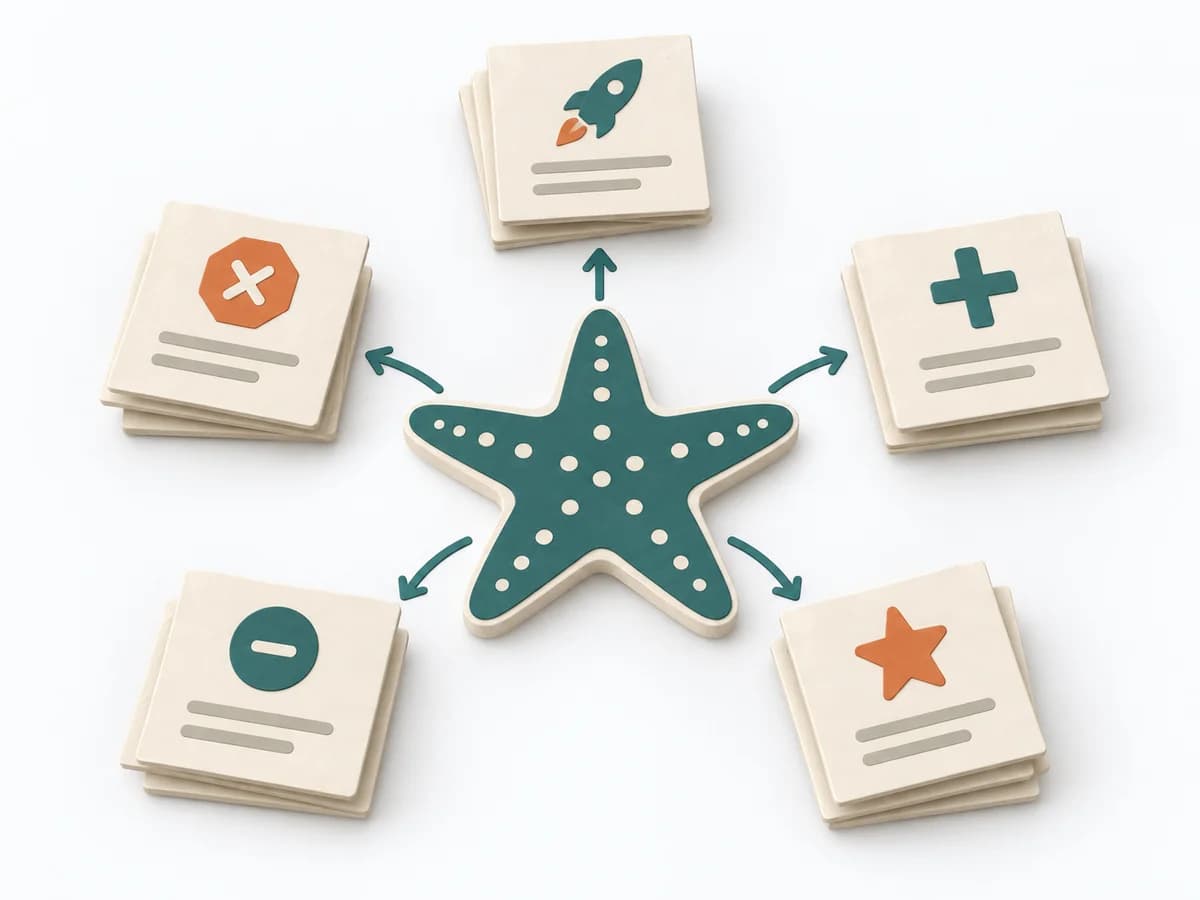 Agile Starfish Retrospective | 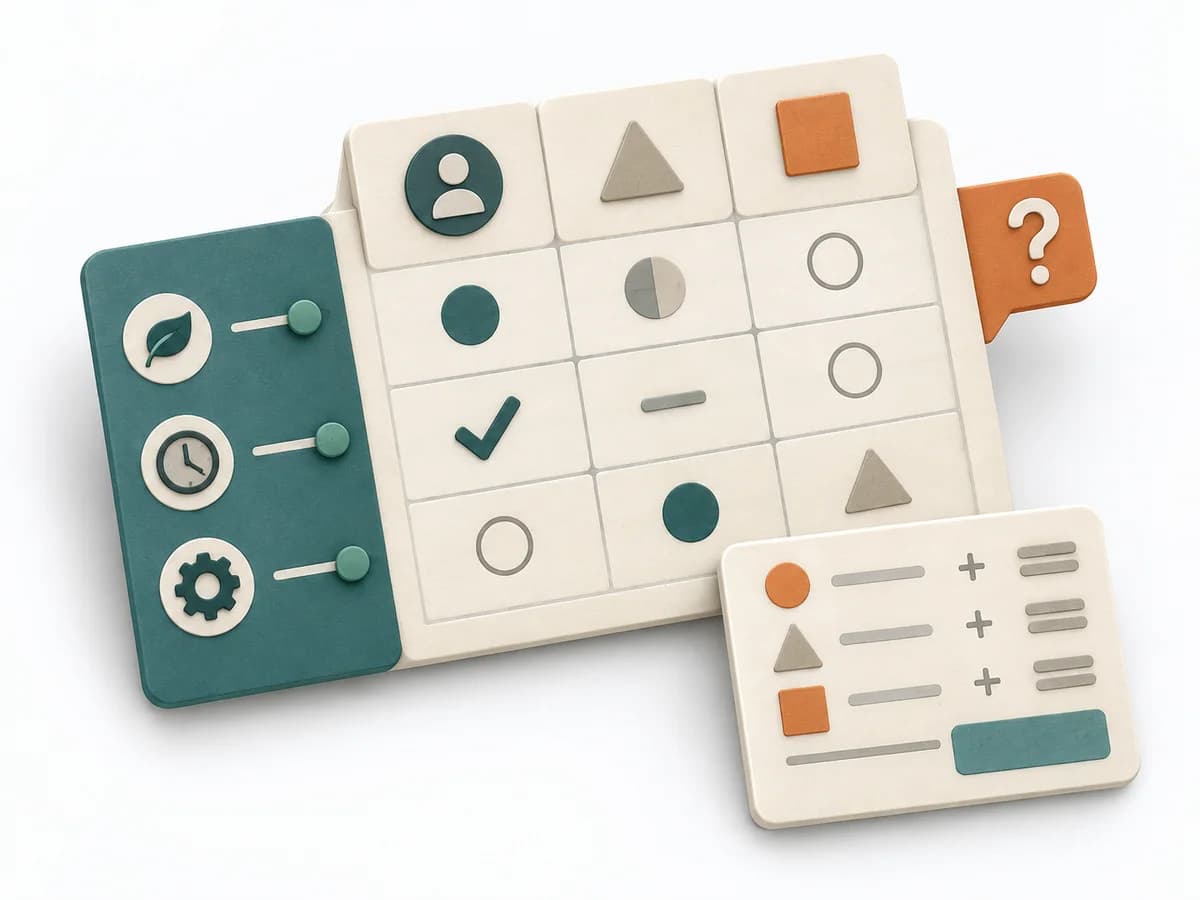 Decision Making Decision Matrix |  Agile Start Stop Continue | 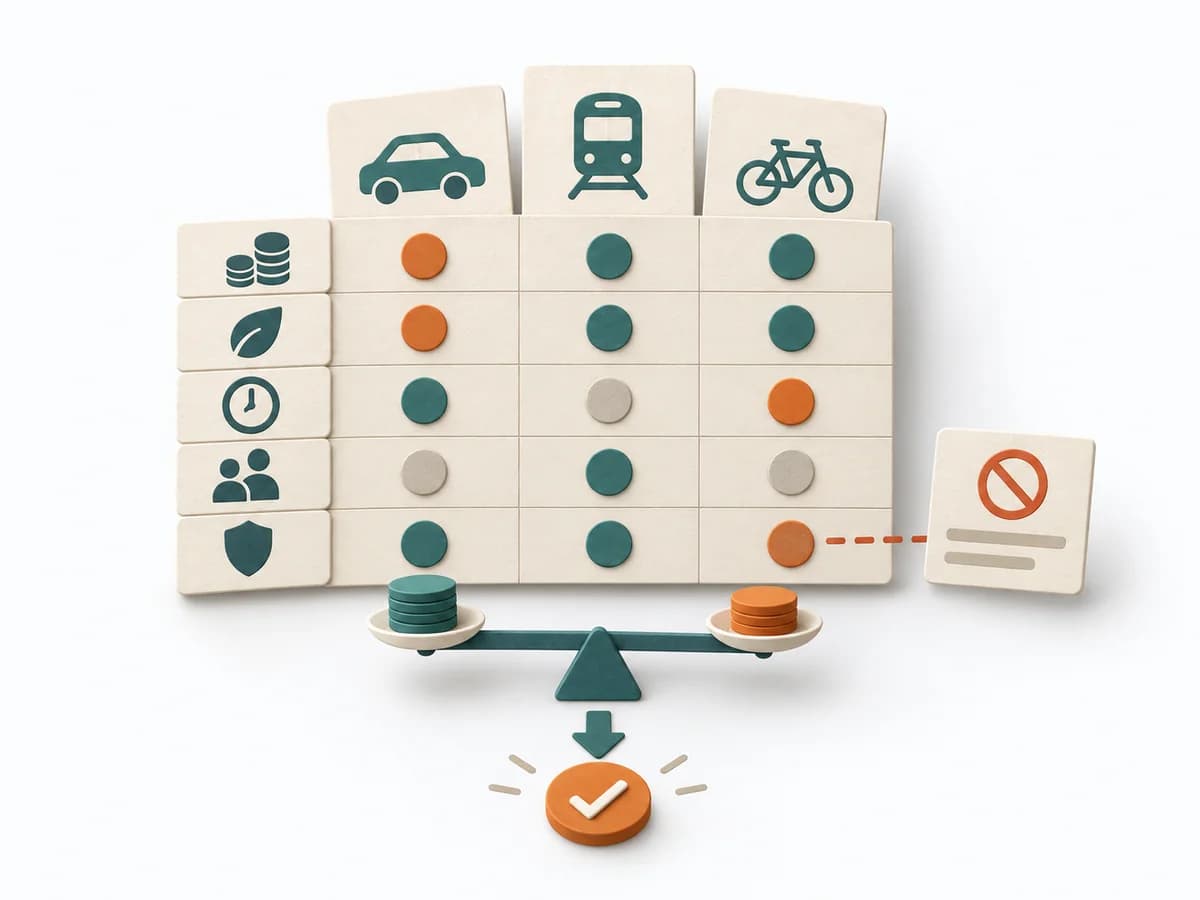 Decision Making Trade-off Analysis |
|---|---|---|---|---|
Purposedifferent | When improvement options need to be sorted more finely than just start and stop, it brings observations into clear kinds of action. This makes visible what should be done more, less, newly, or continued. | When several options collide with several criteria, comparison quickly becomes subjective. A Decision Matrix makes the trade-off visible and brings weighting, criteria, and options into a shared logic. | When a team wants to deliberately adjust its working behavior, it makes habits visible and assessable. It focuses on concrete changes instead of diffuse mood. | With limited resources, quality, speed, cost, and risk almost always compete with each other. Trade-off Analysis makes these tensions explicit and prevents decisions from producing hidden side effects. |
Complexitydifferent | Low | Medium | Low | Medium |
Timedifferent | 45-90 min | 45-90 min | 30-60 min | 45-120 min |
Participantsdifferent | 4-12 | 2-8 | 3-12 | 2-8 |
Formatdifferent | Workshop | Workshop + async | Workshop | Workshop + async |
Outputdifferent | Starfish Board, Practice Changes, Experiments | Decision Matrix, Scoring Rationale, Selected Option | Start Stop Continue Board, Improvement Actions | Trade-off Matrix, Criteria List, Decision Rationale, Accepted Downsides |
Tagsno overlap | RetrospectiveImprovementExperimentsTeam | DecisionCriteriaScoringTradeoffs | RetrospectiveImprovementTeamReflection | TradeoffsDecisionCriteriaOptions |