View methods side by side.
Choose up to four methods. Add them using the search and share the comparison by copying its link.
| Criterion | 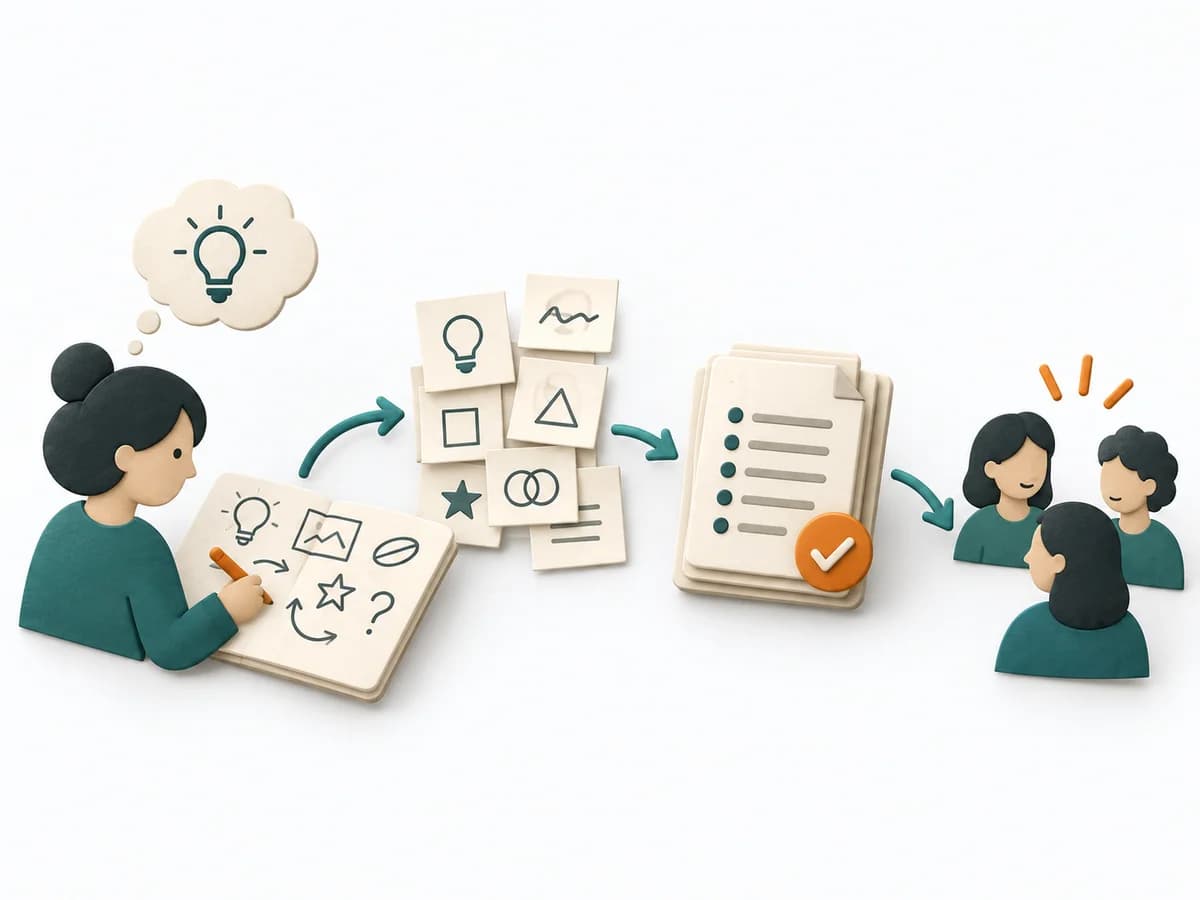 Innovation Solo Brainstorming |  Innovation Reverse Brainstorming |  Facilitation 1-2-4-All | 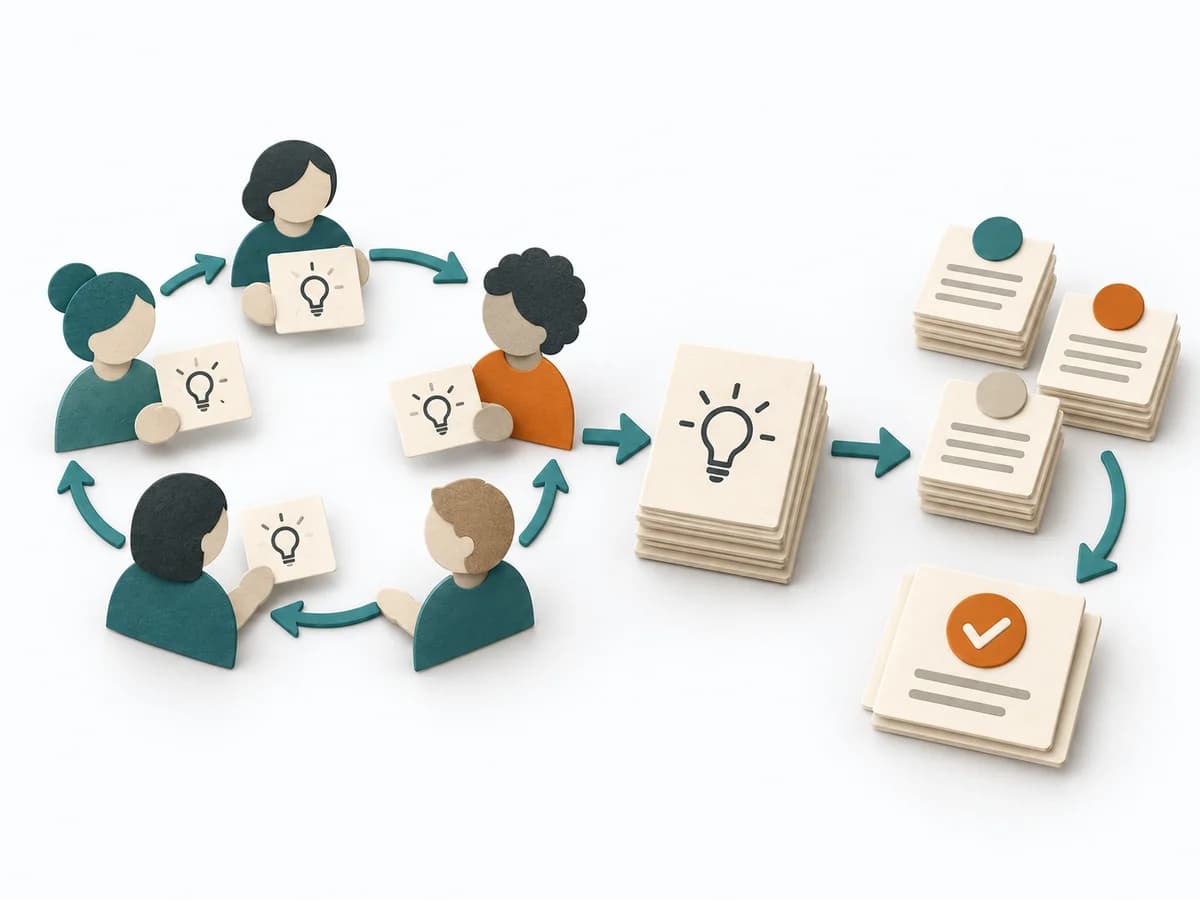 Innovation Round Robin Brainstorming |
|---|---|---|---|---|
Purposedifferent | For an individual thinking problem with no counterpart immediately available, the method creates a protected space for one's own approaches. It prevents outside opinions from narrowing thinking too early. This lets ideas mature before they go into a group format. | For persistent errors or blockages, the method shifts the view to the opposite of the desired effect. It exposes the mechanics of failure and makes hidden causes easier to grasp. This makes improvement more concrete and the problem clearer. | When many people in a group too rarely get to speak, 1-2-4-All distributes thinking time more fairly. The format builds participation step by step and makes quiet or still-unformed thoughts usable faster. | With unevenly distributed speaking time, the method brings every person into the contribution one after another. It prevents early voices from setting the direction while still producing a shared idea space. This makes participation plannable and the team's diversity visible. |
Complexitysame | Low | Low | Low | Low |
Timedifferent | 15-60 min | 30-60 min | 10-20 min | 20-45 min |
Participantsdifferent | 1 | 3-12 | 4-100+ | 4-10 |
Formatdifferent | Async | Workshop | Workshop | Workshop |
Outputdifferent | Personal Idea List, Sketches or Mind Map, Pre-Read for Group Session | Reverse Ideas, Risk Themes, Solution Ideas | Idea List, Shared Insights, Emergent Themes | Idea List, Cluster, Shortlist |
Tags1 shared | BrainstormingIdeationAsync | BrainstormingIdeationCreativityRisk | FacilitationInclusionIdeation | BrainstormingIdeationFacilitationInclusionCreativity |