View methods side by side.
Choose up to four methods. Add them using the search and share the comparison by copying its link.
| Criterion | 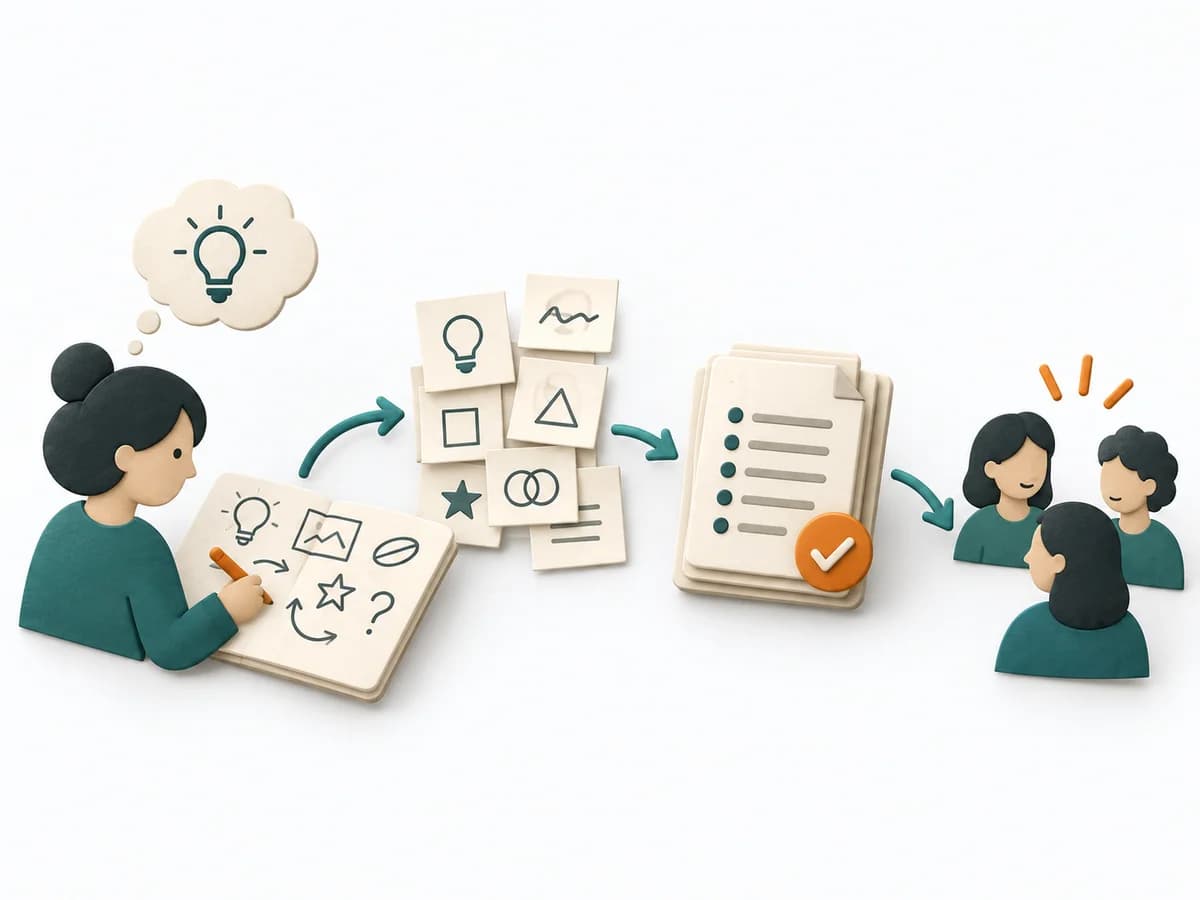 Innovation Solo Brainstorming |  Knowledge Modeling IBIS |  Decision Making Argument Mapping |  Innovation Brainstorming |
|---|---|---|---|---|
Purposedifferent | For an individual thinking problem with no counterpart immediately available, the method creates a protected space for one's own approaches. It prevents outside opinions from narrowing thinking too early. This lets ideas mature before they go into a group format. | IBIS structures thinking about complex questions as a sequence of issues, ideas, and arguments. The method keeps discussions open without forcing them into premature consensus. | When statements, evidence, and counterarguments get mixed up, a debate quickly loses its structure. Argument Mapping breaks a thesis down into its reasoning and makes visible what it really rests on. | When a team faces an open question with many obvious directions, the method first creates breadth instead of premature commitment. It separates idea flow from evaluation and makes lines of thought visible, creating a pool for selection and further development. |
Complexitydifferent | Low | Medium | Medium | Low |
Timedifferent | 15-60 min | 1-3 h | 1-3 h | 30-60 min |
Participantsdifferent | 1 | 2-8 | 1-8 | 4-12 |
Formatdifferent | Async | Workshop + async | Workshop + async | Workshop |
Outputdifferent | Personal Idea List, Sketches or Mind Map, Pre-Read for Group Session | Issue Map, Positions, Argument Notes | Argument Map, Evidence Gaps, Decision Rationale | Idea pool, Theme clusters, Shortlist |
Tagsno overlap | BrainstormingIdeationAsync | RationaleKnowledgeDecision | SensemakingDecisionRationale | BrainstormingIdeationCreativityWorkshopDivergence |