View methods side by side.
Choose up to four methods. Add them using the search and share the comparison by copying its link.
| Criterion | 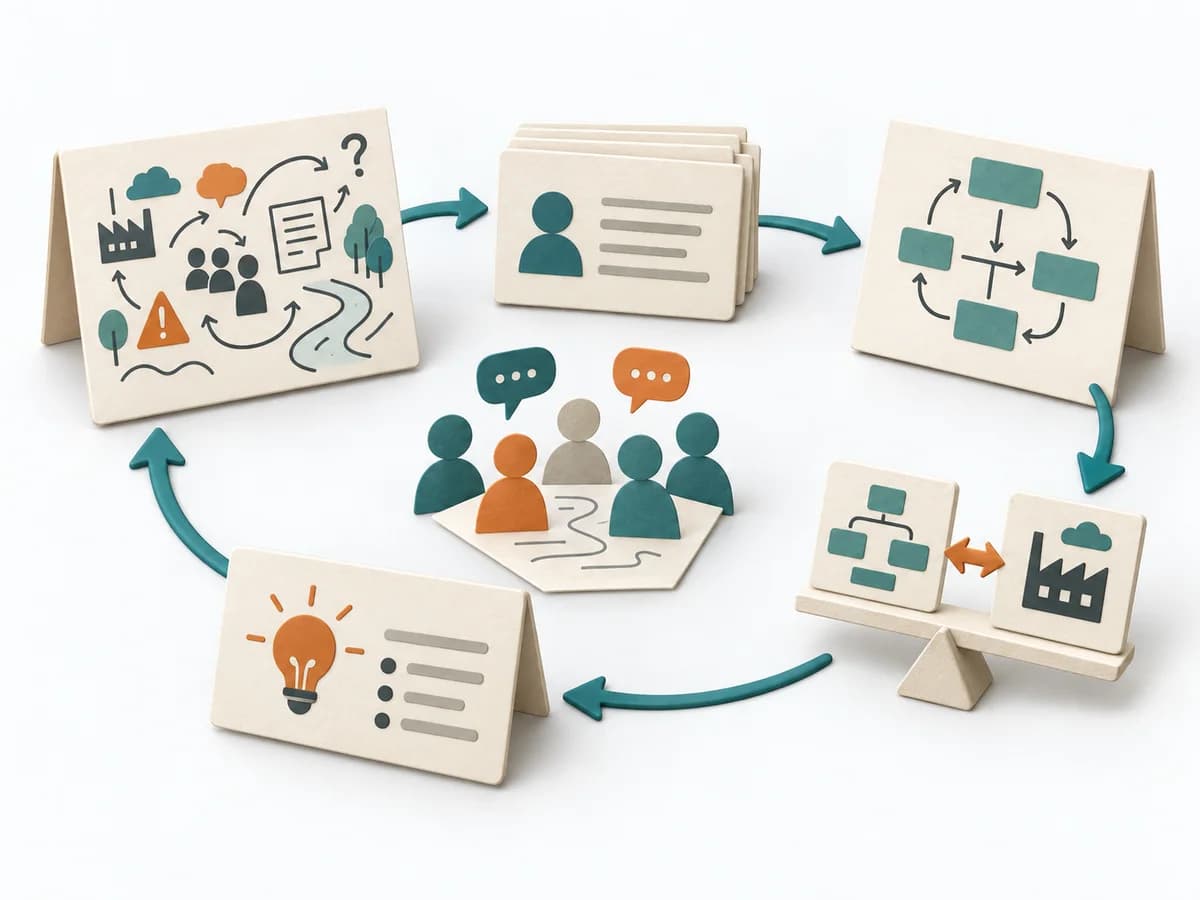 Systems Thinking Soft Systems Methodology |  UX Research User Interviews |  UX Research Affinity Diagramming |  UX Research Empathy Mapping |
|---|---|---|---|---|
Purposedifferent | Soft Systems Methodology helps explore unclear or politically charged problems systematically. Instead of forcing a quick answer, the method builds a shared understanding of perspectives and room for action. | When teams derive needs only from assumptions and real motives are missing, user interviews give direct access to behavior and meaning. Conversations from the target group's everyday life make patterns, tensions, and open questions solidly visible. | When research notes, feedback, or observations sit unconnected side by side, affinity diagramming sorts the raw material into solid themes. Many individual points turn into patterns that make decisions and opportunities clearer. | When a lot is assumed about a target group but little is seen jointly, empathy mapping makes knowledge and gaps directly comparable. The picture also shows which assumptions hold up and where evidence is missing. |
Complexitydifferent | High | Low | Low | Low |
Timedifferent | 0.5-3 Tage | 30–60 min per interview | 45–90 min | 30–60 min |
Participantsdifferent | 5-15 | 1 participant per interview | 3-10 | 4-8 |
Formatdifferent | Workshop | Workshop + async | Workshop | Workshop |
Outputdifferent | Rich Picture, Root Definitions, Conceptual Models, Change Agenda | Interview Notes, Themes, Insight Summary | Theme clusters, Insight statements, Opportunity areas | Empathy Map, Assumptions List, Research Gaps |
Tagsno overlap | Soft systemsComplexitySensemakingSystems thinking | QualitativeResearchCustomerDiscovery | SynthesisQualitativeRoot cause | SynthesisQualitativeWorkshop |