View methods side by side.
Choose up to four methods. Add them using the search and share the comparison by copying its link.
| Criterion | 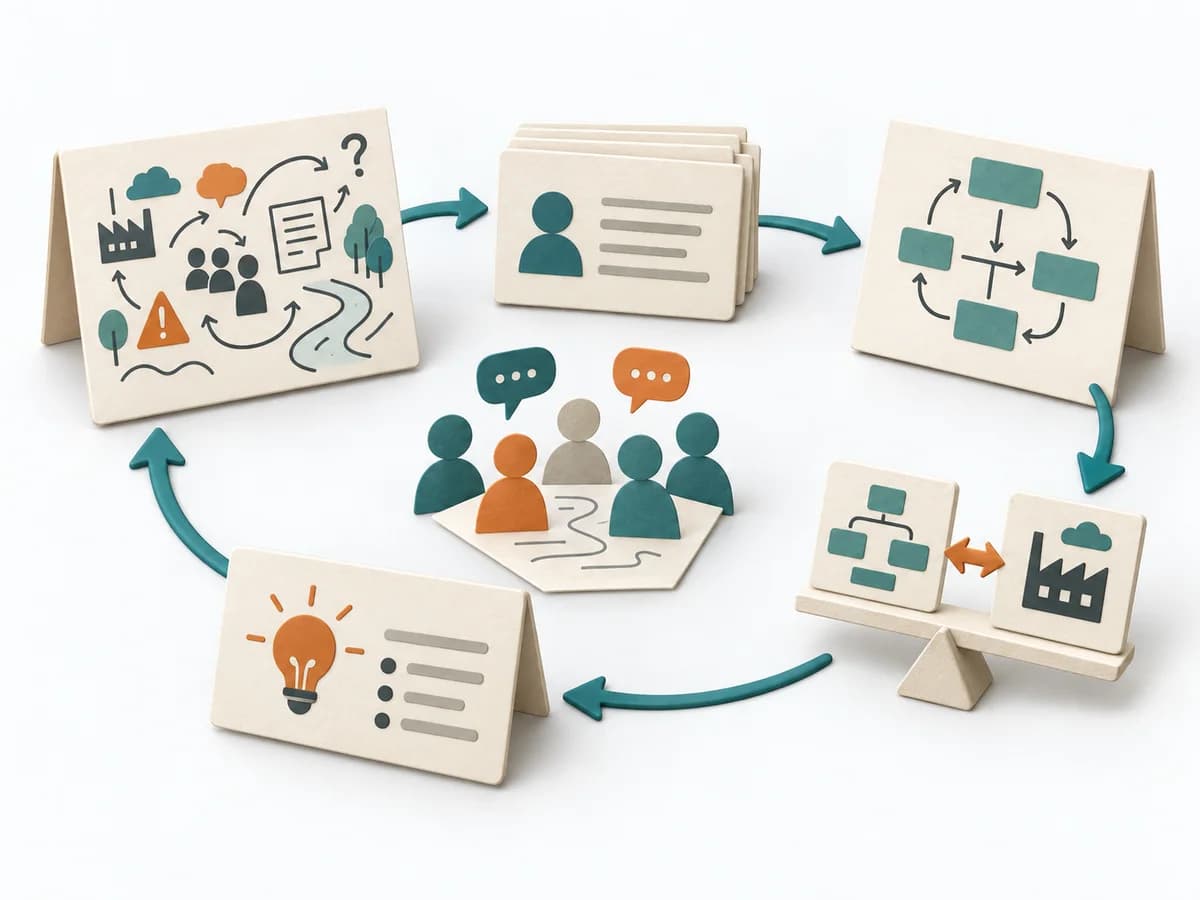 Systems Thinking Soft Systems Methodology |  Systems Thinking Leverage Points |  Innovation Design Charrette |  Innovation Brainstorming |
|---|---|---|---|---|
Purposedifferent | Soft Systems Methodology helps explore unclear or politically charged problems systematically. Instead of forcing a quick answer, the method builds a shared understanding of perspectives and room for action. | Leverage Points show exactly where interventions in a system produce a disproportionate effect. It draws relationships, patterns, and feedback loops. The result is captured as a leverage map and action strategy. | In a tightly timed design process with many participants, the method pools several lines of thinking in a short time. It brings parallel design energy without letting the discussion tip into endless coordination. This quickly produces solid directions for architecture or space. | When a team faces an open question with many obvious directions, the method first creates breadth instead of premature commitment. It separates idea flow from evaluation and makes lines of thought visible, creating a pool for selection and further development. |
Complexitydifferent | High | High | Medium | Low |
Timedifferent | 0.5-3 Tage | Half day | Halber Tag bis mehrere Tage | 30-60 min |
Participantsdifferent | 5-15 | 3-12 | 10-50 | 4-12 |
Formatsame | Workshop | Workshop | Workshop | Workshop |
Outputdifferent | Rich Picture, Root Definitions, Conceptual Models, Change Agenda | Leverage Map, Action Strategy | Sketches and Concepts, Consolidated Solution Sketch, Prioritized Direction | Idea pool, Theme clusters, Shortlist |
Tagsno overlap | Soft systemsComplexitySensemakingSystems thinking | Systems thinkingChangeStrategy | BrainstormingWorkshopCollaborationIdeation | BrainstormingIdeationCreativityWorkshopDivergence |