View methods side by side.
Choose up to four methods. Add them using the search and share the comparison by copying its link.
| Criterion | 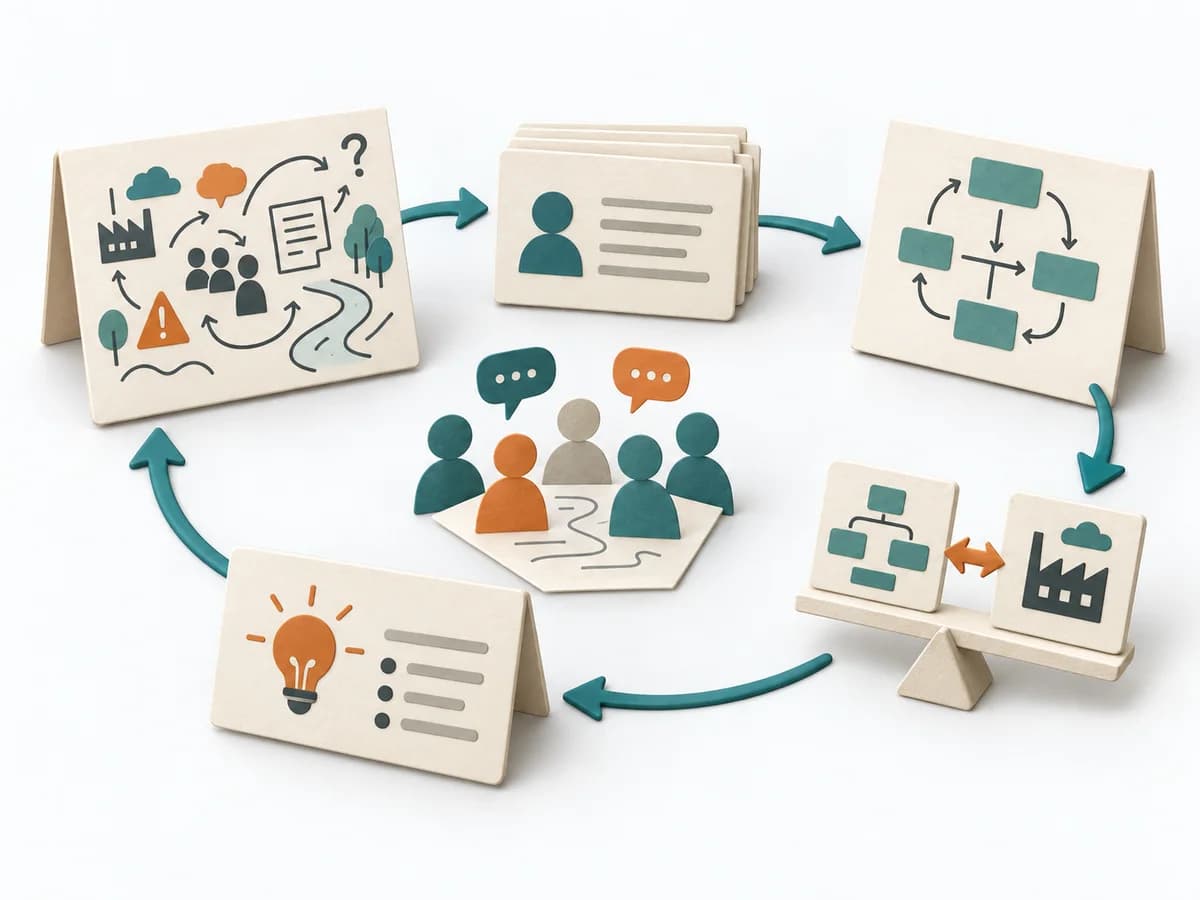 Systems Thinking Soft Systems Methodology |  UX Research Affinity Diagramming | 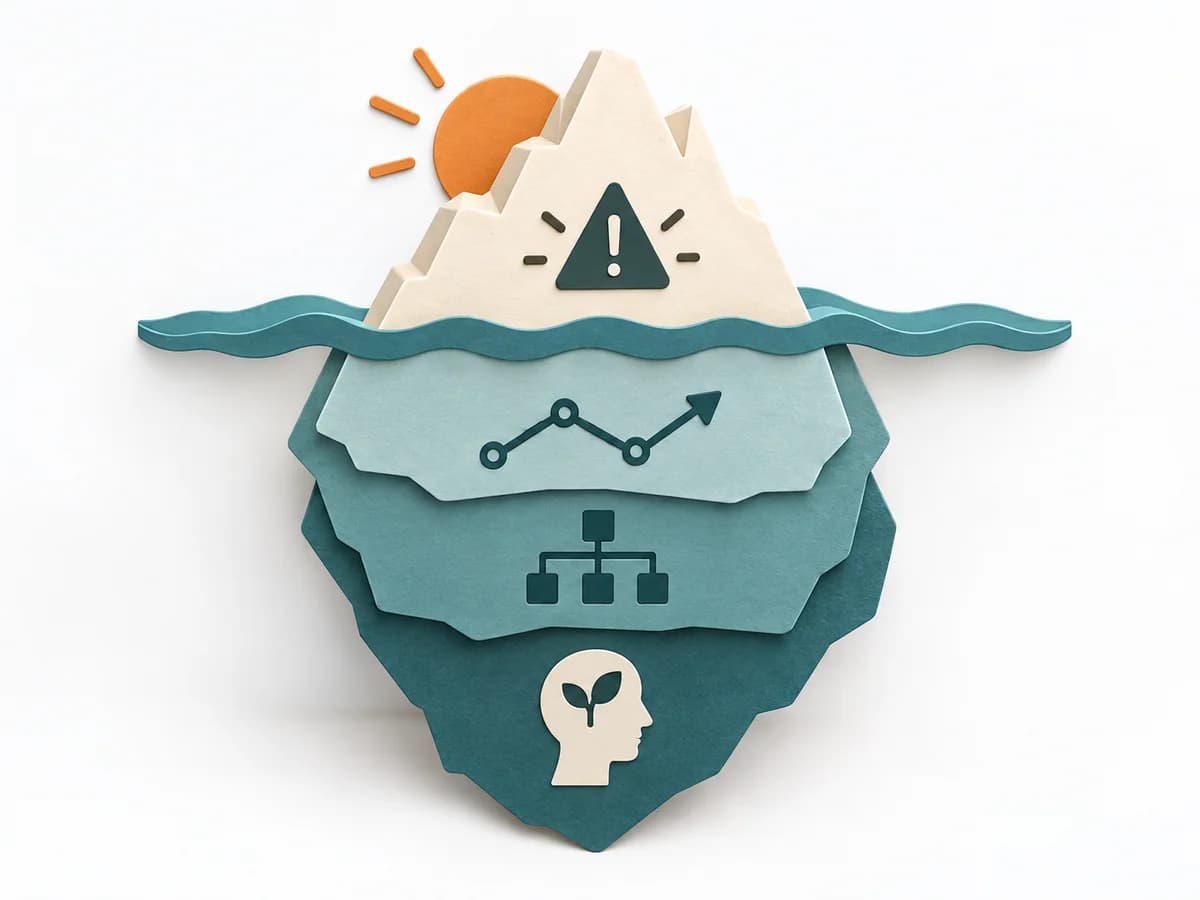 Systems Thinking Iceberg Model | 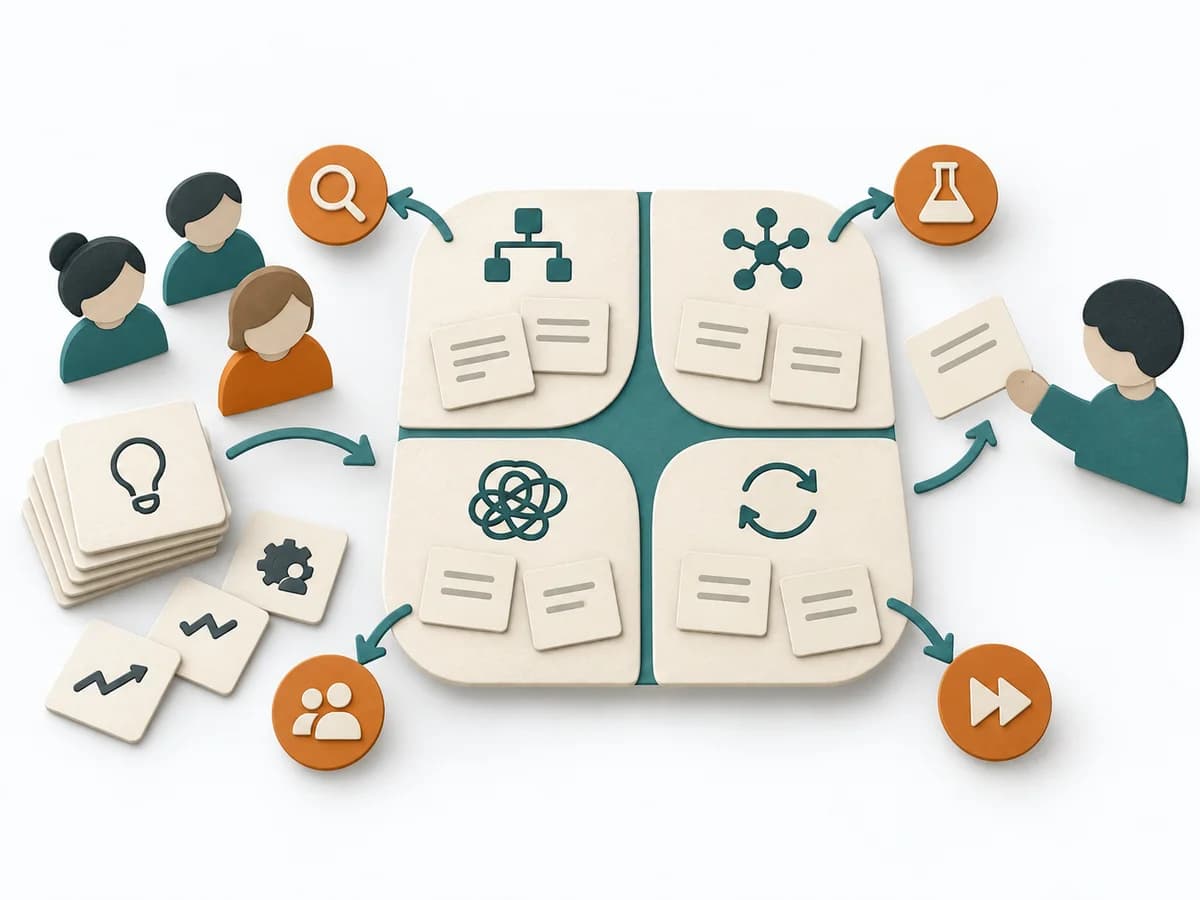 Decision Making Cynefin Workshop |
|---|---|---|---|---|
Purposedifferent | Soft Systems Methodology helps explore unclear or politically charged problems systematically. Instead of forcing a quick answer, the method builds a shared understanding of perspectives and room for action. | When research notes, feedback, or observations sit unconnected side by side, affinity diagramming sorts the raw material into solid themes. Many individual points turn into patterns that make decisions and opportunities clearer. | The Iceberg Model separates visible events from patterns, structures, and mental models. This turns a single observation into a deeper understanding of why a problem keeps recurring. | When problems are unclear, chaotic, or only seemingly familiar, standard recipes fall short. A Cynefin Workshop sorts situations by the nature of their problem and connects them with matching action logic. |
Complexitydifferent | High | Low | Low | Medium |
Timedifferent | 0.5-3 Tage | 45–90 min | 30-60 min | 60-180 min |
Participantsdifferent | 5-15 | 3-10 | 2-10 | 4-20 |
Formatdifferent | Workshop | Workshop | Workshop + async | Workshop |
Outputdifferent | Rich Picture, Root Definitions, Conceptual Models, Change Agenda | Theme clusters, Insight statements, Opportunity areas | Iceberg Worksheet, Pattern Notes, Intervention Ideas | Cynefin Map, Domain-specific Actions, Sensemaking Notes |
Tagsno overlap | Soft systemsComplexitySensemakingSystems thinking | SynthesisQualitativeRoot cause | Systems thinkingRoot causePatterns | ComplexitySensemakingDecision |