View methods side by side.
Choose up to four methods. Add them using the search and share the comparison by copying its link.
| Criterion |  Product Strategy SMART Goals | 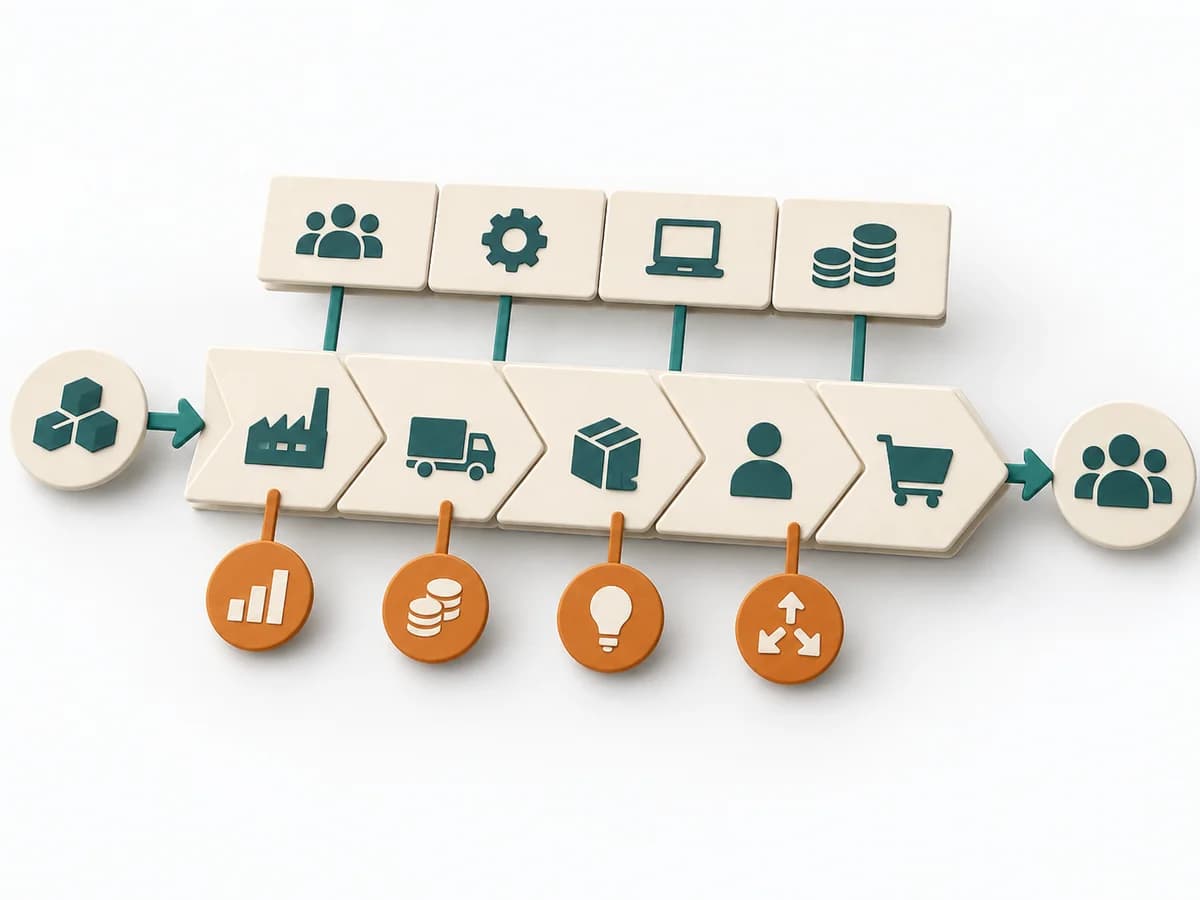 Business Strategy Value Chain Analysis |  Business Strategy GAP Analysis |  Product Strategy OKRs |
|---|---|---|---|---|
Purposedifferent | When goals are formulated too generally, it brings measurability, direction, and timing into shape. It prevents intentions from staying without clear verification. | Value Chain Analysis shows where value is created, costs accrue, and differentiation becomes possible along the process. It compares strengths, risks, market logic, and courses of action. The result is captured as a value-chain map and lever list. | GAP Analysis compares the current state with a target picture and makes the distance manageable. It becomes useful when, ahead of new initiatives, it must become clear which capabilities, processes, or resources are missing. | When strategic direction needs to become measurable, it connects ambition with checkable results. It makes goals connectable to focus and review. |
Complexitydifferent | Low | High | Medium | Medium |
Timedifferent | 15-30 min | Half day | 1-3 h | 1-2 h Setup |
Participantsdifferent | 1-8 | 3-8 | 2-8 | 2-20 |
Formatdifferent | Workshop + async | Workshop | Workshop + async | Workshop + async |
Outputdifferent | SMART Goal, Measurement Note, Deadline | Value Chain Map, Lever List | Gap Matrix, Action Plan, Risk Notes | OKR set, Measurement plan, Review cadence |
Tagsno overlap | GoalsPlanningMeasurementAlignment | StrategyBusiness modelDiagnosisAnalysis | StrategyAnalysisPlanning | GoalsAlignmentOutcomesMeasurement |