View methods side by side.
Choose up to four methods. Add them using the search and share the comparison by copying its link.
| Criterion |  Product Strategy SMART Goals | 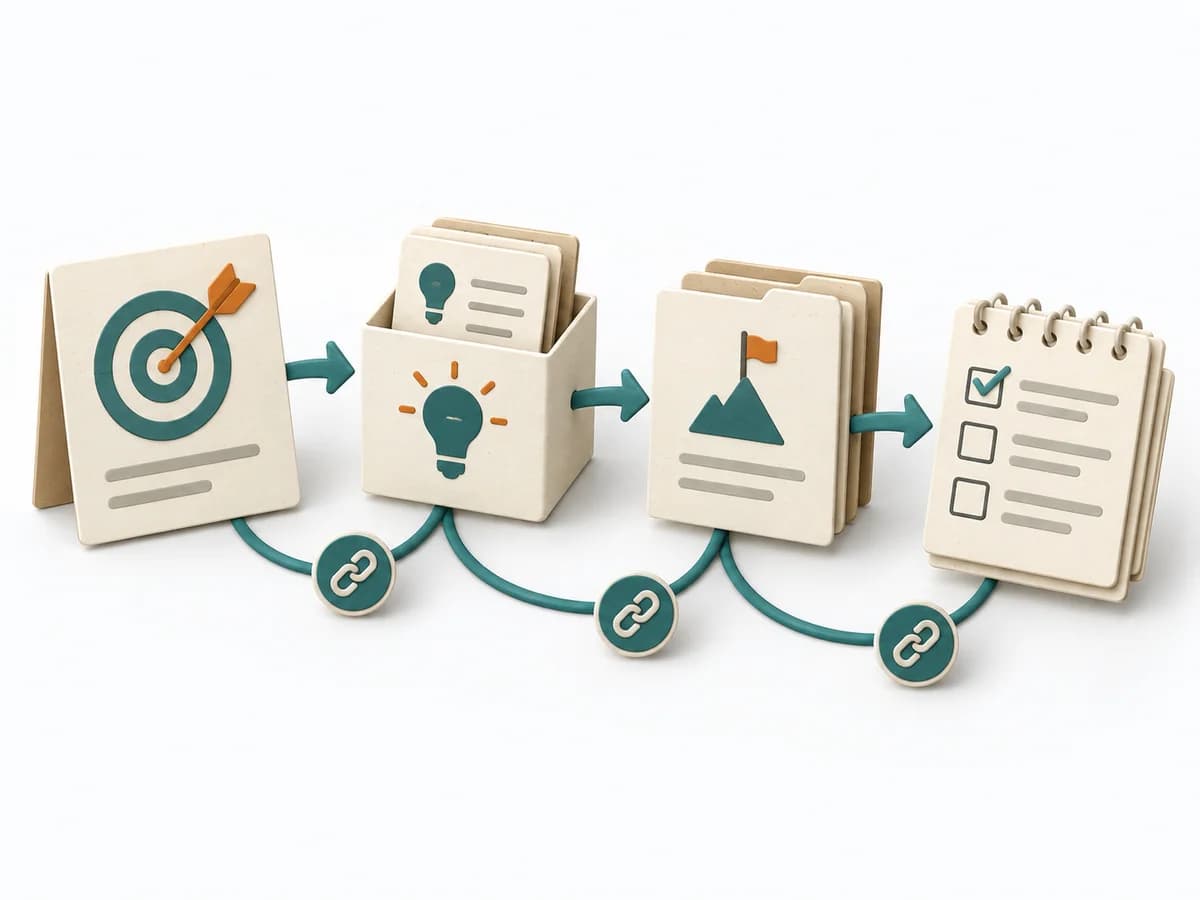 Product Strategy GIST Planning |  Facilitation Power Interest Grid |  Facilitation Stakeholder Salience Model |
|---|---|---|---|---|
Purposedifferent | When goals are formulated too generally, it brings measurability, direction, and timing into shape. It prevents intentions from staying without clear verification. | GIST Planning helps clarify target groups, value, goals, and priorities. It links customer value, product logic, and decision priorities, and captures the result as goals, an idea bank, and a step-project list. | When many stakeholders compete for attention at once, the Power Interest Grid sorts them by influence and stake. It turns individual contributions into a visible selection. The result is captured as a Power Interest Grid and a stakeholder-specific strategy. | When stakeholders appear to matter very differently, the Stakeholder Salience Model rates their actual priority through power, legitimacy, and urgency. It turns individual contributions into a visible selection. The result is captured as a Salience diagram and a class-based strategy. |
Complexitydifferent | Low | Medium | Low | Medium |
Timedifferent | 15-30 min | Wochen bis Monate je Goal | 30-60 min | 60-90 min |
Participantsdifferent | 1-8 | 3-10 | 2-8 | 3-6 |
Formatdifferent | Workshop + async | Workshop + async | Workshop | Workshop |
Outputdifferent | SMART Goal, Measurement Note, Deadline | Goals, Idea bank, Step-project list, Tasks, Learning reports | Power Interest Grid, Strategy per Stakeholder | Salience Diagram, Strategy per Class |
Tagsno overlap | GoalsPlanningMeasurementAlignment | RoadmapOutcomesPlanningExperiments | StakeholdersFacilitationAlignmentPlanning | StakeholdersFacilitationAlignmentGovernance |