View methods side by side.
Choose up to four methods. Add them using the search and share the comparison by copying its link.
| Criterion | 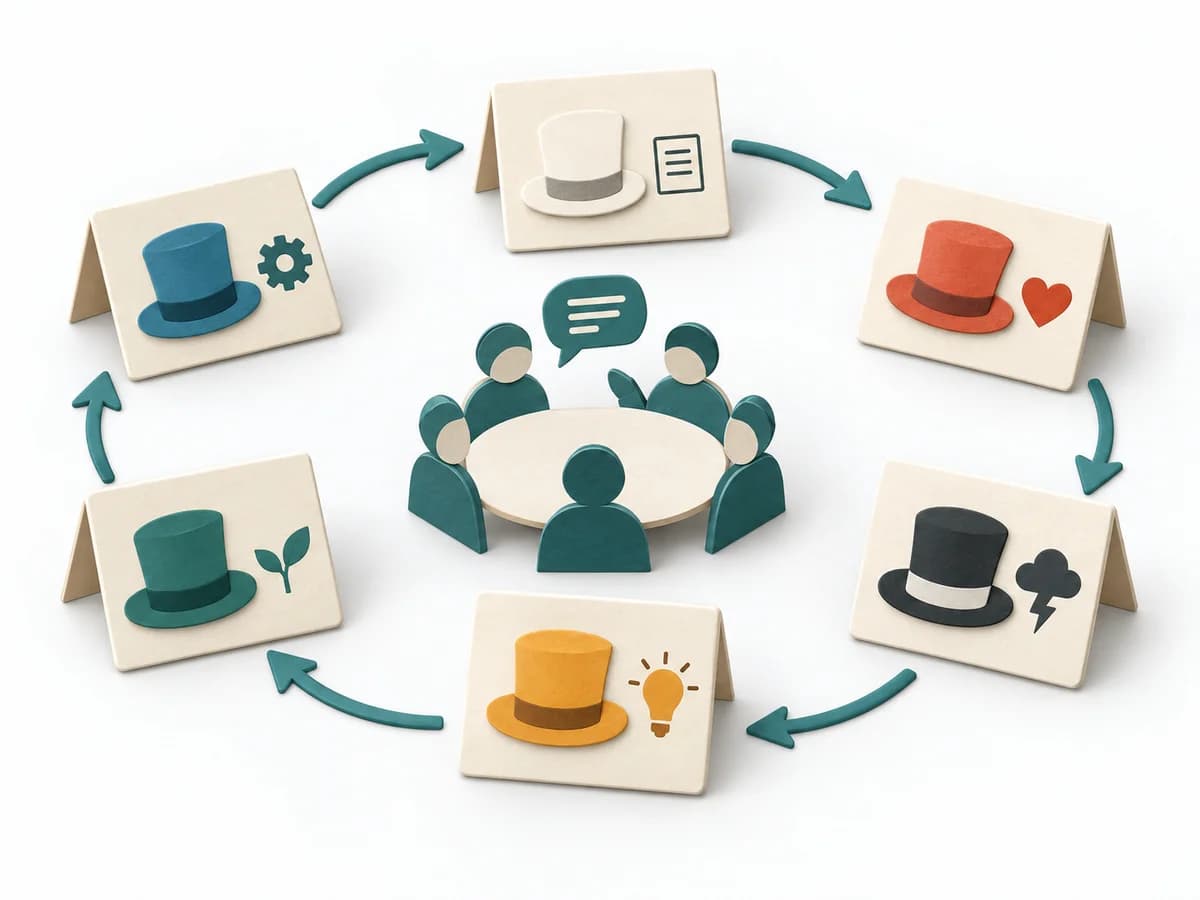 Facilitation Six Thinking Hats | 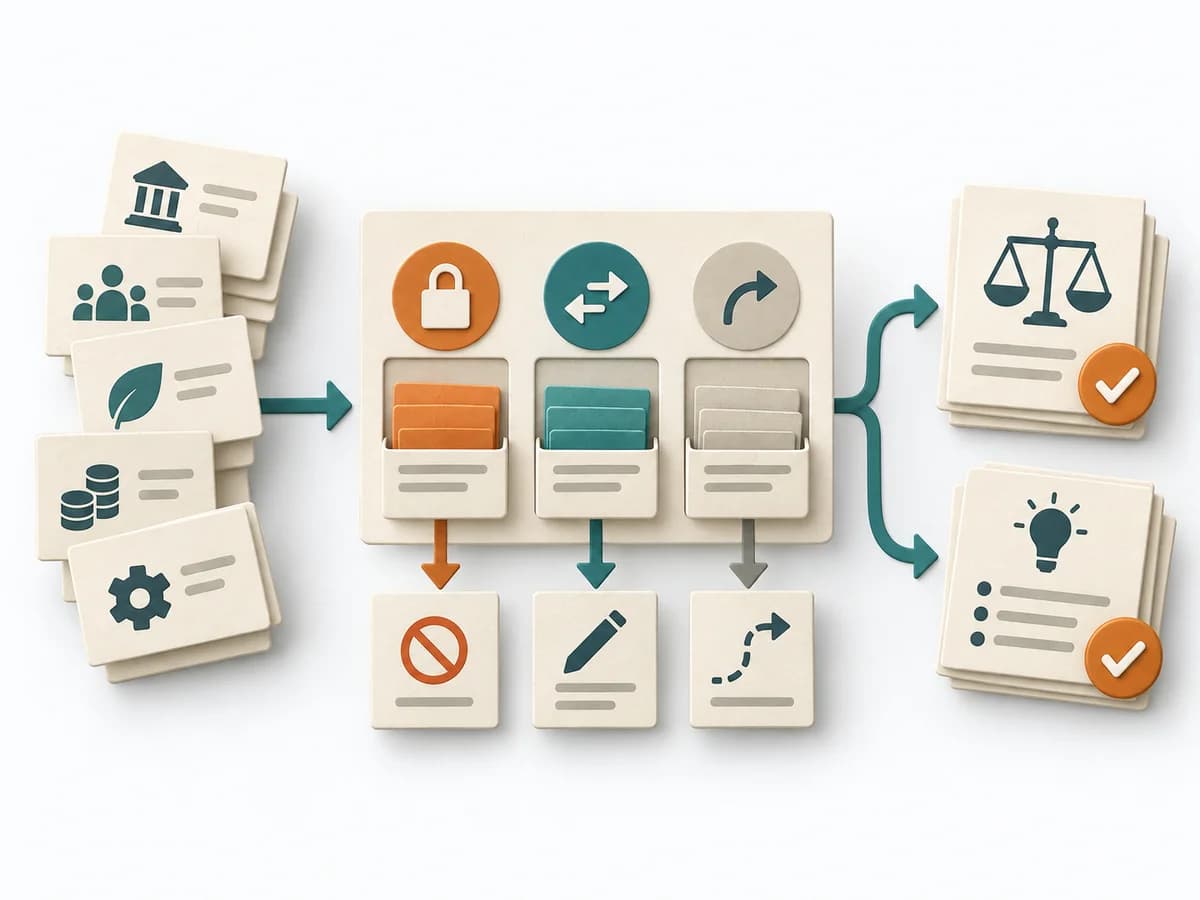 Decision Making Constraint Analysis |  Facilitation Power Interest Grid |  Facilitation Stakeholder Mapping |
|---|---|---|---|---|
Purposedifferent | When a topic gets stuck too quickly in the same thinking mode, Six Thinking Hats deliberately separates the perspectives. This means facts, risks, creativity, and emotional signals get worked through one after another instead of mixed together. | When an initiative stalls, the limit often lies not in the idea but in hard or soft boundary conditions. Constraint Analysis separates these limits and shows which of them can actually be shaped. | When many stakeholders compete for attention at once, the Power Interest Grid sorts them by influence and stake. It turns individual contributions into a visible selection. The result is captured as a Power Interest Grid and a stakeholder-specific strategy. | When an initiative depends on many people, interests, and power dynamics, Stakeholder Mapping systematically orders the environment. It shows who influences, who is affected, and where relationship management or safeguarding matters first. |
Complexitydifferent | Medium | Low | Low | Low |
Timedifferent | 45-90 min | 30-90 min | 30-60 min | 60–90 min |
Participantsdifferent | 4-12 | 2-8 | 2-8 | 2-8 |
Formatdifferent | Workshop | Workshop + async | Workshop | Workshop + async |
Outputdifferent | Perspective Notes, Decision Inputs, Action Items | Constraint List, Hard/Soft Classification, Option Impact Notes, Decision Boundaries | Power Interest Grid, Strategy per Stakeholder | Stakeholder Map, Engagement Plan, Risk Notes |
Tagsno overlap | FacilitationOptionsDecision | ConstraintsDecisionPlanningOptions | StakeholdersFacilitationAlignmentPlanning | StakeholdersAlignmentFacilitationChange |