View methods side by side.
Choose up to four methods. Add them using the search and share the comparison by copying its link.
Selected:Shape UpChange AnalysisSAAM (Software Architecture Analysis Method)ATAM (Architecture Tradeoff Analysis Method)
| Criterion | 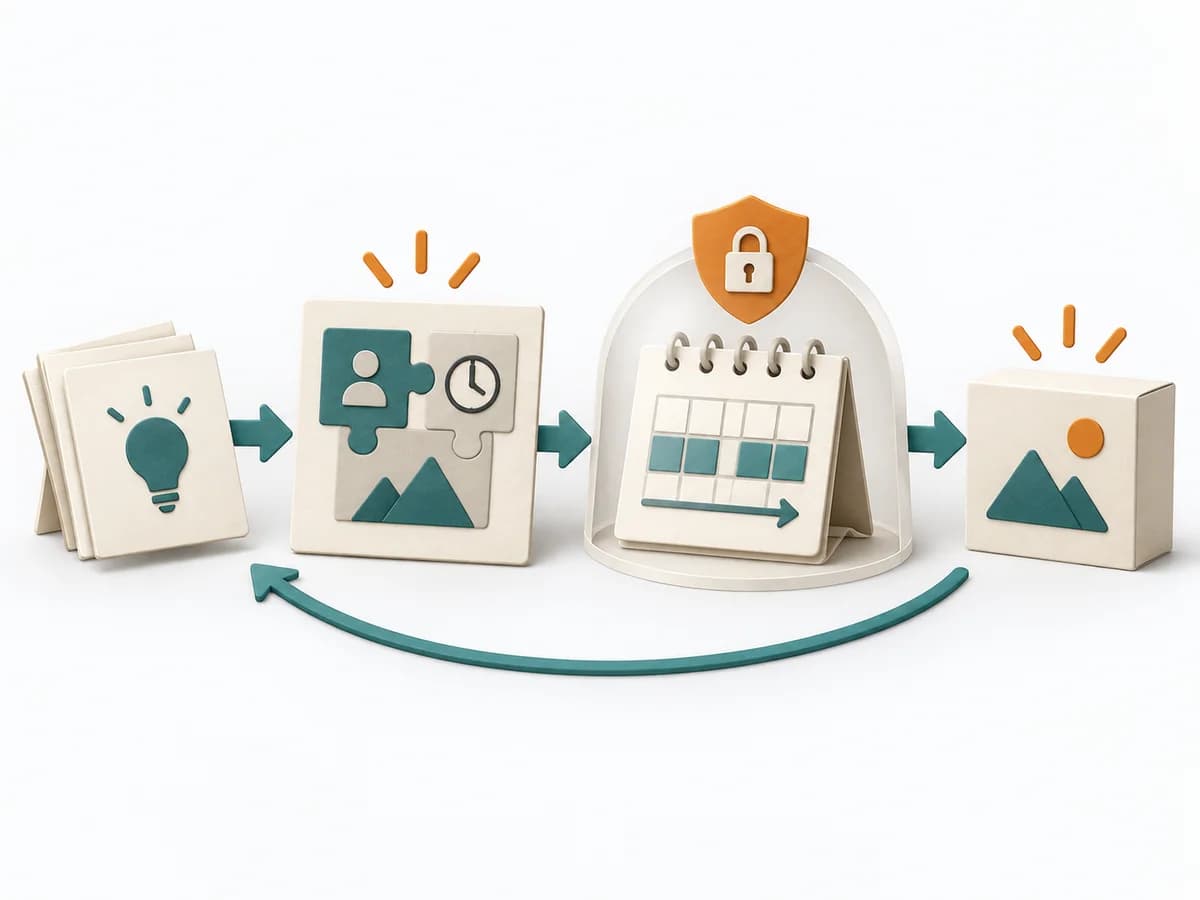 Delivery Shape Up |  Operations Change Analysis |  Architecture SAAM (Software Architecture Analysis Method) |  Architecture ATAM (Architecture Tradeoff Analysis Method) |
|---|---|---|---|---|
Purposedifferent | Shape Up helps clarify scope, sequence, and delivery flow. It makes work boundaries and decisions explicit and captures results as pitches, bet-table decisions, and hill charts. | For a deviation after a change, the method isolates the influence of the altered condition. It narrows down which differences are relevant and which are just accompanying noise. | SAAM helps teams judge an architecture’s suitability for selected tasks and changes. It is particularly useful for examining modifiability and comparing architecture alternatives with clear reasoning. | ATAM helps teams weigh architecture decisions when quality goals compete. The team considers business goals, stakeholder expectations, and technical decisions together. The evaluation shows which risks need further investigation. |
Complexitydifferent | Medium | Medium | High | High |
Timedifferent | 6 Wochen Cycle + 2 Wochen Cool-Down | 45-120 min | Preparation, scenario analysis, and findings review; effort depends on scope | Several meetings plus preparation and analysis; total effort depends on scope |
Participantsdifferent | 2-4 pro Pitch | 2-6 | Architecture experts and stakeholders for scenarios and weighting | Evaluation team, architects, and relevant stakeholders |
Formatsame | Workshop + async | Workshop + async | Workshop + async | Workshop + async |
Outputdifferent | Pitches, Bet-table decisions, Hill charts, Cooldown outcomes | Change Matrix, Cause Hypotheses, Validation Questions, Action List | Domain functions mapped to components and connections, Quality attributes and evaluation criteria, Typical tasks and their effects on the architecture, Reasoned evaluation or comparison of alternatives | Prioritized quality scenarios in a utility tree, Architecture risks with reasoning and assumptions, Sensitivity and trade-off points, Findings report with open investigations |
Tagsno overlap | PlanningDeliveryAutonomy | ChangeRoot causeTroubleshootingComparison | ArchitectureChangeAnalysisComparisonQuality | ArchitectureQualityRiskTradeoffsStakeholders |