View methods side by side.
Choose up to four methods. Add them using the search and share the comparison by copying its link.
| Criterion | 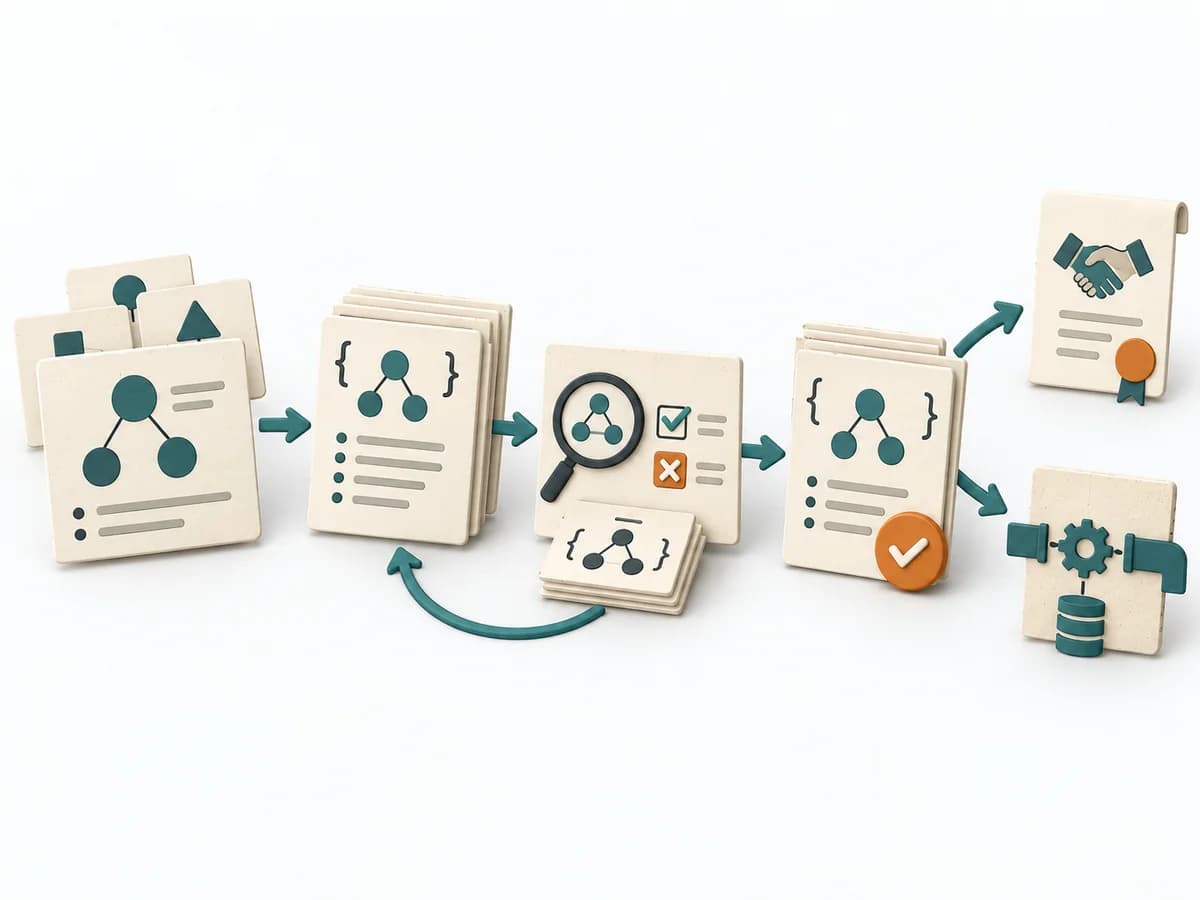 Knowledge Modeling Shape-First Modeling |  Knowledge Modeling Competency Questions |  Decision Making Cynefin Workshop |  Decision Making Argument Mapping |
|---|---|---|---|---|
Purposedifferent | Shape-First Modeling defines data quality through shapes before implementation or integration frays at the edges. The approach fits when validation and data contracts should be part of the design from the start. | Competency Questions translate a domain model into concrete questions that it must be able to answer. The method keeps the model's scope clean and prevents pretty but useless structures. | When problems are unclear, chaotic, or only seemingly familiar, standard recipes fall short. A Cynefin Workshop sorts situations by the nature of their problem and connects them with matching action logic. | When statements, evidence, and counterarguments get mixed up, a debate quickly loses its structure. Argument Mapping breaks a thesis down into its reasoning and makes visible what it really rests on. |
Complexitysame | Medium | Medium | Medium | Medium |
Timedifferent | Halber Tag pro Domain Slice | 2-4 h | 60-180 min | 1-3 h |
Participantsdifferent | 1-4 | 2-8 | 4-20 | 1-8 |
Formatdifferent | Workshop + async | Workshop + async | Workshop | Workshop + async |
Outputdifferent | SHACL or ShEx Shapes, Validation Reports, Data Contracts, Shape Documentation | Competency Question Set, Required Concepts, Test Queries, Coverage Matrix | Cynefin Map, Domain-specific Actions, Sensemaking Notes | Argument Map, Evidence Gaps, Decision Rationale |
Tagsno overlap | Knowledge graphValidationSemantic | OntologyKnowledge graphScopeRequirementsSemantic | ComplexitySensemakingDecision | SensemakingDecisionRationale |