View methods side by side.
Choose up to four methods. Add them using the search and share the comparison by copying its link.
| Criterion |  Knowledge Modeling Shape-First Modeling | 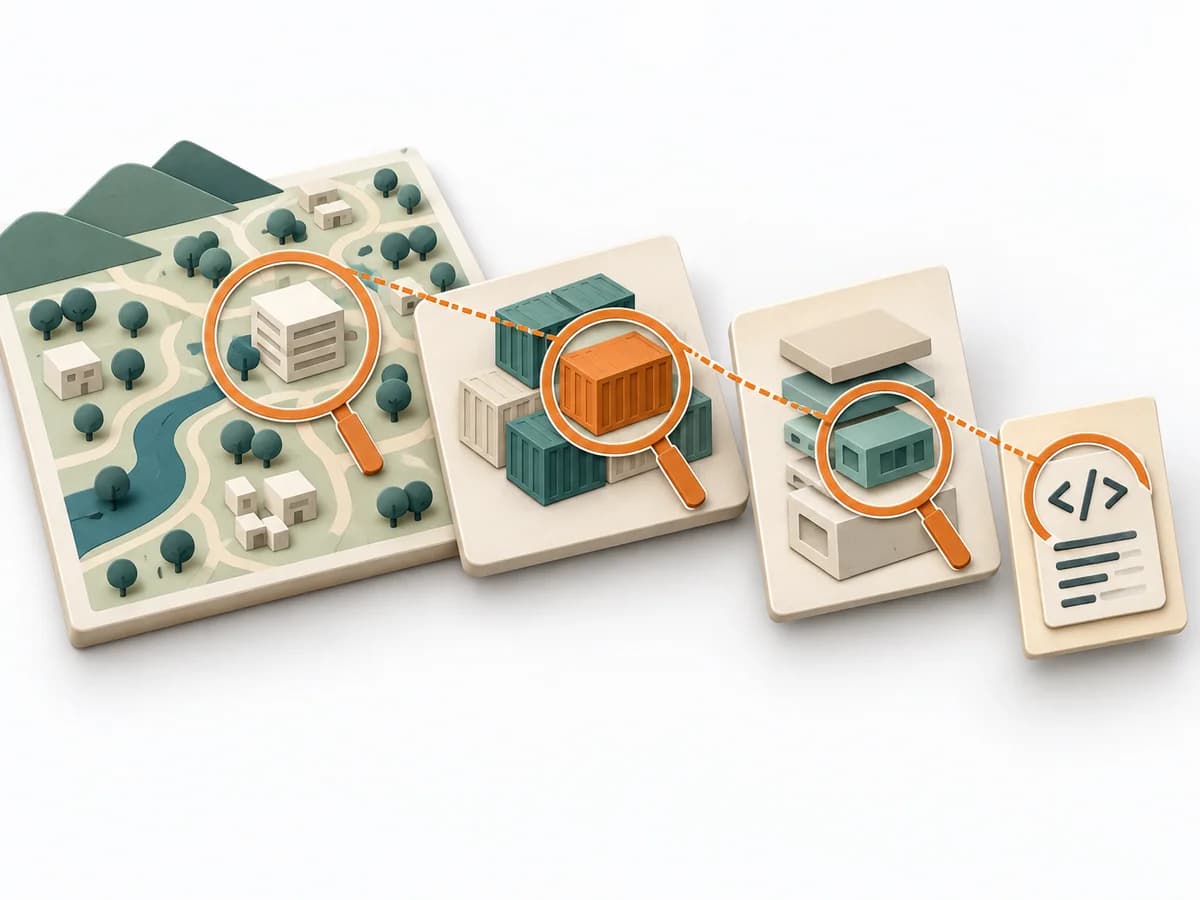 Architecture C4 Model |  Product Discovery Smoke Test |  Product Discovery Fake Door Test |
|---|---|---|---|---|
Purposedifferent | Shape-First Modeling defines data quality through shapes before implementation or integration frays at the edges. The approach fits when validation and data contracts should be part of the design from the start. | The C4 Model makes a system legible across several resolution levels, from context down to code. It suits situations where different audiences need to understand the same architecture from different altitudes. | When demand only needs to be roughly verified, it tests interest with minimal effort. It measures whether people would take a next step at all. | When demand is still unclear, it measures interest in a feature before it is built. It separates real behavior from polite agreement and deliberately keeps build effort small. |
Complexitydifferent | Medium | Low | Low | Medium |
Timedifferent | Halber Tag pro Domain Slice | 1-4 h | 1-5 Tage | 1-5 Tage |
Participantsdifferent | 1-4 | 1-5 | Nutzertraffic | Nutzertraffic |
Formatdifferent | Workshop + async | Workshop + async | Async | Async |
Outputdifferent | SHACL or ShEx Shapes, Validation Reports, Data Contracts, Shape Documentation | Context Diagram, Container Diagram, Component Diagram | Interest Metrics, Conversion Signal, Learning Note | Click Data, Interest Signal, Learning Decision |
Tagsno overlap | Knowledge graphValidationSemantic | ArchitectureCommunicationVisualization | ValidationExperimentsDemandGrowth | ValidationExperimentsDemandDiscovery |