View methods side by side.
Choose up to four methods. Add them using the search and share the comparison by copying its link.
| Criterion |  Knowledge Modeling Shape-First Modeling |  Decision Making Assumption Surfacing | 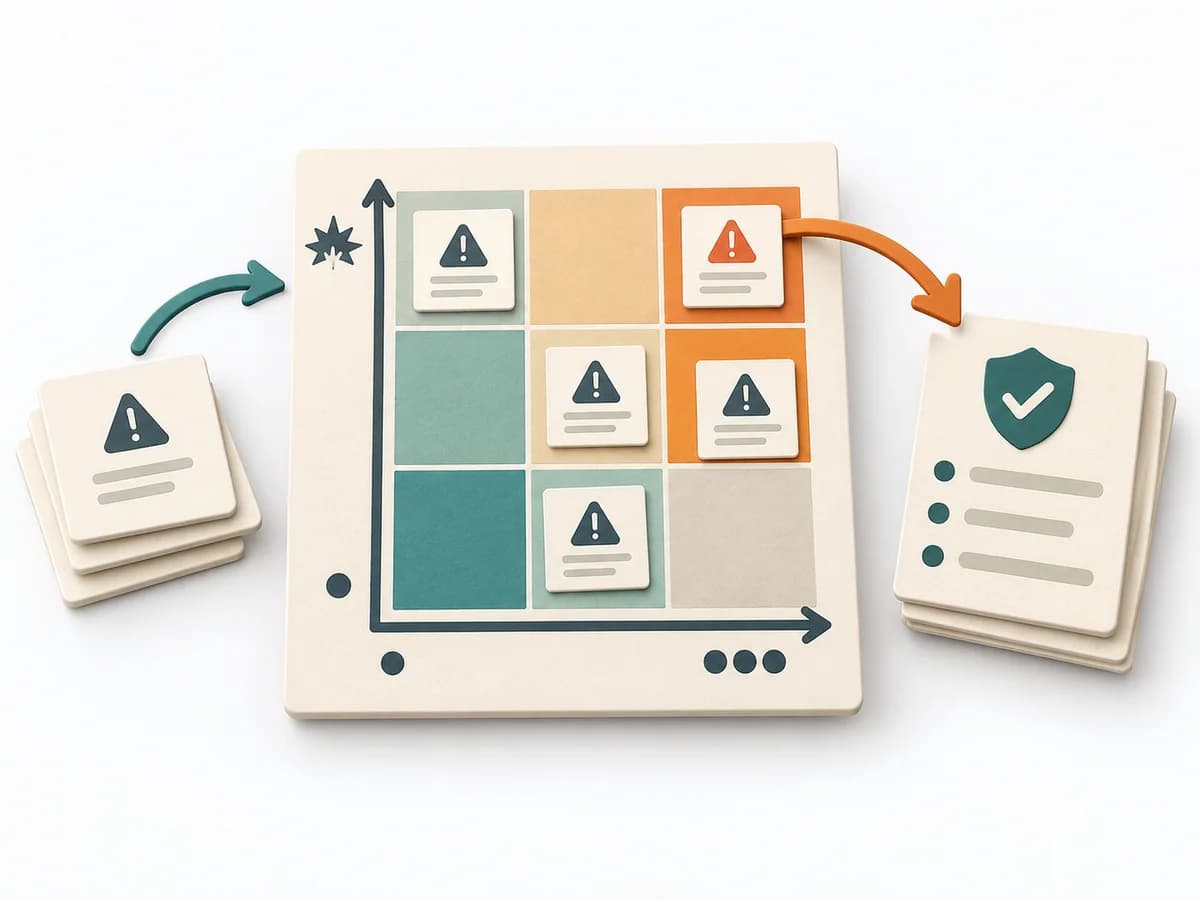 Decision Making Risk Matrix |  Knowledge Modeling Competency Questions |
|---|---|---|---|---|
Purposedifferent | Shape-First Modeling defines data quality through shapes before implementation or integration frays at the edges. The approach fits when validation and data contracts should be part of the design from the start. | Plans often contain assumptions that were never openly stated and remain dangerous precisely because of that. Assumption Surfacing makes these silent premises visible and prioritizes which of them carry the initiative or could sink it. | When a project faces many possible disruptions, it quickly becomes unclear which risks deserve attention first. It separates options, evaluation criteria, and open risks. The result is captured as a Risk Matrix and a Top Risk List. | Competency Questions translate a domain model into concrete questions that it must be able to answer. The method keeps the model's scope clean and prevents pretty but useless structures. |
Complexitydifferent | Medium | Low | Low | Medium |
Timedifferent | Halber Tag pro Domain Slice | 45-90 min | 30-60 min | 2-4 h |
Participantsdifferent | 1-4 | 2-8 | 3-10 | 2-8 |
Formatsame | Workshop + async | Workshop + async | Workshop + async | Workshop + async |
Outputdifferent | SHACL or ShEx Shapes, Validation Reports, Data Contracts, Shape Documentation | Assumption List, Critical Assumptions, Learning Plan | Risk Matrix, Top Risk List | Competency Question Set, Required Concepts, Test Queries, Coverage Matrix |
Tagsno overlap | Knowledge graphValidationSemantic | AssumptionsRiskDecisionDiscovery | RiskDecisionPrioritizationAssessment | OntologyKnowledge graphScopeRequirementsSemantic |