View methods side by side.
Choose up to four methods. Add them using the search and share the comparison by copying its link.
| Criterion | 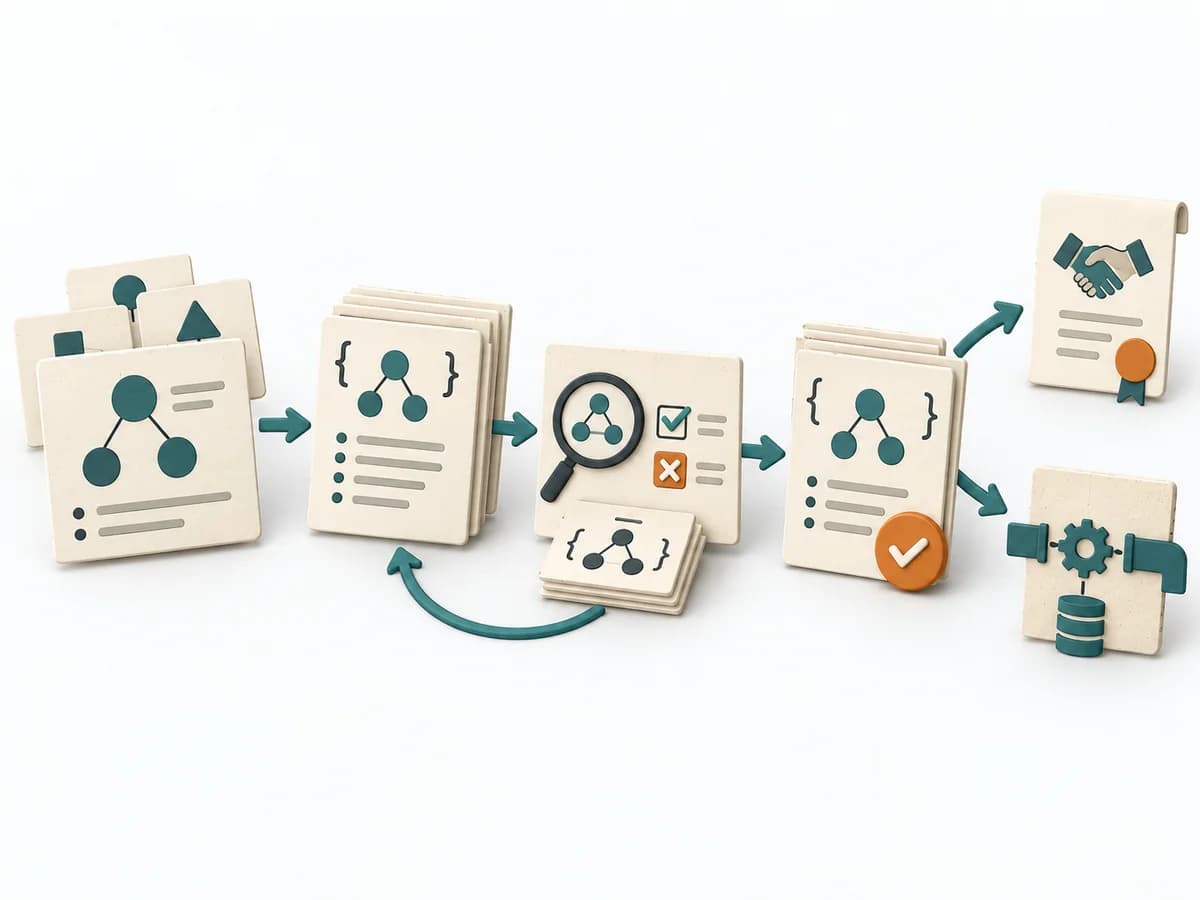 Knowledge Modeling Shape-First Modeling |  Operations A3 Problem Solving |  Operations Kepner-Tregoe |  Facilitation Decision Jam |
|---|---|---|---|---|
Purposedifferent | Shape-First Modeling defines data quality through shapes before implementation or integration frays at the edges. The approach fits when validation and data contracts should be part of the design from the start. | For a complex deviation with several people involved, the method bundles problem, analysis, and decision onto one page. It creates a shared working space where causes, countermeasures, and follow-up fit together. | For a disturbance that's hard to pin down, the method cleanly separates problem, cause, and decision. It reduces mixing when symptoms allow several interpretations. | When a decision is stuck, Decision Jam loosens the knot through structured separation of problem, idea, and selection. The format creates movement without jumping prematurely at the first seemingly elegant answer. |
Complexitydifferent | Medium | Medium | High | Low |
Timedifferent | Halber Tag pro Domain Slice | 45-90 min | 2-8 h | 60-90 min |
Participantsdifferent | 1-4 | 2-5 | 2-8 | 4-10 |
Formatdifferent | Workshop + async | Workshop + async | Workshop + async | Workshop |
Outputdifferent | SHACL or ShEx Shapes, Validation Reports, Data Contracts, Shape Documentation | A3 Report, Action Plan, Root Cause Analysis | Problem Analysis, Decision Analysis, Risk Plan | Problem Cluster, Prioritized Challenge, Experiment |
Tagsno overlap | Knowledge graphValidationSemantic | LeanProblem solvingCoachingOperations | Problem solvingRoot causeDecisionOperations | FacilitationDecisionProblem solvingWorkshop |