View methods side by side.
Choose up to four methods. Add them using the search and share the comparison by copying its link.
| Criterion |  Agile Scrum | 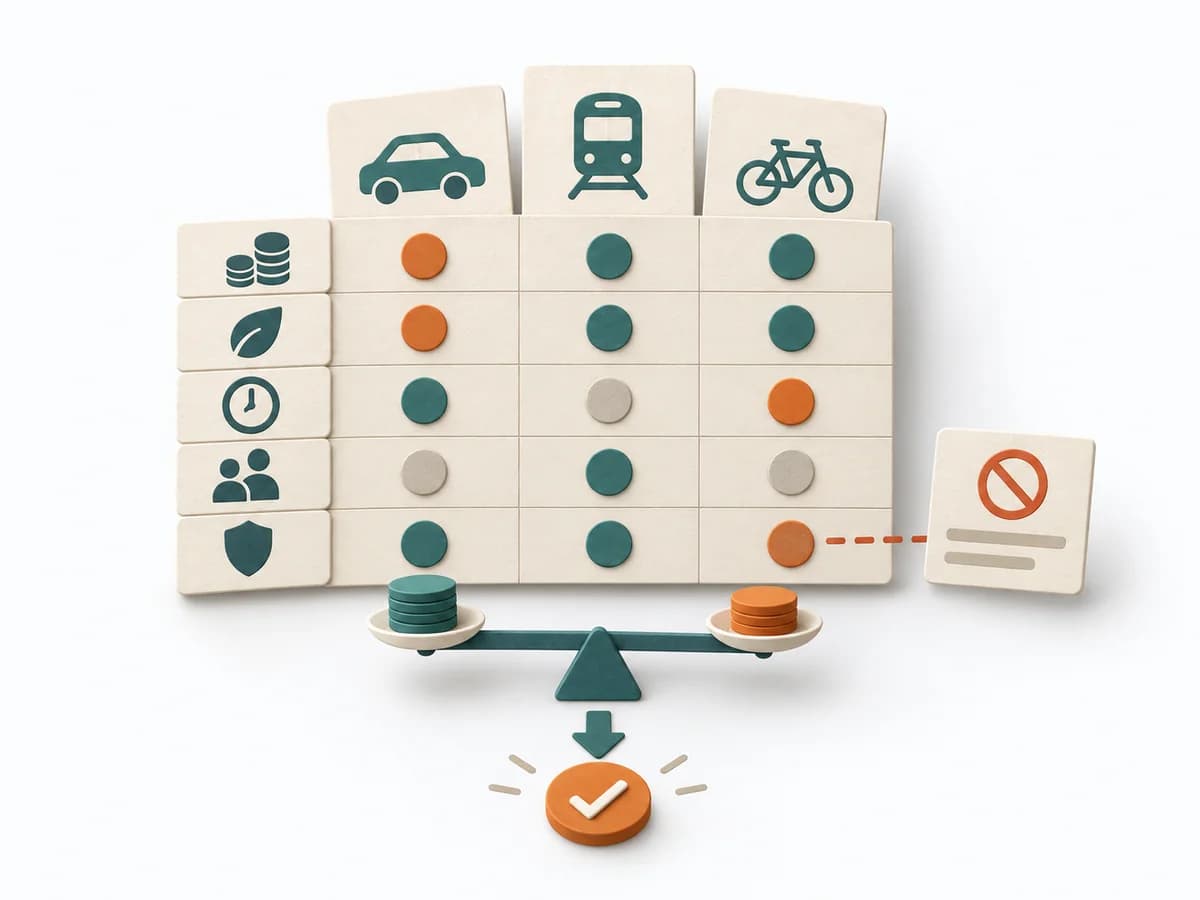 Decision Making Trade-off Analysis |  Decision Making Pre-Mortem | 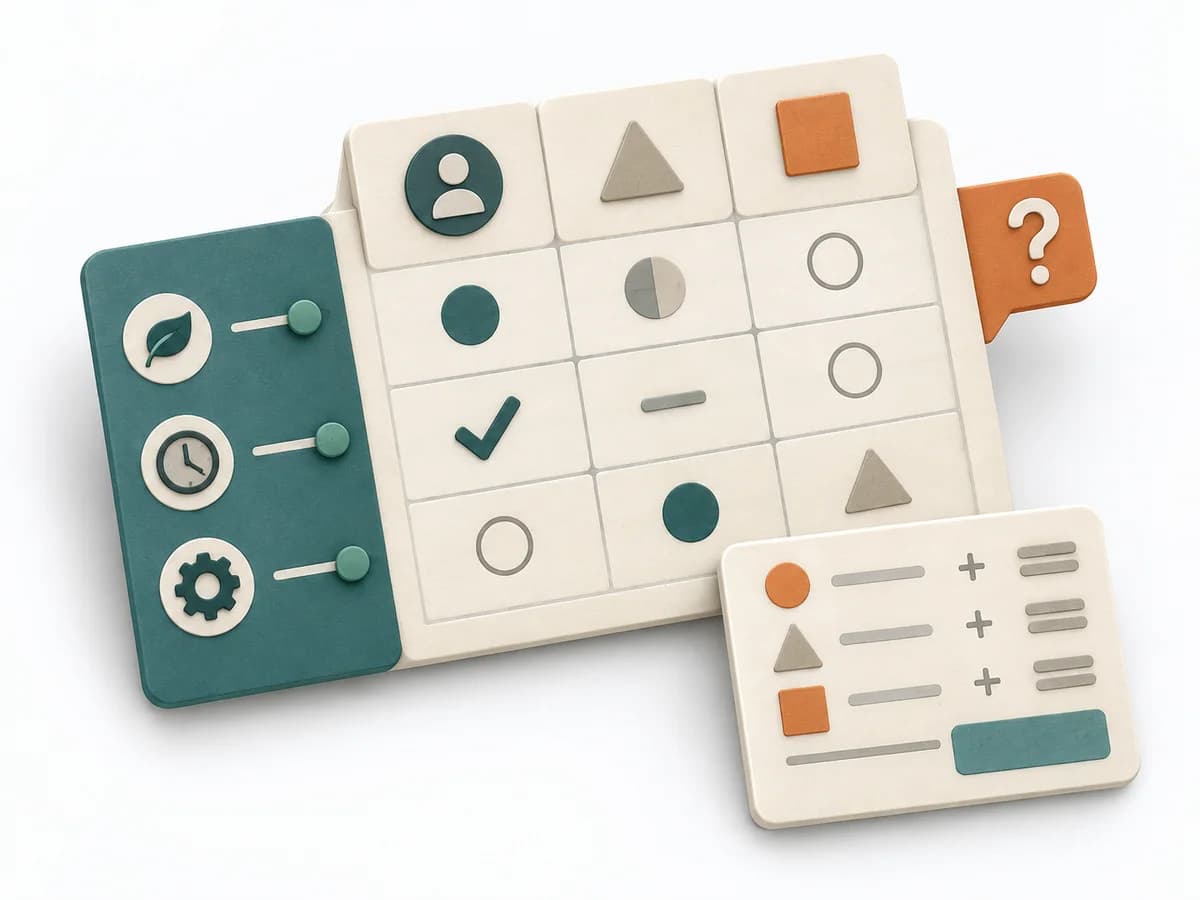 Decision Making Decision Matrix |
|---|---|---|---|---|
Purposedifferent | When a team needs to work in a fixed delivery rhythm, it stabilizes cadence, responsibility, and feedback loops. It makes collaboration reliable across sprint boundaries. | With limited resources, quality, speed, cost, and risk almost always compete with each other. Trade-off Analysis makes these tensions explicit and prevents decisions from producing hidden side effects. | In early initiatives with many uncertainties, planning quickly turns too optimistic. A pre-mortem makes the expected failure visible in advance and sharpens the view of causes, gaps, and countermeasures. | When several options collide with several criteria, comparison quickly becomes subjective. A Decision Matrix makes the trade-off visible and brings weighting, criteria, and options into a shared logic. |
Complexitydifferent | Medium | Medium | Low | Medium |
Timedifferent | 1-4 Wochen je Sprint, laufend | 45-120 min | 20–45 min | 45-90 min |
Participantsdifferent | 3-10 (Scrum Team) | 2-8 | Small cross-functional group | 2-8 |
Formatdifferent | Workshop + async | Workshop + async | Workshop | Workshop + async |
Outputdifferent | Product Backlog, Sprint Backlog, Increment, Sprint Goal | Trade-off Matrix, Criteria List, Decision Rationale, Accepted Downsides | Risk list, Mitigation plan, Assumption log | Decision Matrix, Scoring Rationale, Selected Option |
Tagsno overlap | AgileIterationCadence | TradeoffsDecisionCriteriaOptions | RiskDecisionFailurePlanning | DecisionCriteriaScoringTradeoffs |